• Research
  • Emissary
  • About
  • Experts
Carnegie Global logoCarnegie lettermark logo
DemocracyIran
  • Donate
{
  "authors": [
    "Ashley J. Tellis"
  ],
  "type": "other",
  "centerAffiliationAll": "dc",
  "centers": [
    "Carnegie Endowment for International Peace"
  ],
  "collections": [],
  "englishNewsletterAll": "ctw",
  "nonEnglishNewsletterAll": "",
  "primaryCenter": "Carnegie Endowment for International Peace",
  "programAffiliation": "SAP",
  "programs": [
    "South Asia"
  ],
  "projects": [],
  "regions": [
    "South Asia",
    "India",
    "Afghanistan",
    "Pakistan"
  ],
  "topics": [
    "Security",
    "Military",
    "Foreign Policy"
  ]
}
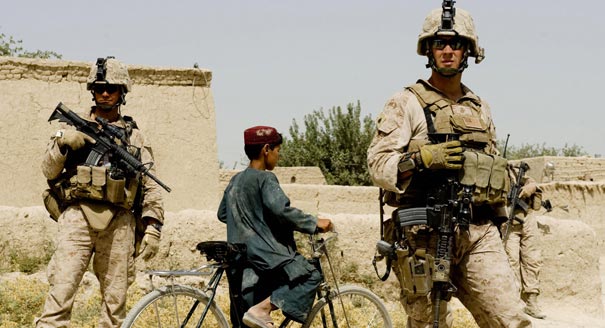
Source: Getty

Other

Creating New Facts on the Ground

Continued military pressure will allow the United States to alter the realities on the ground in Afghanistan, convince the Taliban to consider reconciliation, and enable effective regional diplomacy to find a successful solution for the country.

Link Copied
By Ashley J. Tellis
Published on May 4, 2011
Program mobile hero image

Program

South Asia

The South Asia Program informs policy debates relating to the region’s security, economy, and political development. From strategic competition in the Indo-Pacific to India’s internal dynamics and U.S. engagement with the region, the program offers in-depth, rigorous research and analysis on South Asia’s most critical challenges.

Learn More

  • Although meaningful cooperation in the region surrounding Afghanistan is of vital importance, it has been elusive because Afghanistan’s key neighbors have significantly divergent aims. Engineering a successful regional solution would require the United States to fundamentally transform either these actors’ objectives or their dominant strategies. Achieving the latter may prove more feasible, most crucially vis-à-vis Pakistan.

  • The region’s history of discord is mainly rooted in the troubled relationship between Afghanistan and Pakistan. Although Pakistan’s involvement in Afghanistan is colored by its rivalry with India, its relations with Afghanistan are a geopolitical challenge independent of India because of its fears of disorder along its western borders, the unwelcome idea of “Pashtunistan,” and a related long-standing border dispute.

  • Pakistan’s reaction to these problems has only exacerbated them. As Islamabad, by supporting the Taliban insurgency, has sought to exercise preponderant, if not overweening, influence over Kabul’s strategic choices, it has earned Kabul’s distrust, deepened the Kabul–New Delhi partnership, and increased the risk to its relations with Washington—not to mention threatening the lives of U.S. and other coalition forces operating in Afghanistan.

  • Despite widespread support in Afghanistan for ending the war through a negotiated settlement if possible, the Afghan Taliban leadership is unlikely to consider reconciliation unless it is faced with the prospect of continued losses of the kind sustained as a result of coalition military operations in 2010. A regional solution is similarly unlikely as long as Afghanistan and its neighbors, including India, perceive Islamabad as bent on holding Kabul in a choking embrace.

  • Solving these problems lies beyond the capability of American diplomacy, and right now even of the promised diplomatic surge. The best hope for progress lies in continuing military action to alter the realities on the ground—thereby inducing the Taliban to consider reconciliation, while simultaneously neutralizing the Pakistani strategy that is currently preventing a regional solution.

  • To increase the probability of military success, however, President Obama will need to forgo the politically calculated drawdown of combat troops this summer and instead accept the advice of his field commanders to maintain the largest possible contingent necessary for the coming campaign in eastern Afghanistan. Hard and unpalatable as it might be for the president, this course alone offers a solution that will protect the recent gains in Afghanistan and advance American interests over the long term.

About the Author

Ashley J. Tellis

Former Senior Fellow

Ashley J. Tellis was a senior fellow at the Carnegie Endowment for International Peace.

    Recent Work

  • Paper
    Multipolar Dreams, Bipolar Realities: India’s Great Power Future

      Ashley J. Tellis

  • Commentary
    India Sees Opportunity in Trump’s Global Turbulence. That Could Backfire.

      Ashley J. Tellis

Ashley J. Tellis
Former Senior Fellow
SecurityMilitaryForeign PolicySouth AsiaIndiaAfghanistanPakistan

Carnegie does not take institutional positions on public policy issues; the views represented herein are those of the author(s) and do not necessarily reflect the views of Carnegie, its staff, or its trustees.
More Work from Carnegie Endowment for International Peace

  • Aerial shot of island community
    Commentary
    One Year After the Great Aid Recession, Investments in Climate Mobility Offer Cost-Effective Returns

    Climate mobility interventions can vary, but they all present opportunities to unlock transformative results that mitigate costs associated with inaction.

      • Alejandro Rodriguez

      Alejandro Martin Rodriguez

  • Man standing next to a pile of burned cars
    Commentary
    Emissary
    The Myriad Problems With the Iran Ceasefire

    Four Middle East experts analyze the region’s reactions and next steps.

      • Andrew Leber
      • Eric Lob
      • +1

      Amr Hamzawy, Andrew Leber, Eric Lob, …

  •  A machine gun of a Houthi soldier mounted on a police vehicle next to a billboard depicting the U.S. president Donald Trump and Mohammed Bin Salman, the Crown Prince and Prime Minister of Saudi Arabia, during a protest staged to show support to Iran against the U.S.-Israel war on March 27, 2026 in Sana'a, Yemen.
    Collection
    The Iran War’s Global Reach

    As the war between the United States, Israel, and Iran continues, Carnegie scholars contribute cutting-edge analysis on the events of the war and their wide-reaching implications. From the impact on Iran and its immediate neighbors to the responses from Gulf states to fuel and fertilizer shortages caused by the effective shutdown of the Strait of Hormuz, the war is reshaping Middle East alliances and creating shockwaves around the world. Carnegie experts analyze it all.

  •  A machine gun of a Houthi soldier mounted on a police vehicle next to a billboard depicting the U.S. president Donald Trump and Mohammed Bin Salman, the Crown Prince and Prime Minister of Saudi Arabia, during a protest staged to show support to Iran against the U.S.-Israel war on March 27, 2026 in Sana'a, Yemen.
    Article
    Amid Iran War, Gulf Countries Slow the Pace of Reforms

    The return of war as the organizing factor in Middle Eastern politics has predictable consequences: governments are prioritizing regime stability and becoming averse to political and social reform.

      • Sarah Yerkes

      Sarah Yerkes, Amr Hamzawy

  • Commentary
    Carnegie Politika
    Power, Pathways, and Policy: Grounding Central Asia’s Digital Ambitions

    Central Asia’s digital ambitions are achievable, but only if policy is aligned with the region’s physical constraints.

      Aruzhan Meirkhanova

Get more news and analysis from
Carnegie Endowment for International Peace
Carnegie global logo, stacked
1779 Massachusetts Avenue NWWashington, DC, 20036-2103Phone: 202 483 7600Fax: 202 483 1840
  • Research
  • Emissary
  • About
  • Experts
  • Donate
  • Programs
  • Events
  • Blogs
  • Podcasts
  • Contact
  • Annual Reports
  • Careers
  • Privacy
  • For Media
  • Government Resources
Get more news and analysis from
Carnegie Endowment for International Peace
© 2026 Carnegie Endowment for International Peace. All rights reserved.