

Article
- +1
Toby Dalton, Mark Hibbs, Nicole Grajewski, …
{
  "authors": [
    "Mark Hibbs"
  ],
  "type": "other",
  "centerAffiliationAll": "dc",
  "centers": [
    "Carnegie Endowment for International Peace"
  ],
  "collections": [
    "U.S. Nuclear Policy"
  ],
  "englishNewsletterAll": "ctw",
  "nonEnglishNewsletterAll": "",
  "primaryCenter": "Carnegie Endowment for International Peace",
  "programAffiliation": "NPP",
  "programs": [
    "Nuclear Policy"
  ],
  "projects": [],
  "regions": [
    "North America",
    "United States",
    "South America",
    "Middle East",
    "Iraq",
    "East Asia",
    "China"
  ],
  "topics": [
    "Nuclear Policy"
  ]
}
Source: Getty
How a state’s leaders go about organizing and managing their nuclear assets will likely make all the difference between getting the bomb and failing miserably.
Source: Nonproliferation Review
Jacques Hymans begins Achieving Nuclear Ambitions by asking why, during the nearly seventy years which have elapsed since the United States quickly succeeded in building and testing nuclear weapons, other states apparently needed much more time to replicate the achievement of the Manhattan Project, and still others failed.
Hymans provides answers illustrated by empirical evidence from four historical case studies. These narratives suggest that how a state's leaders go about organizing and managing their nuclear assets will make all the difference between getting the bomb and failing miserably.
The evidence Hymans presents from Iraq, Yugoslavia, and Argentina leads to the conclusion that, when a nuclear program is not organized and directed to achieve specific, realistic outcomes, it is more likely to fail.In Iraq, a nuclear weapon project that, Hymans argues, slowly began making headway during the 1980s was suddenly throttled when it was taken over by Hussein Kamel, a cousin of Saddam Hussein. Beginning in May 1987, Kamel unleashed bureaucratic disorder on the program, and abruptly overturned Iraq's program to enrich uranium using electromagnetic isotopic techniques in favor of gas centrifuges. To make up for lost time, Kamel exposed Iraq's centrifuge program to foreign scrutiny by relying on black market equipment suppliers, and he intimidated scientists with unrealistic deadlines. Two weeks after Saddam invaded Kuwait in August 1990, Kamel returned from the war front to launch a crash program to build a nuclear bomb. By the end of the conflict in 1991, however, Hymans writes, “the centrifuge effort had not yet accumulated any enriched uranium at all” and Iraq's ten-year nuclear weapon effort, notwithstanding an expenditure of a billion US dollars, came to naught.
Argentina and Yugoslavia likewise never acquired nuclear weapons. Juan Perón, who ruled Argentina after World War II until 1955, desired the bomb out of what Hymans calls a “grandiose conception of Argentine nationalism,” but Perón alienated the country's scientific establishment and trusted an Austrian fraudster, Ronald Richter, who had convinced Perón that he possessed precious nuclear secrets. Instead of nuclear weapons, Hymans says, Argentina reaped embarrassment. In Yugoslavia, Josip Broz Tito launched a nuclear energy program in the 1940s, but it suffered from poor organization and brain drain to the West. After India tested a nuclear explosive in 1974, Tito ordered his generals to follow suit, but they didn't deliver.
Hymans's foil to the above examples of mismanagement is China, where Mao Zedong had pushed hard for the bomb program, and an organizational “genius,” Nie Rongzhen, had the freedom to effectively harvest his cadre's nationalism and professionalism to successfully test a nuclear explosive device after about half a decade. It would thus appear from this example that nuclear weapon projects stand the best chance of success if they enjoy high priority, are guided by gifted managers, and if political leaders do not interfere with the work in progress.
The narrative of Achieving Nuclear Ambitions illustrates that good management matters. But the book aims to demonstrate a far more ambitious thesis, namely, what Hymans calls his “theory of nuclear weapons project efficiency.”
The full book review is published in Nonproliferation Review.

Nonresident Senior Fellow, Nuclear Policy Program
Hibbs is a Germany-based nonresident senior fellow in Carnegie’s Nuclear Policy Program. His areas of expertise are nuclear verification and safeguards, multilateral nuclear trade policy, international nuclear cooperation, and nonproliferation arrangements.
Recent Work


Toby Dalton, Mark Hibbs, Nicole Grajewski, …
Mark Hibbs
Carnegie does not take institutional positions on public policy issues; the views represented herein are those of the author(s) and do not necessarily reflect the views of Carnegie, its staff, or its trustees.

In an interview, Jim Lamson discusses the ongoing regional conflict and sees an unclear picture when it comes to winners and losers.

Michael Young

Our new report offers a path forward for local officials and future policymakers.



Joe McCannon, Jenny Keroack, Lauren Jensen, …

Present and future policymakers seeking to address climate-related health challenges can draw lessons from the successes and failures of the Biden administration.
Joe McCannon, Jenny Keroack, Lauren Jensen, …

Unless Beirut lowers expectations, any setbacks will end up bolstering Hezbollah’s narrative.

Mohanad Hage Ali
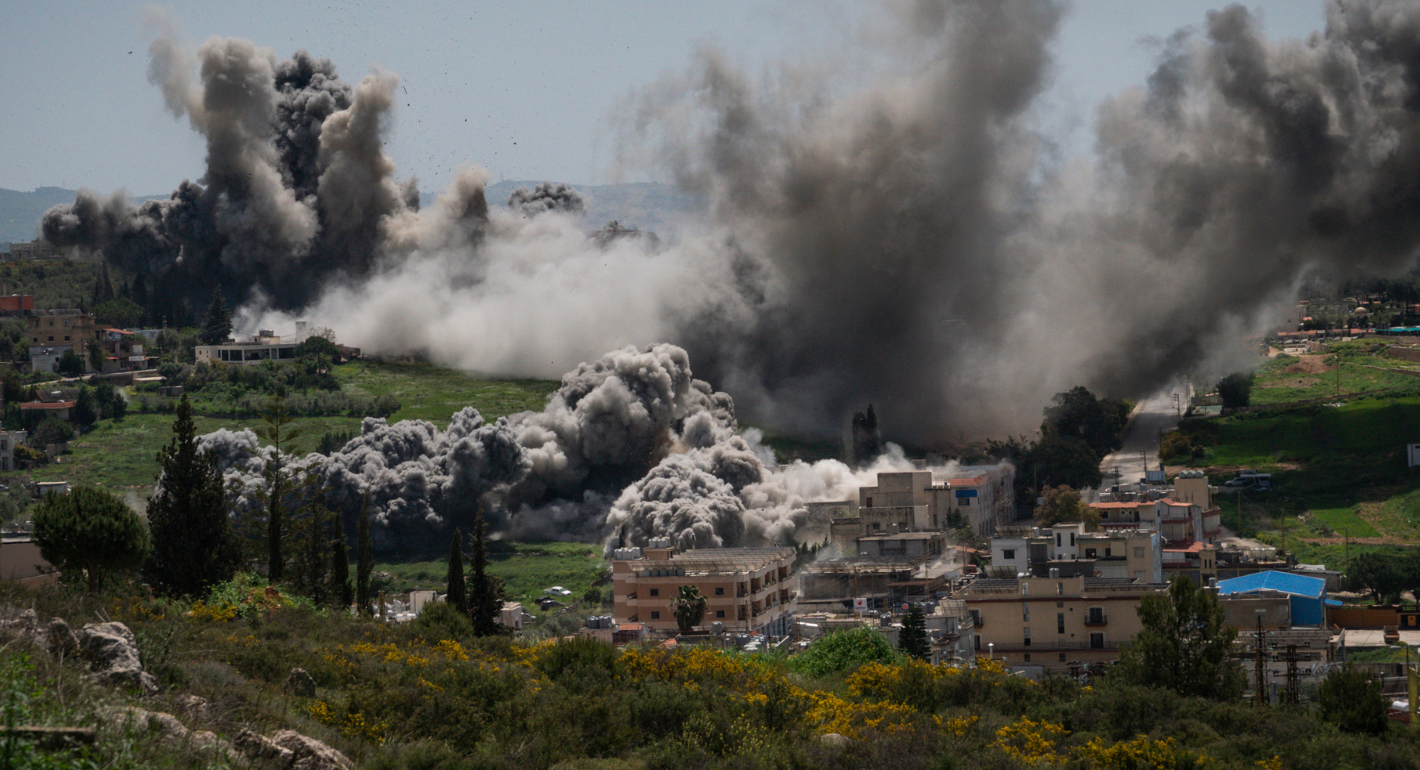
Europe has been standing by while its Southern neighborhood is being redrawn by force. To establish a path to peace between Israel and Lebanon, it’s time for Europeans to get involved with hard power.

Rym Momtaz