• Research
  • Emissary
  • About
  • Experts
Carnegie Global logoCarnegie lettermark logo
DemocracyIran
  • Donate
{
  "authors": [
    "Paul Stronski"
  ],
  "type": "legacyinthemedia",
  "centerAffiliationAll": "dc",
  "centers": [
    "Carnegie Endowment for International Peace"
  ],
  "collections": [],
  "englishNewsletterAll": "ctw",
  "nonEnglishNewsletterAll": "",
  "primaryCenter": "Carnegie Endowment for International Peace",
  "programAffiliation": "russia",
  "programs": [
    "Russia and Eurasia"
  ],
  "projects": [],
  "regions": [
    "North Africa",
    "Southern, Eastern, and Western Africa",
    "Russia"
  ],
  "topics": [
    "Foreign Policy"
  ]
}
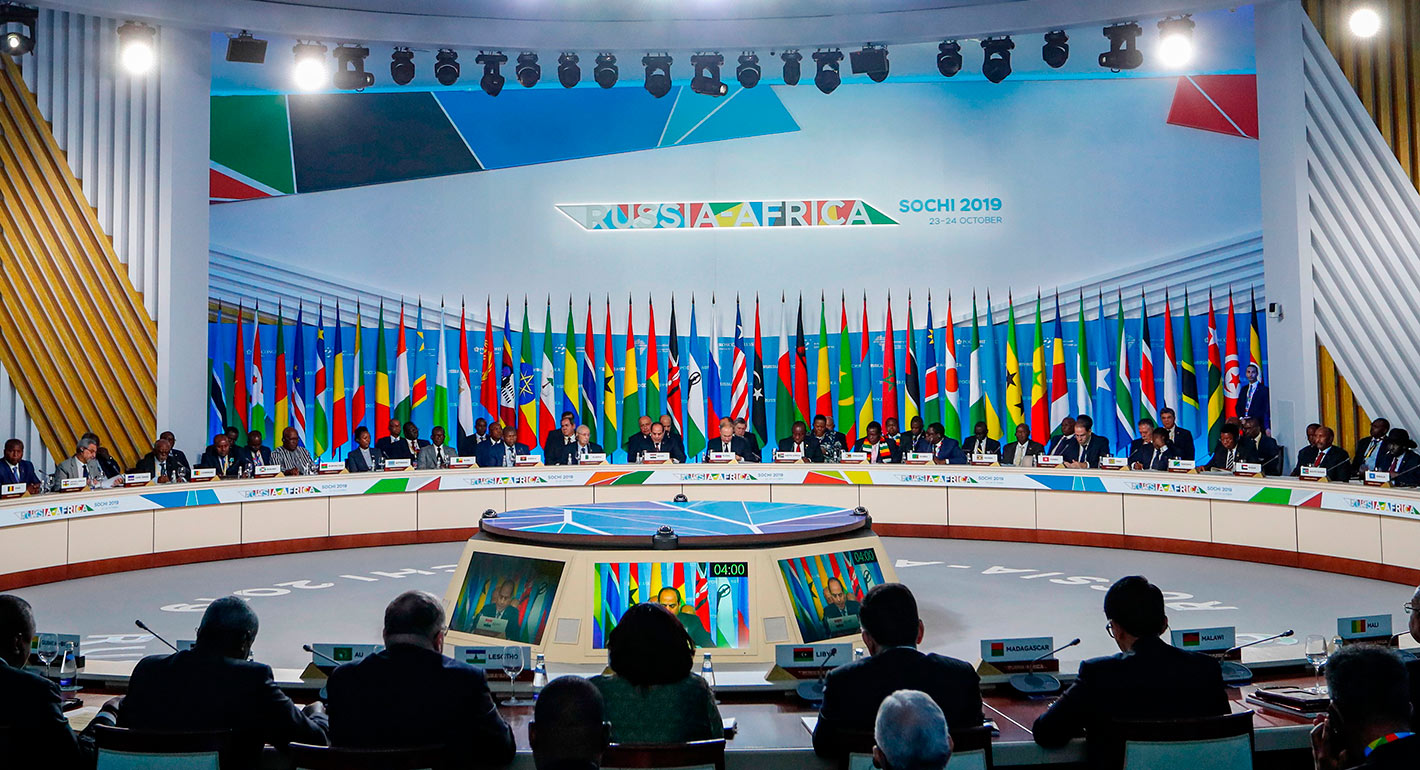
Source: Getty

In The Media

Putin Hosts African Leaders to Rile West, but With Little to Offer Them

Putin’s main goal was to rattle the United States and Europe, which have taken Russia’s decades-long absence from Africa for granted.

Link Copied
By Paul Stronski
Published on Oct 24, 2019
Program mobile hero image

Program

Russia and Eurasia

The Russia and Eurasia Program continues Carnegie’s long tradition of independent research on major political, societal, and security trends in and U.S. policy toward a region that has been upended by Russia’s war against Ukraine.  Leaders regularly turn to our work for clear-eyed, relevant analyses on the region to inform their policy decisions.

Learn More

Source: Axios

The pomp and circumstance of this week's Sochi summit, where President Vladimir Putin hosted 43 senior African leaders, furthers a narrative Russia is crafting about its return to the continent.

The big picture: Putin's main goal was to rattle the U.S. and Europe, which have taken Russia’s decades-long absence from Africa for granted. Despite his hype, however, cash-strapped Russia’s reach on the continent is still a far cry from what China, the West and many lesser powers can muster when it comes to financing, trade, investment and even influence.

Context: Opportunism drives the foreign policy Russia is pursuing in Africa today — a departure from the ideological approach of the USSR, which invested heavily in military and security ties and economic development to create client regimes among revolutionary and post-colonial leaders.

  • Despite the Trump administration’s rhetorical focus on “great power competition,” the U.S. and its allies have disengaged from Africa, creating vacuums Moscow can exploit.
  • Yet Russia's influence is not expanding across the board. Its deepest inroads are in highly troubled countries, such as the Central African Republic, or pariah states such as Sudan and Zimbabwe that are often under UN sanctions.

Between the lines: During the 2000s, the Kremlin envisioned Africa as part of a “multipolar world” that would not be led by Washington.

  • Africa’s heavy representation in the UN — it accounts for more than 25% of countries in the UN General Assembly — made it an important target.
  • Since 2014, nimble Russian diplomacy and old-fashioned vote-buying has strengthened African support for Moscow’s stances on Crimea, Syria and Libya.

Yes, but: Russia has little economic penetration on the continent.

  • In 2017, trade between Russia and sub-Saharan Africa was $3 billion, well behind China's $56 billion and the U.S.' $27 billion. The most significant mineral and energy opportunities it's pursuing have already been examined or discarded by other players.
  • Limited resources and risk appetite have left Russia falling back on tools like sending Kremlin-connected mercenaries to conflict zones or offering consulting services to autocratic regimes on election manipulation.

What to watch: No ground-breaking trade, investment or security announcements came out of the summit, suggesting the gathering was more symbolic than substantive. But if Moscow expands its Africa policy after the summit and under the West's inattentive watch, it could be a far greater worry for the West.
This article was originally published in Axios.

About the Author

Paul Stronski

Former Senior Fellow, Russia and Eurasia Program

Paul Stronski was a senior fellow in Carnegie’s Russia and Eurasia Program, where his research focuses on the relationship between Russia and neighboring countries in Central Asia and the South Caucasus.

    Recent Work

  • Article
    Russia’s Growing Footprint in Africa’s Sahel Region

      Paul Stronski

  • Commentary
    Russia in the Balkans After Ukraine: A Troubling Actor

      Paul Stronski

Paul Stronski
Former Senior Fellow, Russia and Eurasia Program
Paul Stronski
Foreign PolicyNorth AfricaSouthern, Eastern, and Western AfricaRussia

Carnegie does not take institutional positions on public policy issues; the views represented herein are those of the author(s) and do not necessarily reflect the views of Carnegie, its staff, or its trustees.
More Work from Carnegie Endowment for International Peace

  • Commentary
    Strategic Europe
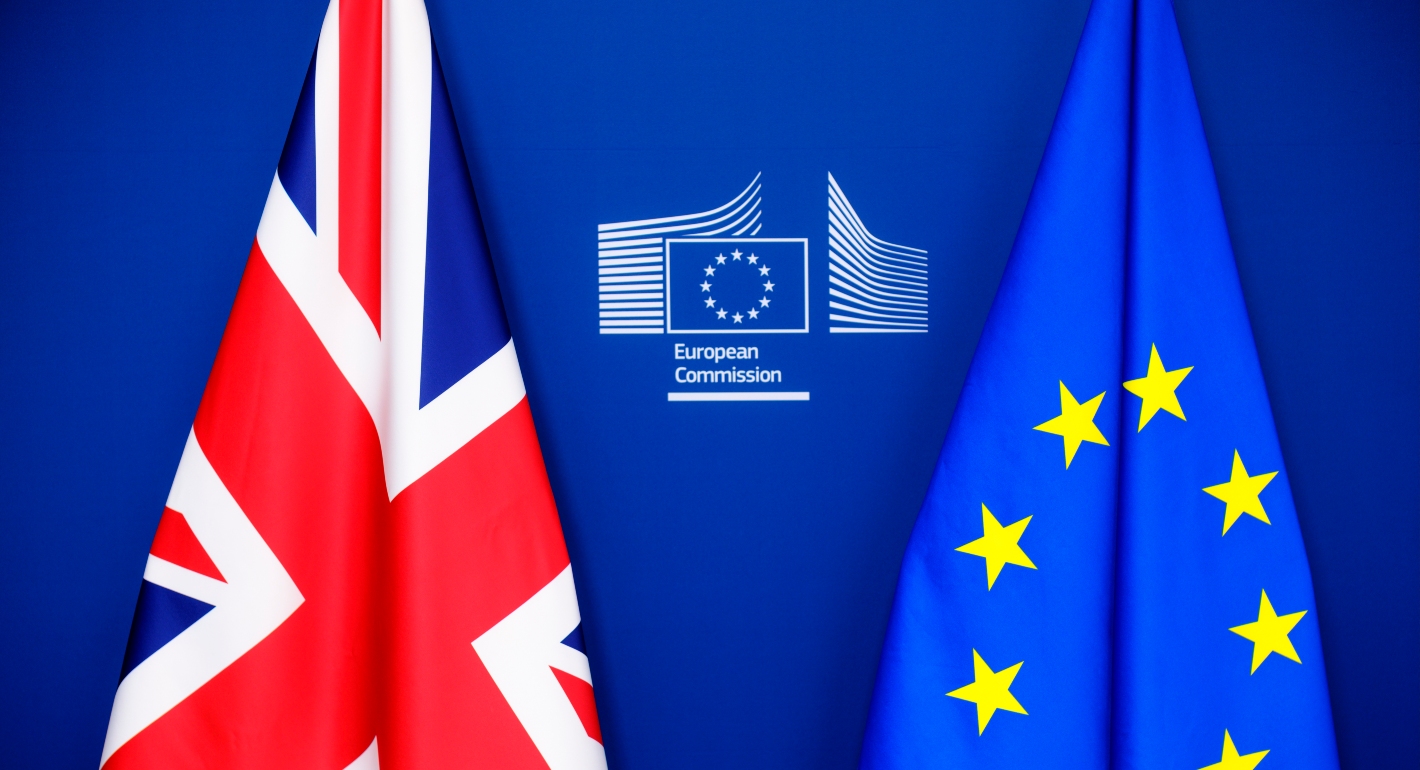
    Taking the Pulse: Is the EU Ready for Rapprochement With the UK?

    Closer EU-UK ties could help address urgent European concerns. But is the EU ready for rapprochement with the United Kingdom?

      • Rym Momtaz

      Rym Momtaz, ed.

  • Commentary
    Carnegie Politika
    Who Is Responsible for the Demise of the Russian Internet?

    The Russian state has opted for complete ideological control of the internet and is prepared to bear the associated costs.

      Maria Kolomychenko
  • Duterte stands with his fist raised and a crowd of people stand behind him
    Paper
    Duterte’s Populist Foreign Policy as Illiberal Defiance: Consequences and Prospects

    In the Philippines, Duterte-era discourse emphasizing sovereignty, anti-Western skepticism, and strongman diplomacy mirrors tenets of populist foreign policy around the world.
      Aries A. Arugay
  • Commentary
    Carnegie Politika
    Russia’s Coal Industry Is Running on Borrowed Time

    Powerful lobbyists and inertia led to Russia’s coal-mining sector missing an excellent opportunity to solve its structural problems.

      Alexey Gusev
  • Commentary
    Strategic Europe
    France, Italy, and Spain Should Use Force in Lebanon

    Europe has been standing by while its Southern neighborhood is being redrawn by force. To establish a path to peace between Israel and Lebanon, it’s time for Europeans to get involved with hard power.

      • Rym Momtaz

      Rym Momtaz

Get more news and analysis from
Carnegie Endowment for International Peace
Carnegie global logo, stacked
1779 Massachusetts Avenue NWWashington, DC, 20036-2103Phone: 202 483 7600
  • Research
  • Emissary
  • About
  • Experts
  • Donate
  • Programs
  • Events
  • Blogs
  • Podcasts
  • Contact
  • Annual Reports
  • Careers
  • Privacy
  • For Media
  • Government Resources
Get more news and analysis from
Carnegie Endowment for International Peace
© 2026 Carnegie Endowment for International Peace. All rights reserved.