

Commentary
Closer EU-UK ties could help address urgent European concerns. But is the EU ready for rapprochement with the United Kingdom?
Rym Momtaz, ed.
{
  "authors": [
    "Brett McGurk"
  ],
  "type": "legacyinthemedia",
  "centerAffiliationAll": "",
  "centers": [
    "Carnegie Endowment for International Peace",
    "Malcolm H. Kerr Carnegie Middle East Center"
  ],
  "collections": [],
  "englishNewsletterAll": "",
  "nonEnglishNewsletterAll": "",
  "primaryCenter": "Carnegie Endowment for International Peace",
  "programAffiliation": "",
  "programs": [],
  "projects": [],
  "regions": [
    "Middle East",
    "Syria",
    "Levant"
  ],
  "topics": [
    "Political Reform",
    "Security",
    "Foreign Policy"
  ]
}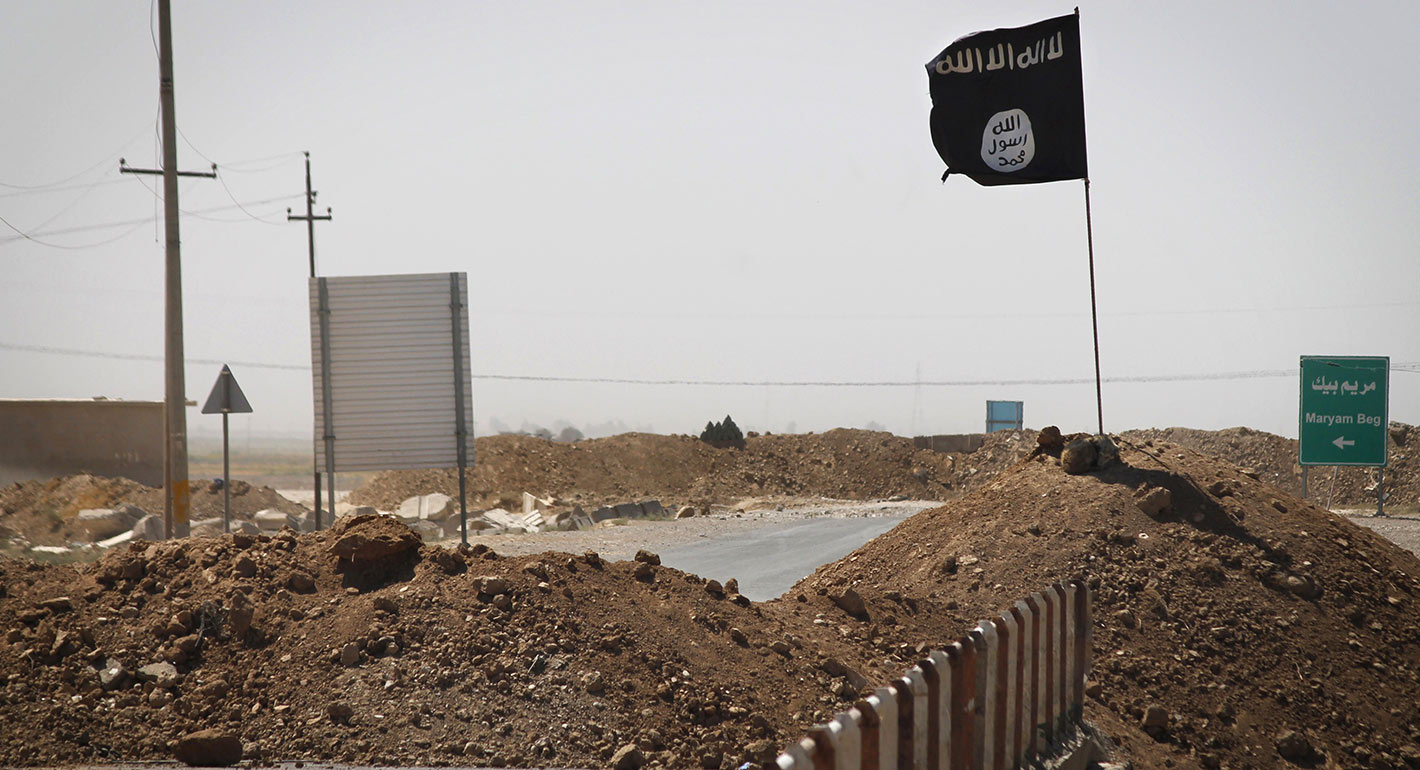
Source: Getty
Trump deserves full credit for approving the operation that led to Baghdadi’s demise. It’s a shame the information that led to the raid apparently did not come to him before the tragic decision to abruptly pull U.S. Special Forces from much of northeastern Syria.
Source: Washington Post
The killing of Abu Bakr al-Baghdadi is great news for the civilized world. The raid deep into northwestern Syria speaks once again to the incredible professionalism of the U.S. Special Forces and the intelligence analysts who help target their operations. The details of this operation speak as well to larger truths about Syria — and to what we have forfeited with the sudden U.S. retreat across its northeast this month.
Baghdadi is not an easily replaceable leader. He claimed unique religious credentials as a Muslim caliph, and his declaration of an Islamic State “caliphate” galvanized tens of thousands of foreign fighters to flood into Syria. His successor will keep the Islamic State alive in Iraq and Syria — the group maintains more than 10,000 fighters there — but after five years of sustained pressure it’s a weakened organization with no remaining territorial hold.
This would be the perfect time to consolidate success and act on what is likely a trove of intelligence pulled from the Baghdadi compound. Our analysts are surely poring over this information now, and it will lead to Islamic State sleeper cells and networks across Syria, Iraq and elsewhere. But our abrupt pullout from Syria will make it harder to act on this information. U.S. Special Forces have already left positions overwatching the Islamic State’s former strongholds, including Raqqa and Manbij, where major attacks into Europe were organized. These areas are now controlled by Russia and the Bashar al-Assad regime, foreclosing our ability to act on targetable information.
Turkey also has some explaining to do. Baghdadi was found not in his traditional areas of eastern Syria or western Iraq, but rather in northwestern Syria — just a few miles from Turkey’s border, and in Idlib province, which has been protected by a dozen Turkish military outposts since early 2018. It is telling that the U.S. military reportedly chose to launch this operation from hundreds of miles away in Iraq, as opposed to facilities in Turkey, a NATO ally, just across the border. The United States also reportedly did not notify Turkey of the raid except when our forces came close to its borders, the same notification we would have provided to adversaries such as Russia and Syria.
This reality remains a serious threat to U.S. national security; unfortunately, our ability to gain information in these areas will depend not on Turkey but on the other allies we have established in Syria, particularly the Kurdish-led Syrian Democratic Forces (SDF). It was not a surprise to hear President Trump confirm that credible information leading to Baghdadi came from the SDF. This has been the case for nearly all similar operations targeting ISIS leaders in Syria.
The United States helped develop the SDF — a force that grew to 60,000 fighters, including Arabs, Kurds and Christians — as the infantry to defeat the Islamic State caliphate because there were no available alternatives. The United States had sought to build a counter-Islamic State force with the support of Turkey, but two administrations found Turkish-backed forces too riddled with extremists to partner with. The SDF over time suffered 11,000 casualties, and with broad support from the local population, enabled U.S. forces to operate in Syria at small numbers, limited risk and low cost.
All that makes clear why the decision to evacuate established positions and permit Turkey to attack the SDF with extremist forces it supports was so strategically backward. It unraveled what had been a stable part of the country, injected new actors into the former Islamic State caliphate that harbor and enable Islamic State and al-Qaeda, and sent hundreds of thousands of mostly Syrian Kurds fleeing for their lives, many toward an already fragile Iraqi Kurdistan region.
The subsequent decision to reconstitute U.S. forces in a remote area with a small oil field under a legally dubious mission to protect it from a reconstituted Islamic State also makes little sense. The mission had been and should have remained to ensure Islamic State cannot reconstitute, not to protect an oil field once it does.
Baghdadi’s death at the end of a dark tunnel may diminish the global appeal of the Islamic State brand. The United States can work with its partners around the world to reinforce this success with law-enforcement raids against Islamic State cells in other countries. On the ground in Syria, however — where the Islamic State is plotting its future — it is now more difficult to consolidate this achievement. U.S. forces have already abandoned populated areas, and the SDF has been forced to turn to Russia as its new partner in cities where only one month ago the United States enjoyed local support, access and intelligence.
Trump deserves full credit for approving the operation that led to Baghdadi’s demise. It’s a shame the information that led to the raid apparently did not come to him before the tragic decision to abruptly pull U.S. Special Forces from much of northeastern Syria. Because everything we already know about the raid reinforces just how valuable, unique and hard-fought the small and sustainable American presence there had been.
This article was originally published in the Washington Post.
Former Nonresident Senior Fellow, Middle East Program
Brett McGurk was a nonresident senior fellow in the Middle East Program at the Carnegie Endowment for International Peace.
Carnegie does not take institutional positions on public policy issues; the views represented herein are those of the author(s) and do not necessarily reflect the views of Carnegie, its staff, or its trustees.
Closer EU-UK ties could help address urgent European concerns. But is the EU ready for rapprochement with the United Kingdom?

Rym Momtaz, ed.
The Russian state has opted for complete ideological control of the internet and is prepared to bear the associated costs.

Maria Kolomychenko
In the Philippines, Duterte-era discourse emphasizing sovereignty, anti-Western skepticism, and strongman diplomacy mirrors tenets of populist foreign policy around the world.
Aries A. Arugay
Unless Beirut lowers expectations, any setbacks will end up bolstering Hezbollah’s narrative.

Mohanad Hage Ali
Europe has been standing by while its Southern neighborhood is being redrawn by force. To establish a path to peace between Israel and Lebanon, it’s time for Europeans to get involved with hard power.
Rym Momtaz