

Commentary
- +8
Sophia Besch, Eric Ciaramella, Steve Feldstein, …
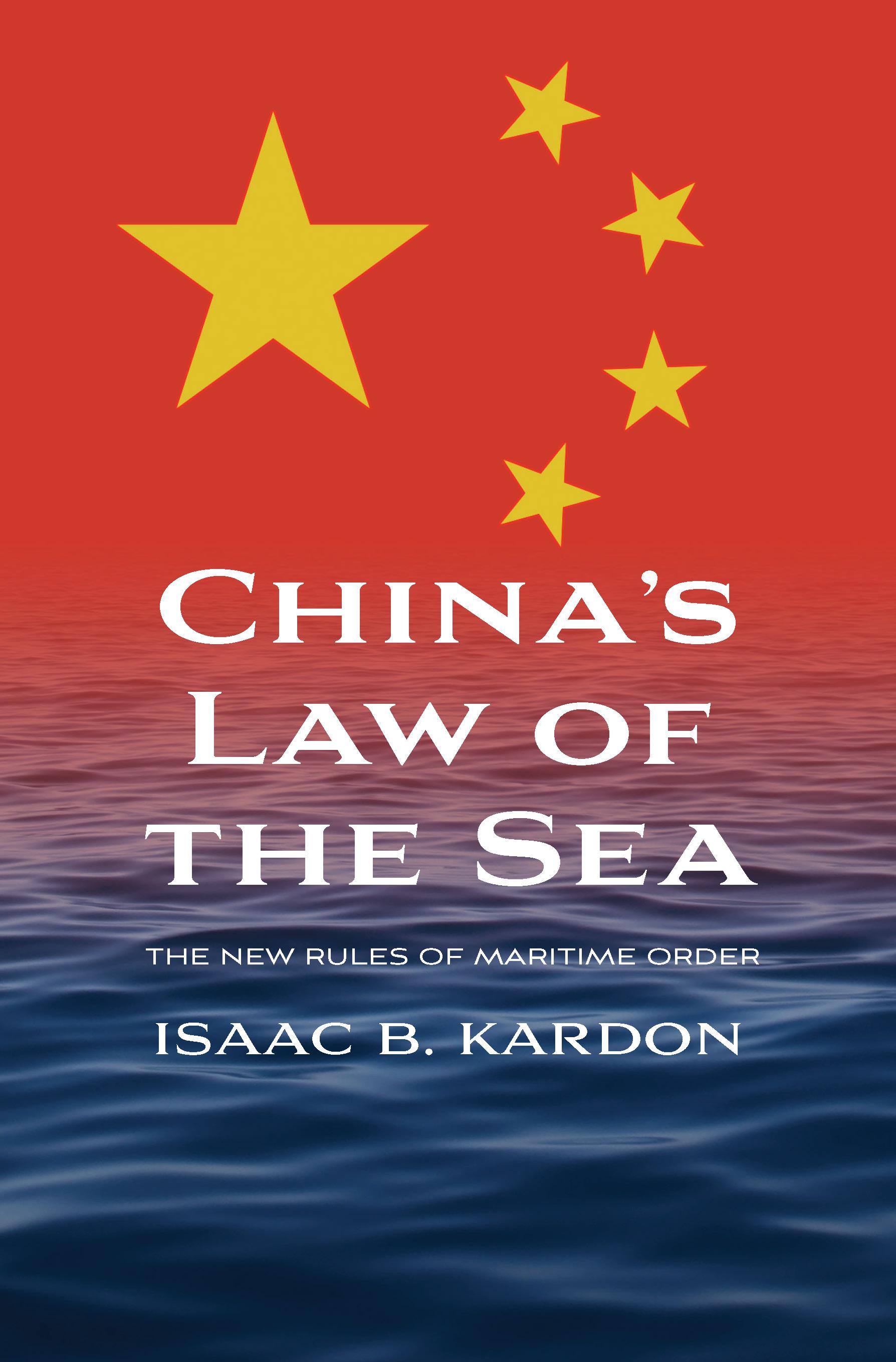
An in-depth examination of the law and geopolitics of China’s maritime disputes and their implications for the rules of the international law of the sea.
Source: Yale University Press
China’s Law of the Sea is the first comprehensive study of the law and geopolitics of China’s maritime disputes. It provides a rigorous empirical account of whether and how China is changing “the rules” of international order—specifically, the international law of the sea.
Conflicts over specific rules lie at the heart of the disputes, which are about much more than sovereignty over islands and rocks in the South and East China Seas. Instead, the main contests concern the strategic maritime space associated with those islands. To consolidate control over this vital maritime space, China’s leaders have begun to implement “China’s law of the sea”: building domestic legal institutions, bureaucratic organizations, and a naval and maritime law enforcement apparatus to establish China’s preferred maritime rules on the water and in the diplomatic arena.
Isaac B. Kardon examines China’s laws and policies to defend, exploit, study, administer, surveil, and patrol disputed waters. He also considers other claimants’ reactions to these Chinese practices, because other states must acquiesce for China’s preferences to become international rules. China’s maritime disputes offer unique insights into the nature and scope of China’s challenge to international order.
“Kardon seeks to correct a common misconception about China’s expansive maritime claims. Rather than simply flouting laws, the PRC has sought to minimize the weight of existing laws and shape new ones through its activities. The volume is a carefully argued and brilliant contribution to scholarship on the evolution of ‘global order.’”
—Margaret M. Pearson, University of Maryland, College Park
“Now that China has the world’s largest navy, is it really a threat to the rules-based maritime order? Those who share this concern will find China’s Law of the Sea an essential analysis of Beijing’s practice as well as theory.”
—Jerome A. Cohen, Council on Foreign Relations
“China’s maritime reach and activity will continue to be components of its ambition and power. Isaac Kardon’s perspectives and keen insight into China’s view of maritime order are unmatched. China’s Law of the Sea is an essential read for everyone who depends on the maritime domain and for all who ponder China’s approach to regional and global order.”
—Gary Roughead, Admiral, U.S. Navy (retired), and former U.S. Navy Chief of Naval Operations
“China’s contested maritime claims are a potential flashpoint for Asian conflict. Isaac Kardon systematically explains how China, in pursuing those claims, manipulates, disregards, or violates international legal norms in ways that could have global implications.”
—Thomas J. Christensen, Columbia University and former Deputy Assistant Secretary of State
“China’s rise as a maritime power is a defining element of its ascent. In this carefully researched and insightful book, Kardon documents China’s distinctive approach to the law of the sea that combines legal interpretations, bureaucratic mobilization, and maritime forces on the water. China’s Law of the Sea is a terrific contribution to the literature that illuminates China’s challenge to the international maritime order in East Asia and beyond.”
—M. Taylor Fravel, director of the Security Studies Program, Massachusetts Institute of Technology

Former Senior Fellow, Asia Program
Isaac B. Kardon was a senior fellow for China studies in the Asia Program.
Recent Work



Sophia Besch, Eric Ciaramella, Steve Feldstein, …


Sheena Chestnut Greitens, Isaac B. Kardon, Cameron Waltz
Carnegie does not take institutional positions on public policy issues; the views represented herein are those of the author(s) and do not necessarily reflect the views of Carnegie, its staff, or its trustees.

The Plaza Accord was not an externally imposed punishment of Japan but part of a broader restructuring that Japanese economists and policymakers themselves recognized was necessary. Its effects were undermined, however, when Tokyo responded to the resulting slowdown with policies that exacerbated investment, credit expansion, and the very imbalances the adjustment was intended to resolve.

Michael Pettis

The real test may come after the leaders leave the room.


Sheena Chestnut Greitens, Oriana Skylar Mastro, Yukon Huang, …

The Horn of Africa countries are among those facing a new security calculus.


Andrew Leber, Lesley Anne Warner

The European far right might fail to steer EU policy in the direction Russia wants, but they will create enough chaos inside Europe to benefit the Kremlin.

Dimitar Bechev

The new U.S.–Denmark–Greenland agreement will help Washington exert political, economic, and financial dominance under the guise of security. Yet, it acknowledged Copenhagen’s and Nuuk’s sovereignty on the island.

Marc Pierini