

Q&A
Alper Coşkun, Amr Hamzawy
{
  "authors": [
    "Alper Coşkun"
  ],
  "type": "commentary",
  "blog": "Emissary",
  "centerAffiliationAll": "dc",
  "centers": [
    "Carnegie Endowment for International Peace"
  ],
  "collections": [
    "Türkiye and the World",
    "Transatlantic Cooperation",
    "European Defense"
  ],
  "englishNewsletterAll": "ctw",
  "nonEnglishNewsletterAll": "",
  "primaryCenter": "Carnegie Endowment for International Peace",
  "programAffiliation": "EP",
  "programs": [
    "Europe"
  ],
  "projects": [],
  "regions": [
    "North America",
    "United States",
    "Middle East",
    "Türkiye"
  ],
  "topics": [
    "Security",
    "Foreign Policy",
    "NATO"
  ]
}
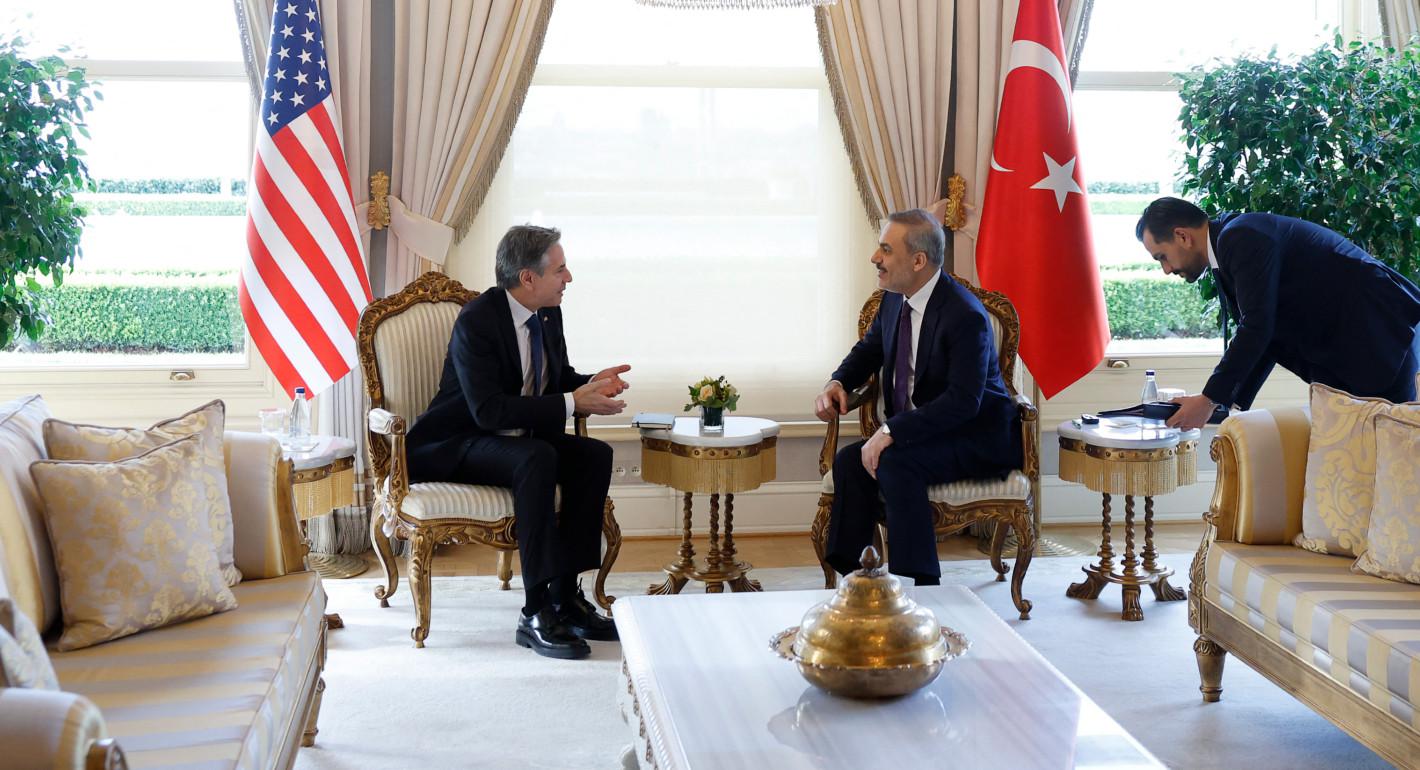
Source: Getty
The agreement, paired with Türkiye’s ratification of Sweden’s NATO accession, is a much-needed opportunity to put the countries’ distressed relationship back on track.
After ratifying Sweden’s NATO accession last month, Türkiye is on its way to receiving forty U.S.-made F-16 fighter jets and seventy-nine modernization kits in a transaction valued at $23 billion.
Getting across this finish line wasn’t easy. An underlying lack of trust stood out throughout negotiations, and Ankara and Washington repeatedly went back and forth before they agreed on a choreography that suited both sides. U.S. President Joe Biden’s administration was careful not to advocate any connection between its acquiescence to the sale of F-16s and Türkiye’s ratification of Sweden’s NATO bid. Nevertheless, the linkage developed behind the scenes—first pushed by the U.S. legislative branch, then embraced by the Turkish side.
The final sticking point was about who would take the decisive step first. The United States insisted on securing Türkiye’s ratification of Sweden’s accession to NATO before committing to the F-16 sale. Ultimately, Türkiye folded and agreed to go out on a limb by taking that irreversible step for the deal to proceed. It was the right thing to do, and in the end, this crude, transactional approach gave everyone what they wanted.
Irrespective of the arm wrestling in the background, the result is a breakthrough. It showed that Ankara and Washington can still muddle through to a mutually acceptable outcome. And it represents a rare convergence in an otherwise distressed era in bilateral relations.
Türkiye and the United States have historically had their ups and downs. But the past decade was particularly bad, and discord over Syria policy, Türkiye’s acquisition of the Russian S-400 air defense system, and U.S. sanctions on Türkiye captured the headlines. But on a deeper level, something more significant took place. An increasing misalignment set in as each side adapted to a changing geopolitical landscape in its own way, with less and less regard for the other.
The global outlook guiding Türkiye’s leadership rests on the assumption that the current international system is at a breaking point and the Western-led global order is imploding. This perspective is not unique and is prevalent in the Global South. But the difference is that Türkiye is a NATO ally embedded in Western institutions.
Like other emerging powers, Türkiye began hedging its bets by choosing the middle course through a flexible foreign policy rather than relying on its default convergence with the United States and its Western allies. This led to Türkiye being perceived as a disruptive ally rather than a like-minded one. Meanwhile, the country took a gradual authoritarian turn, significantly losing ground on its democratic credentials.
In the meantime, the United States also hedged by deepening its cooperation with alternative regional actors such as Greece and Romania. Concurrently, the Biden administration limited its high-level engagement with Türkiye, ostensibly in response to President Recep Tayyip Erdoğan’s behavior and policies.
After the breakthrough F-16 sale, the relationship could start to change for the better. The end of Türkiye’s obstruction to Sweden’s NATO membership is a win for the Biden administration and will relieve some of the political pressure to play hardball with Ankara. On the other hand, the deal is a major investment for Türkiye and a lucrative opportunity for the United States. The transaction also carries the potential to rekindle bilateral defense cooperation, something that has traditionally acted as a catalyst in the partnership and buffered it against shocks.
No matter how far they drift apart, the two countries are long-standing allies and have an overriding interest in preventing a complete rupture in their relationship. U.S. Acting Deputy Secretary of State Victoria Nuland confirmed as much during a visit to Ankara, where she described the deal as a way to “reinvigorate the broader spectrum of [the] relationship.” She spoke of ongoing efforts to have Türkiye produce 155 millimeter caliber artillery for Ukraine and underlined the United States’ readiness to welcome Türkiye back into the F-35 program it had been expelled from after buying the Russian S-400 system, should that problem be eliminated.
Restoring Turkish-U.S. relations to a steadier and better path makes sense for both sides. The two countries should direct their efforts to build on the current momentum while acknowledging at the outset that this project will not be easy—particularly for two reasons.
First, there will be spoilers. Amid this upbeat moment, news of President Vladimir Putin’s prospective visit to Türkiye emerged from Russian sources, reminding onlookers of the different forces at play and Ankara’s insoluble appetite to balance its foreign policy and sustain steady relations with Russia. (The visit has reportedly been postponed.)
Second, any effort that doesn’t involve reimagining the partnership under a more flexible and forward-looking mindset will fall short. This relationship will remain crisis-ridden for the foreseeable future, but dysfunctionality does not have to be the norm. Türkiye and the United States need to embrace a lower level of ambition for their partnership that involves less harmony and occasional bumps but a steady and mutually beneficial trajectory.
Even as the rift between Türkiye and the United States has deepened in the past decade, various geopolitical disruptions acted as a counterforce, reminding both sides of the added value they generate from working in harmony. The Biden administration’s abrupt decision to withdraw from Afghanistan is one such example, where Türkiye and the United States quickly saw merit in cooperating to boost security at the Kabul airport. The war in Ukraine is another example that placed a premium on their working together in different areas ranging from the grain deal to Black Sea security. While it may currently be hard to imagine, the same could happen down the road in the context of the war in Gaza. This list can be extended.
The Turkish-American partnership will continue to be affected by the pendulum effect of geopolitical developments. The evolution of the international landscape toward multipolarity makes this certain. But geopolitics cuts both ways, and Türkiye and the United States can decide to surf the waves that take them in a common direction rather than the tides that pull them apart. They can do so by reimagining their partnership, charting a more flexible path, and boosting resilience through mutual commitment. They now have a new foundation to rebuild on.

Senior Fellow, Europe Program
Alper Coşkun is a senior fellow in the Europe Program and leads the Türkiye and the World Project at the Carnegie Endowment for International Peace in Washington, DC.
Recent Work

Alper Coşkun, Amr Hamzawy
Alper Coşkun, Fatih Ceylan, Tacan İldem, …
Carnegie does not take institutional positions on public policy issues; the views represented herein are those of the author(s) and do not necessarily reflect the views of Carnegie, its staff, or its trustees.

It would provide a golden opportunity to reconsider what success looks like.

Michael Mazarr

Rubio’s recent visit brought welcome attention, but more capital requires governance changes that may be a hard sell for regional governments.

Jennifer B. Murtazashvili
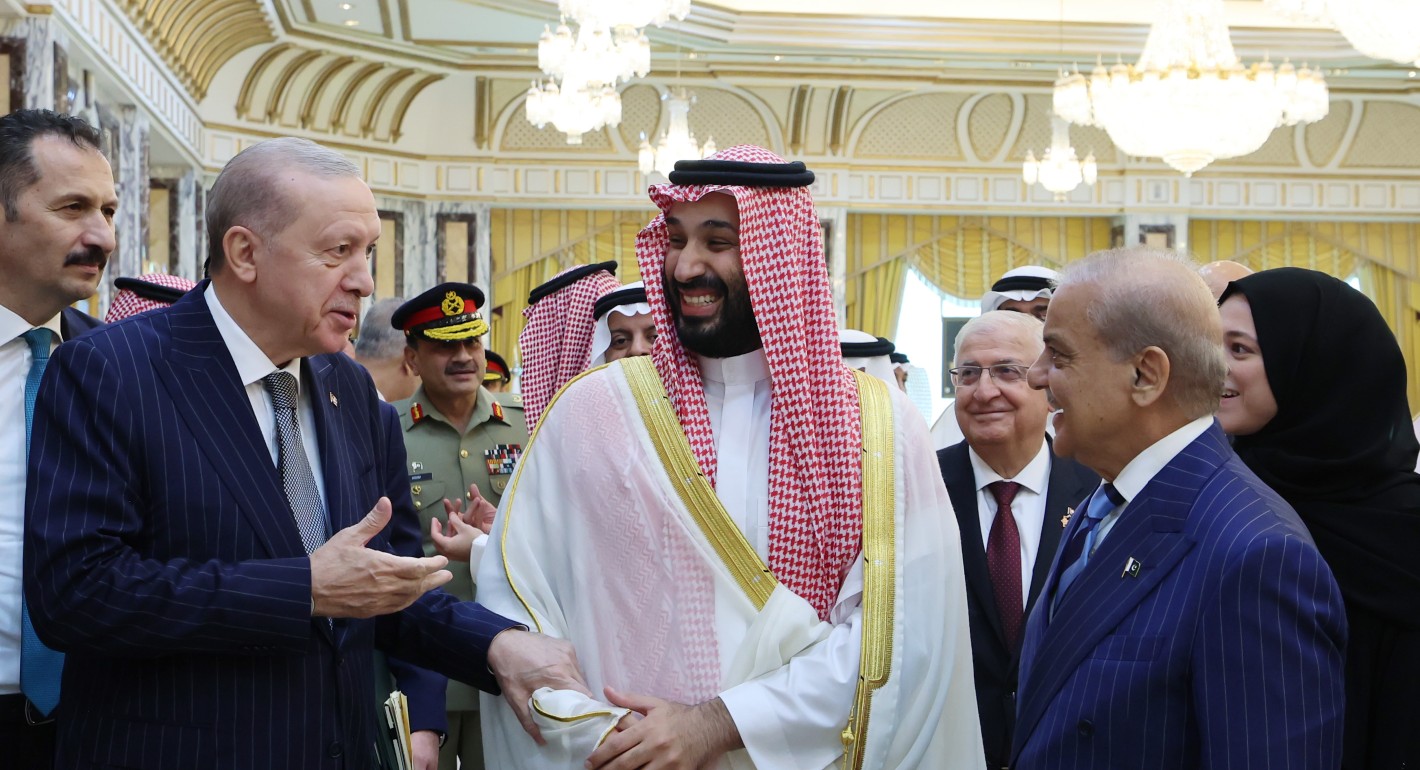
Why Pakistan, Saudi Arabia, and Turkey are joining forces on regional security.
Alper Coşkun, Amr Hamzawy

Despite public disputes over trade and immigration, the strategic partnership’s foundations remain sturdy.

Sameer Lalwani
It signals a new era of tech diffusion and warfare.

Steve Feldstein