

Commentary
When democracies and autocracies are seen as interchangeable targets, the language of democracy becomes hollow, and the incentives for democratic governance erode.
Sarah Yerkes, Amr Hamzawy
{
  "authors": [
    "C. Raja Mohan"
  ],
  "type": "legacyinthemedia",
  "centerAffiliationAll": "",
  "centers": [
    "Carnegie Endowment for International Peace",
    "Carnegie India",
    "Malcolm H. Kerr Carnegie Middle East Center"
  ],
  "collections": [],
  "englishNewsletterAll": "",
  "nonEnglishNewsletterAll": "",
  "primaryCenter": "Carnegie India",
  "programAffiliation": "",
  "programs": [
    "South Asia"
  ],
  "projects": [],
  "regions": [
    "Asia",
    "South Asia",
    "India",
    "Gulf",
    "Middle East",
    "Yemen",
    "East Asia",
    "China"
  ],
  "topics": [
    "Foreign Policy",
    "Security"
  ]
}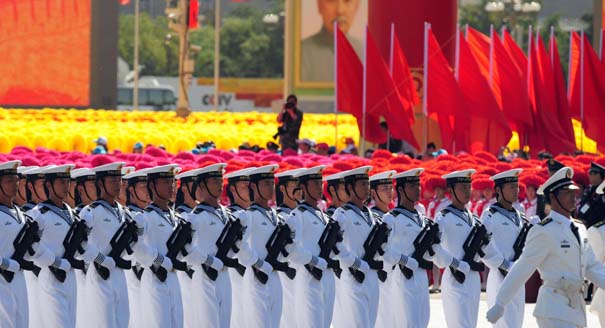
Both China and India have significant populations living beyond their national borders. They have found that extricating compatriots from zones of conflict or natural disasters has become a recurring challenge.
Source: Indian Express
While India continues to evacuate its citizens from Yemen, China was quick to complete its operation last week. China had barely 600 people in Yemen to rescue. India had nearly 4,000 citizens in Yemen when the evacuation began last week amid the escalation of the conflict.
For both China and India, which have significant populations living beyond borders, extricating compatriots from zones of conflict or natural disasters has become a recurring challenge. Between 2006 and 2010, Beijing rescued nearly 6,000 citizens from troubled regions. In 2011 alone, China had to evacuate 48,000 citizens, most of them from Libya.
India had pulled out nearly 17,000 people from Libya in 2011. Since the NDA government came to power last summer, New Delhi has had to deal with similar situations in Iraq, Ukraine, and now Yemen. Both Beijing and Delhi are under political pressure from below to act decisively and spare no expense in bringing their people back home. Beijing and Delhi have regularly tasked their armed forces with evacuation operations in different parts of the world.The storylines in China and India begin to diverge somewhat from here.
In Beijing, the political leadership has begun to affirm that China’s national interests go beyond the borders and securing them is a top priority. Prime Minister Li Keqiang summed up the new dynamic last year: “As China becomes more open, the number of Chinese companies and citizens overseas is increasing.” Safeguarding the “legitimate rights and interests of Chinese companies and citizens,” Li added, is a major political priority for the party and government.
China’s defence establishment is translating this political commitment into appropriate policies and institutional capabilities. In Delhi, the political leaders turn to the armed forces as the instrument of first resort in coping with crises involving Indian citizens abroad. But there has been no matching effort to frame the issue in strategic terms.
In the biennial defence white paper issued by China in 2013, Beijing introduced a new section that reviewed China’s interests beyond borders. “With the gradual integration of China’s economy into the world economic system,” it declared, “overseas interests have become an integral component of China’s national interests.”
“Security issues are increasingly prominent, involving overseas energy and resources, strategic sea lines of communication (SLOCs), and Chinese nationals and legal persons overseas,” the white paper said. Defending these interests, according to the white paper, is one of the new historic missions of the People’s Liberation Army.
In India, Prime Ministers Atal Bihari Vajpayee and Manmohan Singh often declared that India’s security perimeter runs from the Suez to the South China Sea. But the civilian leadership in the ministry of defence has been loath to make the necessary institutional changes or provide the political guidance and necessary resources to the armed forces.
As the demand for deploying the PLA beyond the nation’s borders grows, China’s strategic discourse has begun to evolve rapidly in the last few years. China’s defence debates are no longer constrained by old political inhibitions. China has long had a small marine contingent that was focused on military crises involving Taiwan. Beijing today sees a larger role for its marine brigades in its military strategy. While the PLA marines will have a critical role in asserting China’s expansive territorial claims in the South and East China Seas, Beijing has begun to occasionally deploy some units in the Indian Ocean.
China’s defence community is also debating the merits and problems of acquiring foreign military bases. While the need for timely military responses makes bases attractive, the political complications they generate can be rather difficult to deal with. China is also reviewing its traditional doctrine of non-intervention in the internal affairs of other countries. Beijing is now taking a greater interest in resolving conflicts in regions of vital interest.
China has steadily expanded its participation in international peacekeeping operations. Since 2008, the Chinese navy has been deployed in the Gulf of Aden for counter-piracy operations. Humanitarian assistance and disaster relief have become major priorities for the PLA.
Beijing’s expansive defence diplomacy presents China as a good international citizen and a responsible power. It helps ease some of the concerns about China’s growing military power. Above all, the frequent deployment of the armed forces beyond borders generates valuable experience for the PLA in developing its expeditionary capabilities and familiarity with distant theatres.
Although India has had a longer and more impressive record of deploying its military for securing international public goods, there has been little appreciation of its strategic significance within the civilian bureaucracy and the political leadership of the defence ministry. Prime Minister Narendra Modi, who articulated a more ambitious policy towards the Indian Ocean during his “Sagar Yatra” last month, will hopefully find ways to bring India’s military and strategic policies in line with its growing interests beyond borders.
This article was originally published in the Indian Express.
Carnegie does not take institutional positions on public policy issues; the views represented herein are those of the author(s) and do not necessarily reflect the views of Carnegie, its staff, or its trustees.
When democracies and autocracies are seen as interchangeable targets, the language of democracy becomes hollow, and the incentives for democratic governance erode.

Sarah Yerkes, Amr Hamzawy
Unexpectedly, Trump’s America appears to have replaced Putin’s Russia’s as the world’s biggest disruptor.

Alexander Baunov
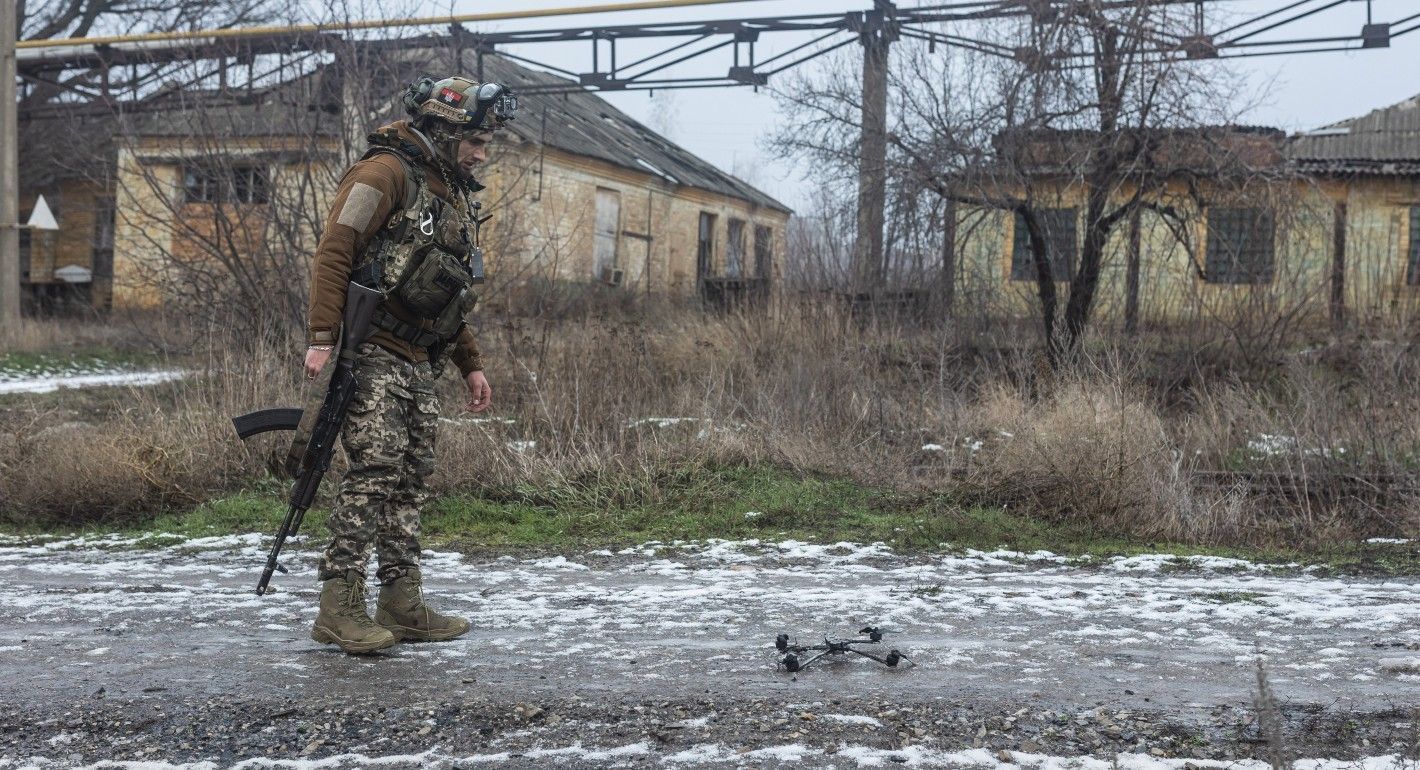
From Sudan to Ukraine, UAVs have upended warfighting tactics and become one of the most destructive weapons of conflict.


Jon Bateman, Steve Feldstein
And how they can respond.

Sophia Besch, Steve Feldstein, Stewart Patrick, …
They cannot return to the comforts of asymmetric reliance, dressed up as partnership.
Sophia Besch