

Paper
Constantino Xavier
{
  "authors": [
    "Constantino Xavier"
  ],
  "type": "legacyinthemedia",
  "centerAffiliationAll": "dc",
  "centers": [
    "Carnegie Endowment for International Peace",
    "Carnegie India"
  ],
  "collections": [],
  "englishNewsletterAll": "ctw",
  "nonEnglishNewsletterAll": "",
  "primaryCenter": "Carnegie India",
  "programAffiliation": "SAP",
  "programs": [
    "South Asia"
  ],
  "projects": [],
  "regions": [
    "Asia",
    "South Asia",
    "India"
  ],
  "topics": [
    "Foreign Policy",
    "Security"
  ]
}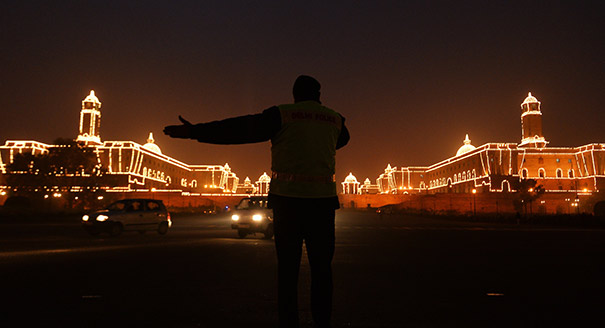
Source: Getty
Beyond just military power and humanitarian relief, India’s capacity to serve as a first responder to crises in the region also requires the strategic will and skill to help solve neighboring countries’ political conflicts.
Source: Hindustan Times
Despite the questionable election that brought President Abdulla Yameen to power in the Maldives in 2013, India has remained loyal to him in both good times and bad. But with the country witnessing another, even deeper, political crisis, New Delhi must now play hardball if it wants to be part of the solution that returns the Maldives to democracy, stability and its sphere of influence.
Delhi’s patience has been running out for some time now. In his quest to fend off Western pressure, Yameen has been tilting towards China through a series of high-level visits, a free trade agreement, and tighter security cooperation. Unlike Nepal, Male also opted to support the Belt and Road Initiative without first consulting India.
By leaving the Commonwealth in 2016, Male further reinforced the view that its international isolation favours China at the expense of India. Finally, South Block is also running out of political space to keep engaging the Maldives. It is the only one of all nine neighbouring countries that Prime Minister Narendra Modi has not visited yet. The current crisis could well be the last straw for New Delhi. It could put Maldives back on its democratic path by restoring its parliamentary, judicial and media freedoms, and also ensure a government that will heed first and foremost to India’s special strategic and economic interests.
To achieve this ideal scenario, Delhi should implement sequential pressure that deploys mediation, sets clear targets contingent on red lines, and balances inducements with punitive measures. This engagement must ensure that the Maldivian president commits to a democratic reset, including the immediate release or return of all political detainees, and free elections later this year.
New Delhi can explore a range of tools to make President Yameen agree and deliver on this roadmap. It can escalate the tone of its statements, including at the United Nations, and coordinate with like-minded countries to reduce Male’s diplomatic space. It can implement targeted sanctions against members of the ruling coalition. New Delhi can also facilitate the emergence of a more organised opposition, or activate assets to support popular protests and disrupt the government’s functioning. In the most extreme scenario, India could execute a military intervention to stabilise the Maldives and ensure internal peace and order, as it did in 1988.
Unlike a few years ago, conditions are now ripe to execute this strategy. On the one hand, while Male may hope Beijing will help it withstand Indian pressure, China is bound to ditch President Yameen as the increasingly uncertain benefits of supporting him begin to outweigh the rising costs of keeping him in power. On the other hand, because the United States and Europe are now less inclined to engage in liberal interventionism, they are willing to let India take the lead and give teeth to their condemnatory statements.
Beyond just military power and humanitarian relief, India’s capacity to serve as a first responder to crises in the region also requires the strategic will and skill to help solve neighbouring countries’ political conflicts. After it failed to take such an initiative during the Rohingya refugee crisis, the Maldives one poses another test for India to act like a leading power with a mix of pressure and incentives.
This article was originally published in the Hindustan Times.
Former Fellow, Carnegie India
Constantino Xavier was a fellow at Carnegie India, based in New Delhi. His research focus is on India’s foreign policy, with emphasis on relations with its neighboring countries and South Asian regional security.
Recent Work
Constantino Xavier
Constantino Xavier
Carnegie does not take institutional positions on public policy issues; the views represented herein are those of the author(s) and do not necessarily reflect the views of Carnegie, its staff, or its trustees.
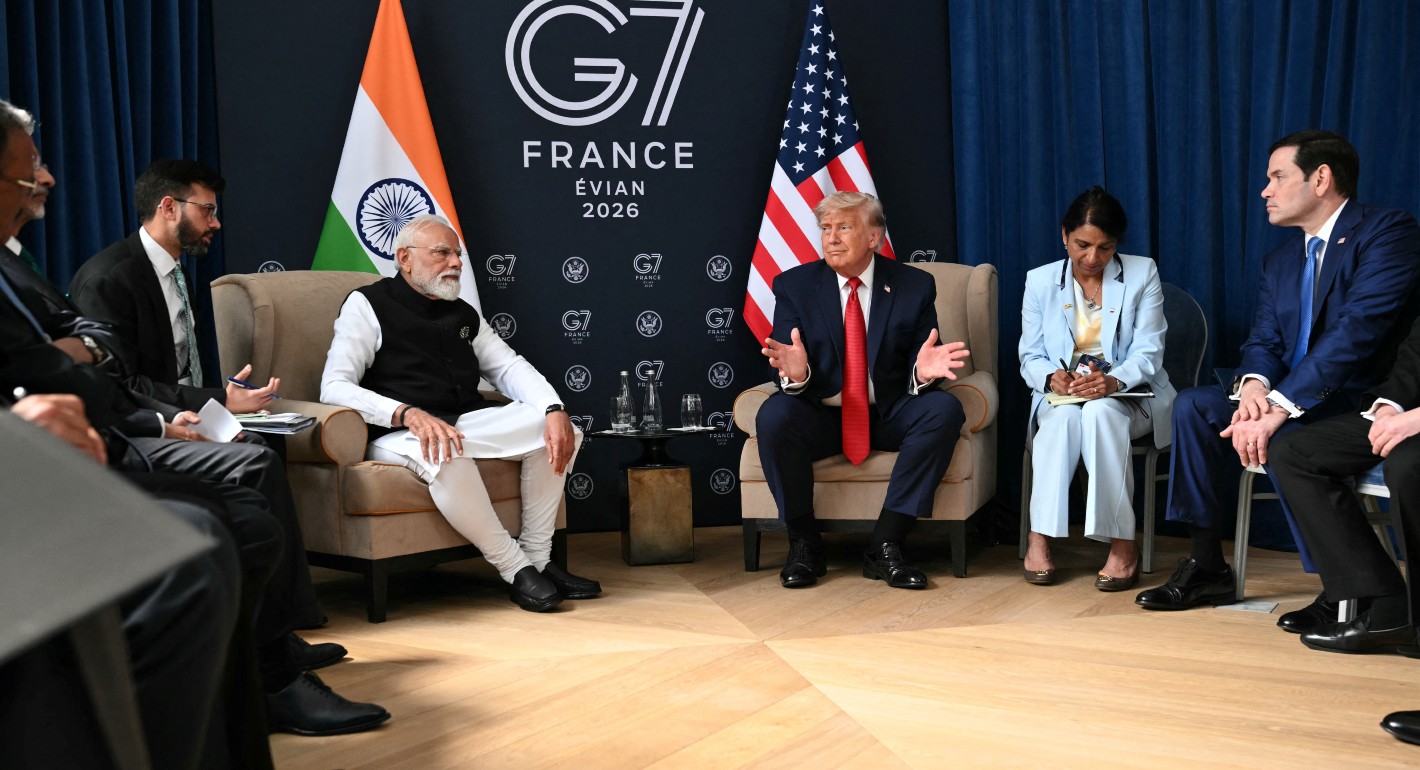
Despite public disputes over trade and immigration, the strategic partnership’s foundations remain sturdy.
Sameer Lalwani
It signals a new era of tech diffusion and warfare.

Steve Feldstein

With its public finances in shambles, the far right polling at 35 percent ahead of the 2027 presidential election, and a growing protest movement, is France’s crisis a threat to the EU’s geopolitical awakening?

Rym Momtaz, ed.

Russia’s AI-driven propaganda campaigns operate in a fragmented, chaotic, and often illogical manner. That’s not necessarily a problem for the Kremlin, though: It’s much easier to mimic genuine public debate that way.

Ilya Klishin

Ahead of a tough winter for Ukraine, Donald Trump’s swing back toward Russia bodes ill. But instead of panicking, Kyiv’s European allies are focusing on action.
Rym Momtaz