

Commentary
It should address the shortcomings of previous crisis communication efforts and adapt to the demands of frontier AI.
Lucy Luo
{
  "authors": [
    "Jessica Tuchman Mathews",
    "Charles G. Boyd"
  ],
  "type": "legacyinthemedia",
  "centerAffiliationAll": "",
  "centers": [
    "Carnegie Endowment for International Peace"
  ],
  "collections": [],
  "englishNewsletterAll": "",
  "nonEnglishNewsletterAll": "",
  "primaryCenter": "Carnegie Endowment for International Peace",
  "programAffiliation": "",
  "programs": [],
  "projects": [],
  "regions": [
    "United States",
    "Iraq"
  ],
  "topics": [
    "Security"
  ]
}
REQUIRED IMAGE
Source: Carnegie
By Jessica T. Mathews and Charles G. Boyd
Originally published in the New York Times, September 19, 2002
If the United Nations Security Council rushes to send inspectors back into Iraq on Baghdad's promise of cooperation and under the old rules, it will be playing a chump's game, one Saddam Hussein has won countless times. Once in, the inspectors will face delay, obstruction, bugging and a succession of manufactured crises. These will prompt familiar fights among the major powers over whether a particular Iraqi act constitutes a major violation. Soon the United States will declare the whole exercise a failure and invade Iraq.
That is an outcome worth avoiding. For the United States, the costs of such a war include the death of soldiers, economic losses caused by the effect of soaring oil prices on a fragile stock market, the need to post tens of thousands of troops in Iraq for many years, lingering resentment among allies whose cooperation we need and the near certainty of creating legions of new terrorists who hate America. For the United Nations, the result would be a terrible defeat, an admission of weakness and of its inability to impose its writ on a villain. For the world as a whole, the costs will include the deaths of innocent Iraqis, increased repression in Arab states coping with domestic political anger and possibly chaos in the region.
That is the short list. The worst-case outcomes include an attack with biological weapons on Israel and on American troops at their weakest moment — as they assemble in the region — by a man with nothing to lose. What would be the likely response by both countries, and with what long-term consequence?
There is a credible alternative to these scenarios that is worth trying. It is a new system of coercive inspections to replace the game of cat and mouse that Mr. Hussein has perfected. The Security Council would create a powerful, American-led multinational military force, the inspections implementation force, that would enable the inspection teams to carry out "comply or else" inspections. If Iraq refused to accept, or obstructed the inspections, regime change (preferably under a United Nations mandate) would be back on the table.
This force would be strong enough to ensure that inspectors see what they want, when they want, including sites previously designated off limits, with full security for the inspectors. A key is establishment of both "no flight" and "no drive" zones in the region where an inspection is being conducted. Air and armored cavalry forces would provide the ground strength. Intelligence is crucial. The force would be provided with a complete range of reconnaissance, surveillance, listening, encryption and photo-interpretation capabilities. True surprise inspections and prompt entry would be the norm, not the lucky exception.
Overall control would be vested in the civilian chairman of the inspection teams who would determine, without interference from the Security Council, what is to be inspected. The force commander would decide the size and composition of the detachment to accompany any particular inspection and direct its employment.
We have worked with others — including Rolf Ekeus, who led inspections in Iraq from 1991 to 1997 — to develop the coercive-inspections concept, covering its political, technical and military aspects. This would not be easy as a military mission, but it would be less difficult than a war and more likely to improve our security. While states in the region would not welcome such a military presence, it would be preferable to a war.
The necessary preconditions are probably the most difficult part. The United States would have to focus unequivocally on the threat Iraq poses — its weapons of mass destruction — rather than on Saddam Hussein's many other transgressions. It would have to make an explicit, unambiguous pledge to forswear a war for regime change for as long as inspections are working. ("Inspections" would include a discovery and disarmament phase followed by open-ended monitoring and verification.) Otherwise, the inspection force would be nothing more than a Trojan horse for an invasion force, something Iraq would have to refuse.
For their part, other countries would have to refuse Iraq's seductive offer. They would have to act on what they all know: that Saddam Hussein will try to obstruct inspections, and that every point of potential disagreement they leave open is an opportunity Baghdad will seize. Instead, they and the United States have to enact a plan that says the time for negotiating with Baghdad is over and, using a credible threat of force, under multilateral auspices, at last insist on Iraq's compliance with a goal they can universally support.
Iraq's weapons of mass destruction pose a pressing threat but not an immediate one. There is time to do this right and no reason to choose war as a first resort. If the goal is Iraq's disarmament, there is a peaceful means to achieve it.
Jessica T. Mathews is president of the Carnegie Endowment for International Peace. Charles G. Boyd, a former general in the Air Force, is a fellow at the Council on Foreign Relations and president of Business Executives for National Security.
*The original article that appeared in the New York Times on September 19, 2002 contained an editing error. The corrected text appears above.

Distinguished Fellow
Mathews is a distinguished fellow at the Carnegie Endowment for International Peace. She served as Carnegie’s president for 18 years.
Charles G. Boyd
Carnegie does not take institutional positions on public policy issues; the views represented herein are those of the author(s) and do not necessarily reflect the views of Carnegie, its staff, or its trustees.

It should address the shortcomings of previous crisis communication efforts and adapt to the demands of frontier AI.

Lucy Luo
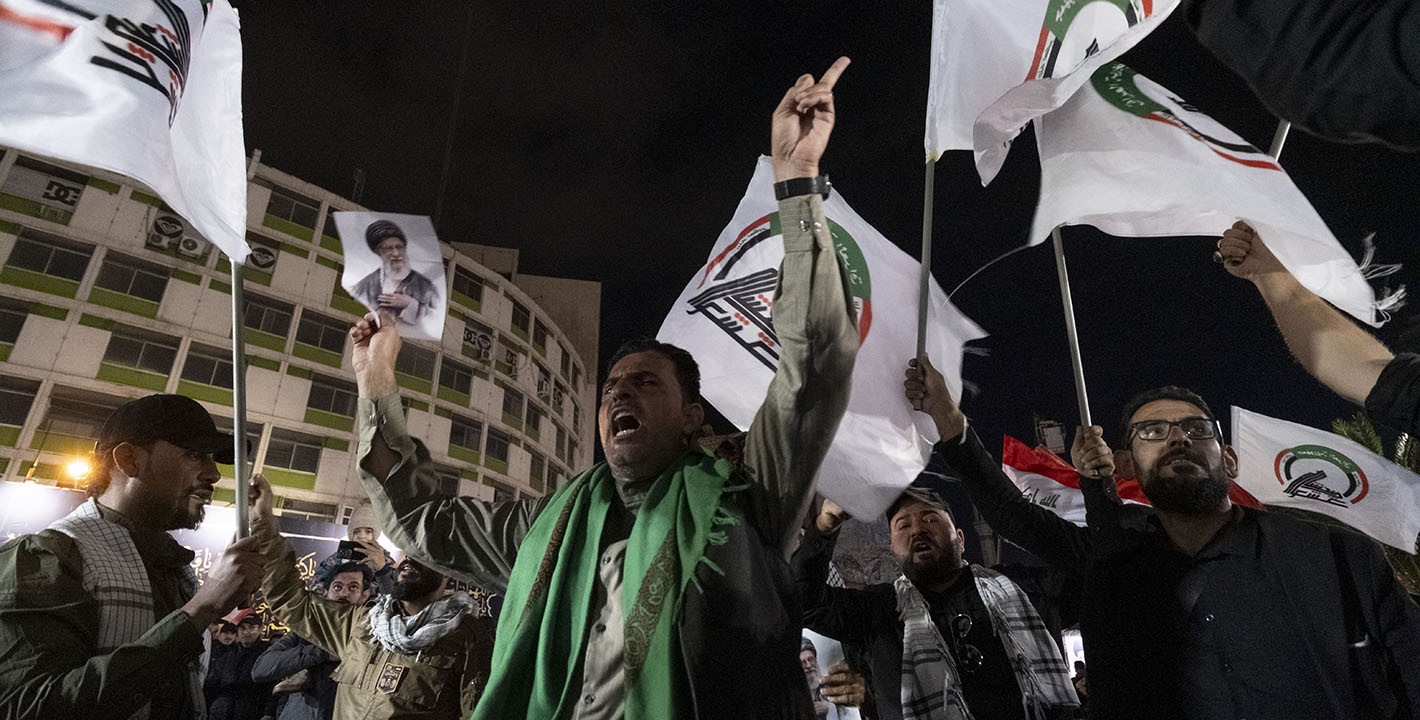
The Zaidi government’s objective to collect weapons is constrained by regional conflict, but it can take certain measures at home.
Ali Al-Mawlawi
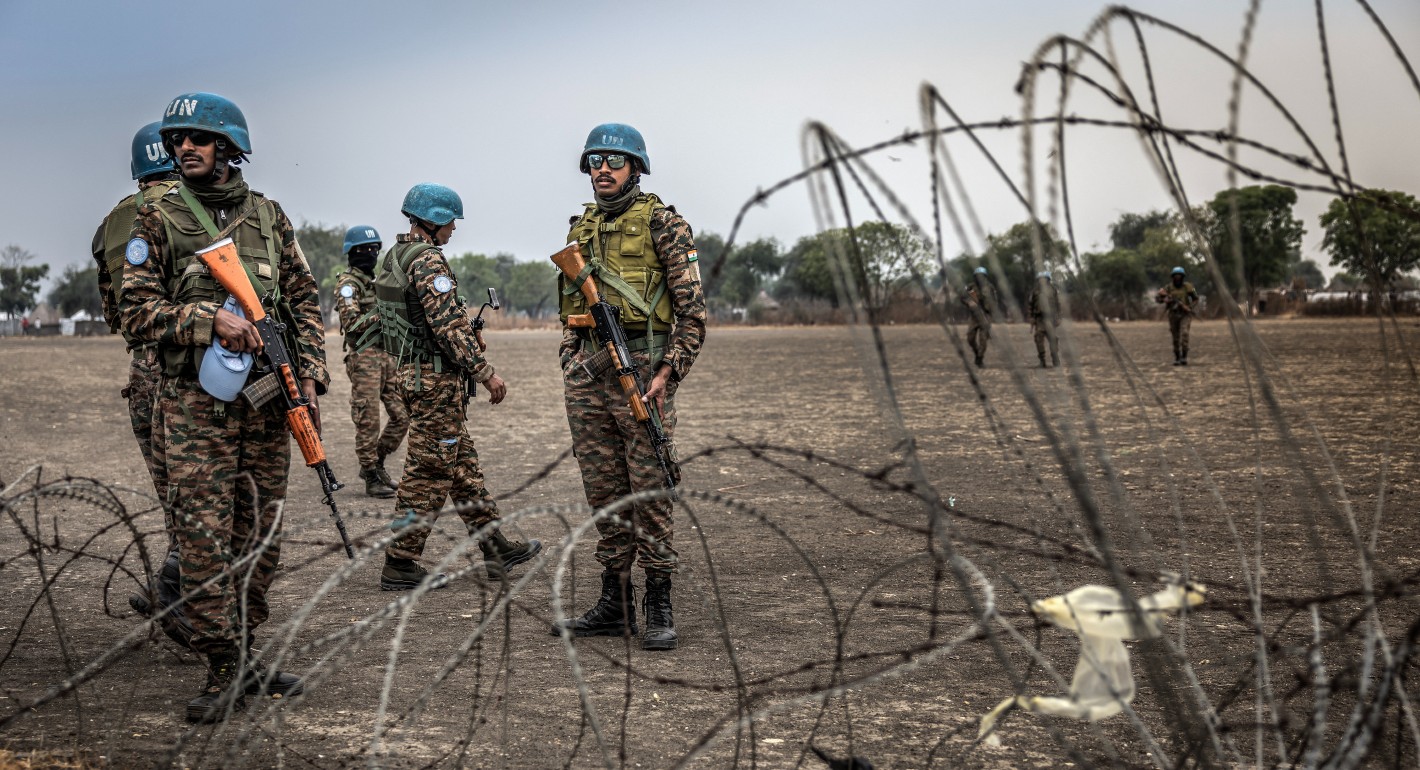
Washington’s decision to support some UN functions while letting others wither is pulling the organization apart at the seams.

Stewart Patrick, Theodore Zaritsky

While there are notable demographic, economic, and geographic divides over AI, there is also substantial alignment between Republicans and Democrats.


Ian Klaus, Mark Baldassare, Rachel George, …

Are Germany’s economic, industrial, and political struggles becoming a liability for the EU’s ability to rise to the geopolitical moment?

Rym Momtaz, ed.