

Other
Anders Aslund
{
  "authors": [
    "Anders Aslund"
  ],
  "type": "legacyinthemedia",
  "centerAffiliationAll": "dc",
  "centers": [
    "Carnegie Endowment for International Peace"
  ],
  "collections": [],
  "englishNewsletterAll": "ctw",
  "nonEnglishNewsletterAll": "",
  "primaryCenter": "Carnegie Endowment for International Peace",
  "programAffiliation": "russia",
  "programs": [
    "Russia and Eurasia"
  ],
  "projects": [],
  "regions": [
    "Caucasus",
    "Russia",
    "Ukraine"
  ],
  "topics": [
    "Political Reform",
    "Democracy",
    "Foreign Policy"
  ]
}
REQUIRED IMAGE
Source: The Moskow Times
It now seems that the Ukrainian Supreme Court will soon declare the country's presidential runoff election invalid. Parliament will then appoint a new Central Elections Commission and set a date for a rerun of the second-round vote, probably Dec. 19.
Looking back at the election campaign, the most amazing thing is how predictable the outcome has been. When I visited Ukraine in late July, people by and large said that three things would happen: Viktor Yushchenko would win the real presidential election; Viktor Yanukovych would steal the election; then protesters would take to the streets and play out the Georgia scenario. This is exactly what has happened. Both sides were prepared for the present drama.
The falsification of the election result was as crude as it was widespread, as the Central Elections Commission makes plain. Officially, Yanukovych won by 2.85 percentage points in the second round, but this was accomplished by blatant ballot stuffing. Turnout in the second round increased by 5.4 percent, but a minimal increase of 0.6 percent was recorded in the 17 regions where Yushchenko prevailed. A whopping 9.1 percent surge was recorded in the 10 regions carried by Yanukovych. In the Donetsk region, turnout was up 18.6 percent to a remarkable 96.7 percent, with 96.2 percent of voters allegedly supporting Yanukovych.
Assuming an equal overall increase in the turnout of 0.6 percent in the second round, the Yanukovych people added 1.7 million votes -- 5.5 percent of the votes cast. All of these were clearly cast for Yanukovych. Discounting them, Yushchenko emerges as the winner by 3 percent of votes cast. Both rounds were marred by other forms of cheating, disinformation and repression by the ruling side. In a free and fair election, Yushchenko would have won by a huge majority.
Today it seems that Yushchenko has won this duel. For starters, he is still alive. His supporters have filled the streets. Perhaps the most important factor is that the revolutionary fervor has caught on. Ukrainians have disproved all the negative stereotypes: They have shown themselves to be well-organized rather than ambivalent and disorderly; sober rather than drunk; intellectual rather than indifferent.
I heard similar reflections in Poland after Pope John Paul II's first visit in the summer of 1979 and later during the Solidarity period. As someone said, Ukraine received independence in 1991; now it has earned it. Demonstrators in Kiev are chanting "east and west together," rather than antagonizing those from the country's eastern regions. Such revolutionary fervor is very difficult to stop, especially when it is so peaceful.
Yushchenko's main challenge was to avoid being branded a Ukrainian nationalist. With his victory in central Ukraine, especially Kiev, and three eastern regions, notably Sumy and Poltava, he has proven his popularity in Russian-speaking regions. The issue is no longer language or ethnicity, but democracy. And it is difficult to stand up against democracy in an election that is even mildly democratic.
Once a popular majority has been established, the next task is to reach the centers of power. The parliament has already declared that the elections were not valid and dismissed the Central Elections Commission.
The other major actors in this drama are the police, the courts and the media. Press reports suggest that a large portion of regular police and special forces units is backing Yushchenko. It is particularly reassuring to see that the opportunistic former defense minister, Evhen Marchuk, who was dismissed in late September, has sided with Yushchenko. The Supreme Court has also decided to do its job, and this will work to Yushchenko's benefit. Television journalists got fed up with toeing the party line and many are now standing up for the opposition candidate. While the situation is not altogether clear, it does seem promising.
Ukraine's eastern regions remain the key source of concern, especially Donetsk and Luhansk. These are the only truly dictatorial regions in Ukraine, however, so it is difficult to take the demonstrations there seriously. The people will stand up to their oppressors even there. Seceding and joining authoritarian Russia makes little sense, even if per capita GDP is substantially higher in Russia.
The reactions of Western leaders have positively surprised me, especially U.S. Secretary of State Colin Powell's strongly worded statement last week in which he announced that the United States did not accept the election results as legitimate. The United States and Europe -- represented by the OSCE, the Council of Europe and the European Union -- have come together on this critical foreign policy issue.
President Vladimir Putin is left with egg on his face, as Stephen Sestanovich put it on National Public Radio. Putin has managed to unite the United States and the EU against him. Kremlin-connected spin doctors Gleb Pavlovsky and Sergei Markov were arguably Yanukovych's main propagandists during the campaign. They should now take responsibility for their actions rather than blaming others. The Ukrainian election has dealt Putin's authority the biggest blow since Beslan.
The obvious next step is to repeat the second-round vote as soon as possible -- a decision that would presumably be made by the Supreme Court. A new Central Elections Commission, as well as regional and local commissions, must be appointed. Some of the worst election practices, such as ambulatory ballot boxes and absentee ballots, should be outlawed or restricted. Obviously, the foreign observers who played such an important role in the first two ballots will remain vital to the process.
There is a danger that the process will drag on so long that the people will become tired or the sheer costs of disruption will rise. Another worry is that the good-hearted Yushchenko could be cheated at the negotiating table. I would feel much safer if he would send in his ally Yulia Tymoshenko or his campaign manager, Oleksandr Zinchenko, if the talks turn nasty. At this stage, negotiations should be kept to a minimum. Yushchenko should offer concessions rather than negotiate over them.
It will be vital for the new government to begin a program of reform very soon. This is a wonderful opportunity to undertake political reforms in order to reduce presidential power and produce early parliamentary elections according to a proportional system. Then Ukraine could move from its unaccountable presidential system to a normal parliamentary system. The party system would be strengthened, and the oligarchs would acquiesce without much of a struggle. The powers of regions and municipalities should also be strengthened, but only on the basis of democratic elections.
It is also important to get going on an economic and social reform program to combat corruption, build democracy and the rule of law while building welfare. Ukraine can do it all, and so much is ready to go. Ukraine's main economic problem has long been corruption, but in the current political climate public officials hardly dare to take bribes. That will bring a greater economic benefit than the loss of one month's production that is likely because of the present general strike.
God bless the Ukrainians!
Anders Aslund, director of the Russian and Eurasian Program at the Carnegie Endowment for International Peace, contributed this comment to The Moscow Times.
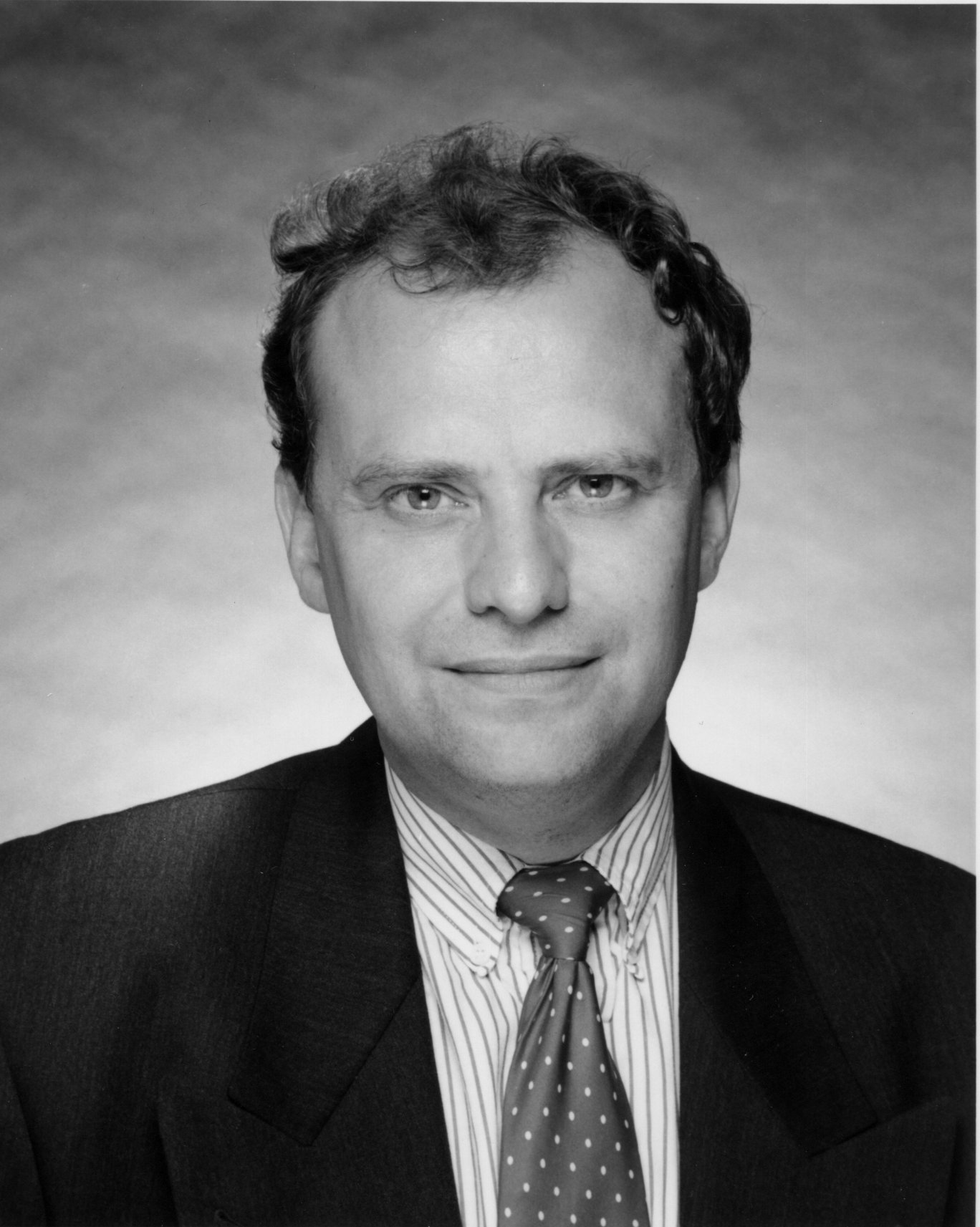
Former Senior Associate, Director, Russian and Eurasian Program
Recent Work
Anders Aslund
Anders Aslund
Carnegie does not take institutional positions on public policy issues; the views represented herein are those of the author(s) and do not necessarily reflect the views of Carnegie, its staff, or its trustees.
Ultimately, Zelensky sided neither with the reform camp nor with the military establishment as such, but with political control.

Balázs Jarábik
Despite the agreement’s uncertainty, it’s still a significant development in regional and nuclear policy.


Andrew Leber, Jane Darby Menton
“AI safety in parallel” is modest and pragmatic but vital.

Matt Sheehan

Trump is distracted and Ukraine wants Europe to step up. The continent’s leaders must find their voice and assert it in talks with Russia.

Alissa de Carbonnel
Unresolved tensions within the AfD may ultimately constrain the its potential as a leader among European and global populist forces.
Jeremy Cliffe