

Commentary
Amr Hamzawy
{
  "authors": [
    "Amr Hamzawy"
  ],
  "type": "other",
  "centerAffiliationAll": "dc",
  "centers": [
    "Carnegie Endowment for International Peace"
  ],
  "collections": [],
  "englishNewsletterAll": "democracy",
  "nonEnglishNewsletterAll": "",
  "primaryCenter": "Carnegie Endowment for International Peace",
  "programAffiliation": "DCG",
  "programs": [
    "Democracy, Conflict, and Governance",
    "Middle East"
  ],
  "projects": [],
  "regions": [
    "Egypt"
  ],
  "topics": [
    "Political Reform"
  ]
}
REQUIRED IMAGE
Recent events in Egypt are again proving that far from championing democratic reforms, the Egyptian government continues to consolidate its own power. The January 29, 2005, arrest of Ayman Nour, a member of the Egyptian People’s Assembly and leader of the newly legalized liberal political party, Al Ghad (Tomorrow), serves as yet another example of Egypt’s persistent semiauthoritarianism.
Recent events in Egypt are again proving that far from championing democratic reforms, the Egyptian government continues to consolidate its own power. The January 29, 2005, arrest of Ayman Nour, a member of the Egyptian People’s Assembly and leader of the newly legalized liberal political party, Al Ghad (Tomorrow), serves as yet another example of Egypt’s persistent semiauthoritarianism.
Click on the link above for the full text of this Policy Outlook.
About the Author
Amr Hamzawy is a senior associate at the Carnegie Endowment, and a noted Egyptian
political scientist who previously taught at Cairo University and the Free University of Berlin. His research interests include the changing dynamics of political participation and the prospects of democratic transformation in the Arab world, with special attention both to Egypt and the Gulf countries.

Director, Middle East Program
Amr Hamzawy is a senior fellow and the director of the Carnegie Middle East Program. His research and writings focus on governance in the Middle East and North Africa, social vulnerability, and the different roles of governments and civil societies in the region.
Recent Work
Amr Hamzawy
Amr Hamzawy, Sarah Yerkes, Kathryn Selfe
Carnegie does not take institutional positions on public policy issues; the views represented herein are those of the author(s) and do not necessarily reflect the views of Carnegie, its staff, or its trustees.
European reactions to the war in Iran have lost sight of wider political dynamics. The EU must position itself for the next phase of the crisis without giving up on its principles.

Richard Youngs
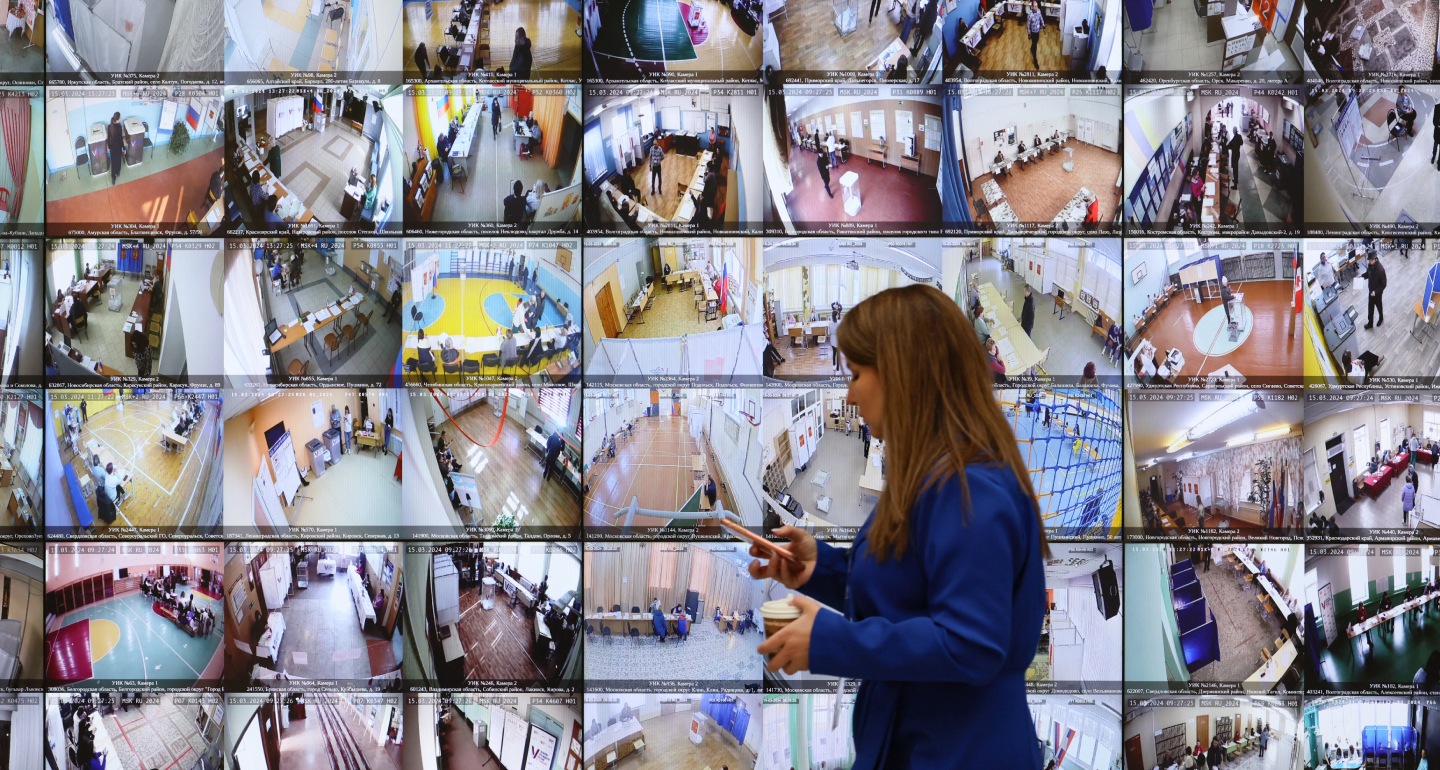
The use of technology to mobilize Russians to vote—a system tied to the relative material well-being of the electorate, its high dependence on the state, and a far-reaching system of digital control—is breaking down.

Andrey Pertsev
As discussions about settlement and elections move from speculation to preparation, Kyiv will have to manage not only the battlefield, but also the terms of political transition. The thaw will not resolve underlying tensions; it will only expose them more clearly.

Balázs Jarábik
A new Carnegie survey of Indian Americans examines shifting vote preferences, growing political ambivalence, and rising concerns about discrimination amid U.S. policy changes and geopolitical uncertainty.


Milan Vaishnav, Sumitra Badrinathan, Devesh Kapur, …
Europe’s interests in Syria extend beyond migration management, yet the EU trails behind other players in the country’s post-Assad reconstruction. To boost its influence in Damascus, the union must upgrade its commitment to ensuring regional stability.
Bianka Speidl, Hanga Horváth-Sántha