

Commentary
Nikolay Petrov
{
  "authors": [
    "Nikolay Petrov"
  ],
  "type": "legacyinthemedia",
  "centerAffiliationAll": "",
  "centers": [
    "Carnegie Endowment for International Peace",
    "Carnegie Russia Eurasia Center"
  ],
  "collections": [],
  "englishNewsletterAll": "",
  "nonEnglishNewsletterAll": "",
  "primaryCenter": "Carnegie Russia Eurasia Center",
  "programAffiliation": "",
  "programs": [],
  "projects": [],
  "regions": [
    "Caucasus",
    "Russia"
  ],
  "topics": [
    "Political Reform",
    "Economy"
  ]
}
Source: Getty
The severe economic crisis in Russia is currently spilling over into the political and administrative spheres. However, the government is not responding properly. Instead of improving administration effectiveness, the Russian government is simply reshuffling regional heads. In economics, the Kremlin is putting unneeded burden on businesses and regional governments.
Source: The Moscow Times

An early presidential election may very well be in the works to return Prime Minister Vladimir Putin to the presidency sooner than 2012. Those who support this plan are convinced that radical measures are required to combat the crisis, and Putin's strong popularity would guarantee the support of the people and avoid massive protests during a severe economic downturn. With the necessary changes to the Constitution likely to be ratified by the end of this year, an early election could be held as soon as the spring.
At the same time, preparations are under way for regional elections in March. United Russia is trying to ease anxiety by rolling out a populist ad campaign, and it has also created anti-crisis teams in each region. But these measures will not accomplish much. Meanwhile, a new party, Right Cause, was created last month.
Regarding personnel policies, the Kremlin has failed to come up with anything better than a hasty reshuffling of staff. Last week, regional police chiefs were plucked from one place and planted in another. Karelia's chief was moved to head the Bashkortostan republic, the Bashkortostan chief relocated to North Ossetia and the North Ossetian chief retired.
The goal of that complicated maneuver was twofold: to replace the North Ossetian minister, who was unable to cope with the situation in that region, and to further weaken the ties between Bashkortostan President Murtaza Rakhimov and the regional police chief. The question is whether the transplanted Bashkortostan police chief will be able to bring the difficult situation in North Ossetia under control.
On the surface, the new appointments to the Interior Ministry and the earlier replacements of ineffective regional leaders may appear as if the Kremlin is reacting more quickly to the mounting crisis. But in reality, it continues to play the same old shell game, which consists of simply shifting around regional heads instead of improving the administrative effectiveness of the existing leaders and institutions in their previous posts.
The situation in the North Caucasus is particularly worrisome because the republics located there will be hurt the most when the economy worsens. While the dismissal of Ingush President Murat Zyazikov helped subdue the people's unrest, the increasingly volatile situation in North Ossetia is just the opposite. Authorities have been unable to stabilize the situation in Dagestan, the only Caucasus republic where the Kremlin has not yet managed to replace the old ruling regime.
In addition to the serious problems brought on by the financial crisis, the Kremlin has created a few additional ones of its own. A decision to raise state employees' salaries by 30 percent effective Dec. 1 puts regional authorities in a bind: Either they grant those pay hikes at a time when budget shortfalls are causing layoffs of government bureaucrats, or they must reduce the existing salaries of some employees to pay for the pay increases. To make matters worse, the minimum wage is scheduled to double in January. Instead of increasing incomes, this additional burden on businesses is likely to result in an increase in unemployment in many regions -- particularly in the Caucasus republics.
Russia will have tremendous difficulties battling the crisis when it adopts policies that, instead of mitigating economic hardships, only aggravate them.
This comment first appeared in The Moscow Times
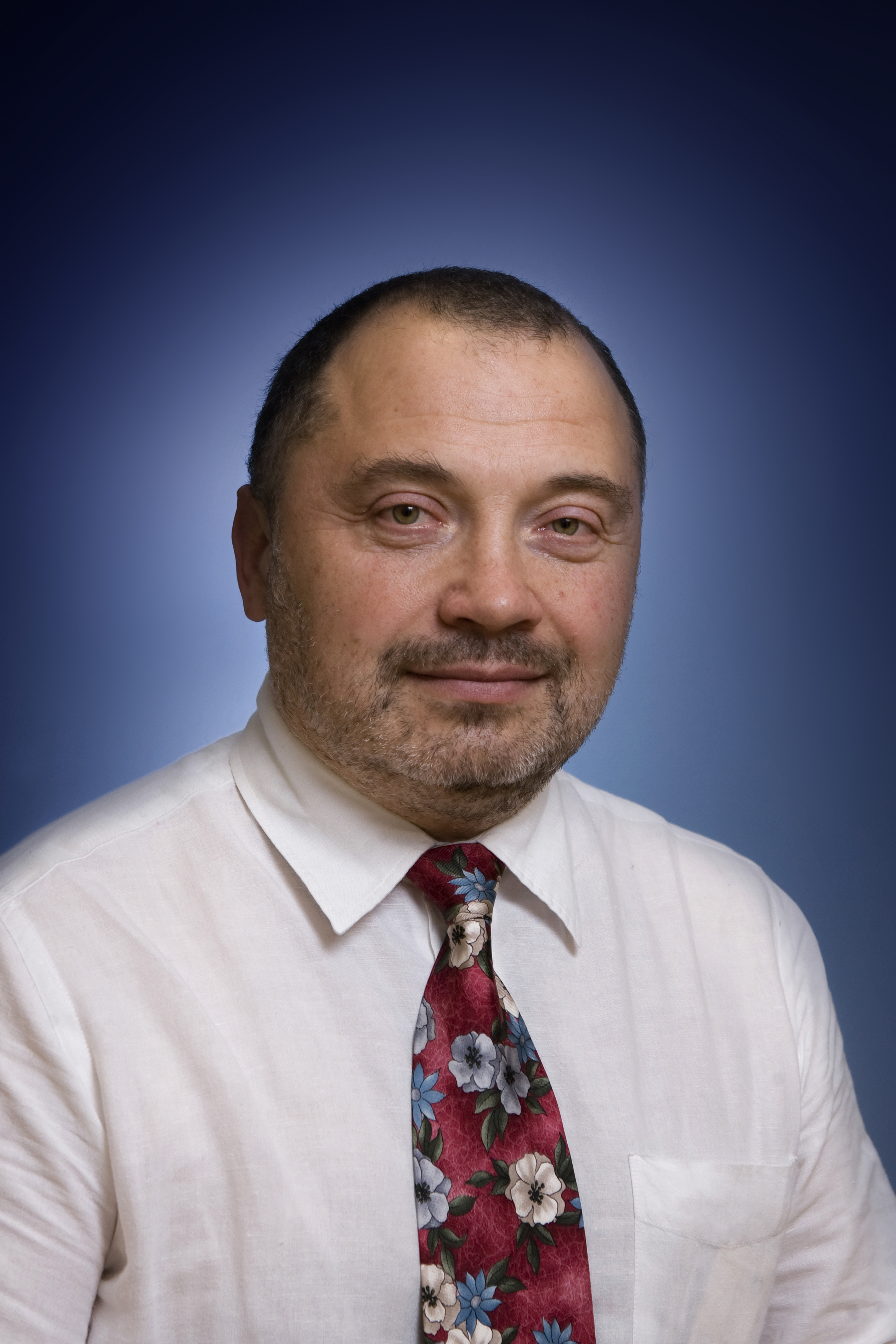
Former Scholar-in-Residence, Society and Regions Program, Moscow Center
Nikolay Petrov was the chair of the Carnegie Moscow Center’s Society and Regions Program. Until 2006, he also worked at the Institute of Geography at the Russian Academy of Sciences, where he started to work in 1982.
Recent Work
Nikolay Petrov
Nikolay Petrov
Carnegie does not take institutional positions on public policy issues; the views represented herein are those of the author(s) and do not necessarily reflect the views of Carnegie, its staff, or its trustees.

Ex-president Gurbanguly Berdimuhamedov remains interested in politics, but his son Serdar, Turkmenistan’s current president, is becoming increasingly independent and willing to break with his father’s legacy. If their covert rivalry goes too far, both risk losing power.

Galiya Ibragimova

Europe is facing rising populism internally as well as external pressures from Russia, China, Turkey, and the United States.

Dimitar Bechev

A notable degree of participative democracy has firmly arrived in Europe. But to have more far-reaching impact, democratic deliberation needs to move into a radically new phase.

Richard Youngs
Economic recovery has brought Sri Lanka a modicum of stability, but domestic strains and great-power rivalry could test how long it lasts.

Avinash Paliwal

Policy proposals on sovereign debt must both match the scale of the challenge and be implementable within existing political constraints.
David McNair