

Article
Thomas Carothers
{
  "authors": [
    "Thomas Carothers"
  ],
  "type": "other",
  "centerAffiliationAll": "dc",
  "centers": [
    "Carnegie Endowment for International Peace",
    "Malcolm H. Kerr Carnegie Middle East Center"
  ],
  "collections": [
    "Democracy and Governance"
  ],
  "englishNewsletterAll": "democracy",
  "nonEnglishNewsletterAll": "",
  "primaryCenter": "Carnegie Endowment for International Peace",
  "programAffiliation": "DCG",
  "programs": [
    "Democracy, Conflict, and Governance"
  ],
  "projects": [],
  "regions": [
    "North America",
    "United States",
    "Egypt",
    "Gulf",
    "Levant",
    "Maghreb"
  ],
  "topics": [
    "Political Reform",
    "Democracy"
  ]
}
Source: Getty
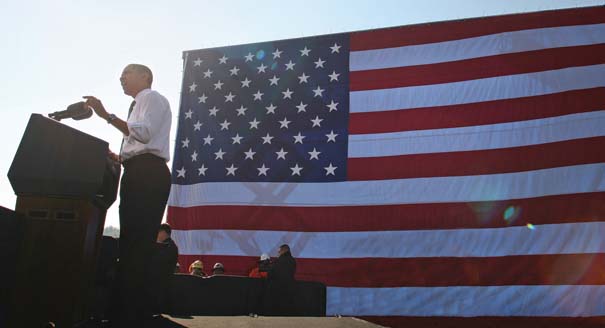
The Obama administration can find a positive new way forward on democracy promotion by changing how the United States supports democracy abroad rather than what emphasis to place on it relative to other interests.

By casting the war on terrorism as a global “freedom agenda,” yet cultivating close ties with autocratic regimes helpful on counterterrorism, he provoked justifiable charges of double standards. And by condoning U.S. abuses of the rule of law and human rights against persons caught in America’s antiterrorism net, he badly damaged America’s standing as a global symbol of democracy.
Some of President Obama’s initial actions offer a valuable start in a necessary process of dissociating the United States from this unfortunate legacy. Just by being elected, Obama sent a ringing signal to the world of the renewal
of American democracy and the power of the democratic idea.
His immediate order to close the Guantánamo Bay detention facility within a year and additional subsequent actions to reverse other legally problematic parts of the war on terrorism added momentum to the rejuvenation of America’s global democratic standing. His sober approach to Iraq—talking about it as a daunting policy challenge rather than as a shining example of U.S. democracy promotion—halts a long, painful delegitimization of the democracy promotion concept. His expressed openness to diplomatic engagement with hostile governments has put the regime-change line to rest.
Key Conclusions

Harvey V. Fineberg Chair for Democracy Studies; Senior Fellow, Democracy, Conflict, and Governance Program
Thomas Carothers, a senior fellow in the Carnegie Endowment for International Peace’s Democracy, Conflict, and Governance Program, is a leading expert on comparative democratization and international support for democracy.
Recent Work
Thomas Carothers
Thomas Carothers
Carnegie does not take institutional positions on public policy issues; the views represented herein are those of the author(s) and do not necessarily reflect the views of Carnegie, its staff, or its trustees.

China’s political future will be shaped between now and next October. As the Communist Party enters its intense “campaign season” to prepare for a major political transition in 2027, reading Beijing's actions and responses may become more difficult as domestic politics weigh on its behavior more than usual.

Damien Ma

The EU can impose sanctions but struggles to enforce them without the United States. With Washington increasingly disinterested in backing European interests, the bloc must now fend for itself.


Nicu Popescu, Tiago Antunes

Rubio’s recent visit brought welcome attention, but more capital requires governance changes that may be a hard sell for regional governments.

Jennifer B. Murtazashvili
America’s foreign-policy objectives have grown more demanding while Americans have demanded greater focus on their own affairs.
Stephen Wertheim

Despite public disputes over trade and immigration, the strategic partnership’s foundations remain sturdy.

Sameer Lalwani