

In The Media
Lahcen Achy
{
  "authors": [
    "Lahcen Achy"
  ],
  "type": "legacyinthemedia",
  "centerAffiliationAll": "dc",
  "centers": [
    "Carnegie Endowment for International Peace",
    "Malcolm H. Kerr Carnegie Middle East Center"
  ],
  "collections": [],
  "englishNewsletterAll": "menaTransitions",
  "nonEnglishNewsletterAll": "",
  "primaryCenter": "Malcolm H. Kerr Carnegie Middle East Center",
  "programAffiliation": "MEP",
  "programs": [
    "Middle East"
  ],
  "projects": [],
  "regions": [
    "North Africa",
    "Algeria",
    "North America"
  ],
  "topics": [
    "Economy"
  ]
}
Source: Getty
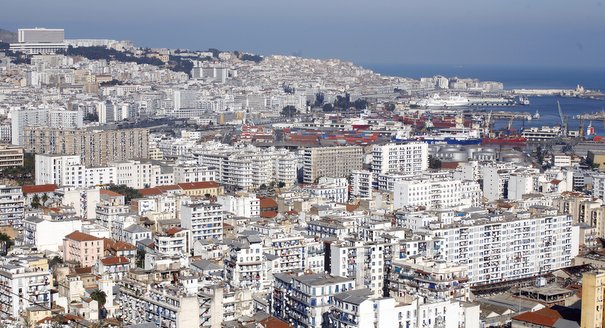
The Algerian government’s response to the global economic crisis is an emergency package months overdue and unlikely to stimulate economic growth. Restrictions on foreign investment, imports and a complete ban on consumer credit will do little to support an already fragile Algerian economy.
Source: Al Hayat

The main response to the economic crisis by the Algerian government is the adoption of a complementary financial law, alongside several measures restricting foreign investments. This emergency package is striking not only because it is late, but also because its design and content are of questionable value for effectively dealing with Algeria’s structural imbalances, which have only worsened in the current economic crisis.
Restrictions have been imposed which require a minimum local ownership of 51% on foreign investments. Now the government is restricting imports and banning credit to consumers as well, triggering widespread dissatisfaction among businesses and consumers alike.
The Algerian Finance Minister justifies these strictures by citing the fact that hydrocarbon products count for roughly 97% of Algeria’s exports and 70% of its fiscal revenues. These statistics are not new; they are common knowledge and have changed little over the past years. Algeria absolutely needs to diversify its economy and break its heavy dependence on the volatile world market energy prices. The relationship between this need for diversification and the current rescue package designed by the government, however, is murky at best.
First, economic diversification is an objective that needs to be considered as a medium to long term strategy, one which might take a decade or even longer before being achieved. It is not appropriate, therefore, to declare this objective in a complementary finance law designed and adopted in an emergency, over a vacation period. If diversification of economic sectors and sources of income for Algerian citizens is part of a sound and committed vision, then it should be an aspect of a carefully designed participatory strategy and not placed in a mere complementary financial law.
Second, administrative constraints on imports and foreign investment are not likely to generate a genuine economic transformation or to create domestic production-led economic growth. The current business environment is not adequate for such changes. It is marked by poor infrastructure and held up by bureaucratic red tape and an unstable regulatory framework that governs the private sector. In addition, these constraints rest on the assumption that the deterioration of the Algerian trade balance is due to excess imports, rather than an absence of non-oil exports. To overcome this trade balance, the Algerian government needs to take an economic approach, with incentive schemes, better human capital and innovative technological partnerships with foreign investors - not a bureaucratic approach that is irrelevant at best.
Third, at a time when most countries around the world are easing monetary policy to stimulate credit extension, including consumption loans to support domestic demand, the Algerian complementary financial law does the exact opposite. It has not merely opted to limit credit to consumers; it has banned such credit entirely. The Finance Minister justifies this law by explaining that the goal is to protect Algerian consumers from excessive debt and also to restrain imports of cars in order to pave the way for local car production.
These arguments fail to convince. Apart from the impact of this law on domestic demand and employment, this decision raises issues about the supervisory role of the Central Bank, as well as the capacity of commercial banks to assess the creditworthiness of their own clients. If banning credit is intended to protect the consumer, the government would logically use similar bans to protect other types of constituents. The argument that this ban will lead to greater local car production is even less valid. In order to attain a local car industry, the government must first persuade an international car manufacturer to establish production units in Algeria. In a best case scenario, it might still take years before cars are actually being manufactured in Algeria.
Finally, it must be emphasized that the fragile economic structure of Algeria, and the nature of the challenges that it faces, are certainly not caused by the current economic crisis. Algeria needs a carefully designed economic strategy that will address existing imbalances and build a strong and diversified economy, one less sensitive to volatile hydrocarbon prices. It certainly does not need partial and inconsistent bureaucratic measures which all too often give the impression of being purely arbitrary.

Former Nonresident Senior Associate, Middle East Center
Achy is an economist with expertise in development, institutional economics, trade, and labor and a focus on the Middle East and North Africa.
Recent Work
Lahcen Achy
Lahcen Achy
Carnegie does not take institutional positions on public policy issues; the views represented herein are those of the author(s) and do not necessarily reflect the views of Carnegie, its staff, or its trustees.
In Egypt’s dense cities, the disappearance of foliage has health implications and punishes daily commuters.

Angie Omar
The Bureau of Industry and Security needs to adjust its focus and practices to maintain its position as the U.S. government’s primary champion of international technological competition.

Geoffrey Irving

Depleted financial reserves and a shrinking tax base mean it is no longer possible to simultaneously deliver high defense spending, price stability, and economic growth.

Alexandra Prokopenko

U.S. trading partners in Asia are closely watching the dispute for signs of how it may affect their own interests.

Barbara Weisel
Amid celebrations of bilateral ties was a deeper focus on stability in the Middle East.

Amr Hamzawy