


Montenegro and Albania are frontrunners for EU enlargement in the Western Balkans, but they can’t just sit back and wait. To meet their 2030 accession ambitions, they must make a strong positive case.
Dimitar Bechev, Iliriana Gjoni
{
"authors": [
"Marina Ottaway",
"Amr Hamzawy"
],
"type": "questionAnswer",
"centerAffiliationAll": "dc",
"centers": [
"Carnegie Endowment for International Peace"
],
"collections": [],
"englishNewsletterAll": "menaTransitions",
"nonEnglishNewsletterAll": "",
"primaryCenter": "Carnegie Endowment for International Peace",
"programAffiliation": "MEP",
"programs": [
"Middle East"
],
"projects": [],
"regions": [
"Middle East",
"North Africa"
],
"topics": [
"Political Reform",
"Democracy",
"Foreign Policy"
]
}Source: Getty
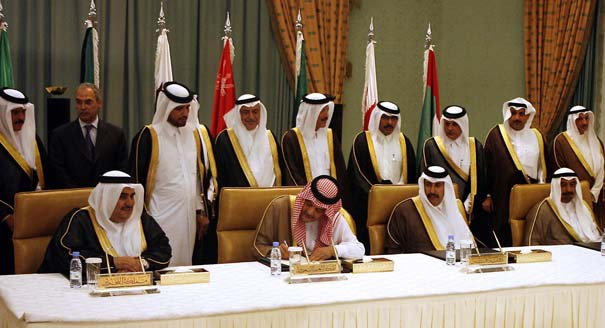
The imbalance of power in Arab countries allows regimes to stay in control virtually unchallenged by non-violent opposition groups. Without a break in the stalemate between the key players—ruling establishments, moderate Islamist movements, and secular parties—democratization is impossible.
The imbalance of power in Arab countries allows regimes to stay in control virtually unchallenged by non-violent opposition groups. Without a break in the stalemate between the key players—ruling establishments, moderate Islamist movements, and secular parties—democratization is impossible. In a video Q&A, Marina Ottaway and Amr Hamzawy discuss their book, Getting to Pluralism: Political Actors in the Arab World, the political stagnation entrenched in the Middle East, and policy options for the West.
Former Senior Associate, Middle East Program
Before joining the Endowment, Ottaway carried out research in Africa and in the Middle East for many years and taught at the University of Addis Ababa, the University of Zambia, the American University in Cairo, and the University of the Witwatersrand in South Africa.
Director, Middle East Program
Amr Hamzawy is a senior fellow and the director of the Carnegie Middle East Program. His research and writings focus on governance in the Middle East and North Africa, social vulnerability, and the different roles of governments and civil societies in the region.
Carnegie does not take institutional positions on public policy issues; the views represented herein are those of the author(s) and do not necessarily reflect the views of Carnegie, its staff, or its trustees.
Montenegro and Albania are frontrunners for EU enlargement in the Western Balkans, but they can’t just sit back and wait. To meet their 2030 accession ambitions, they must make a strong positive case.
Dimitar Bechev, Iliriana Gjoni
Despite long-standing differences, China and Vietnam are reinforcing common ground for collaboration, especially in public security. This internal security–centered diplomacy offers a strengthened road map for how China moves forward with Southeast Asia.
Sophie Zhuang
Climate mobility interventions can vary, but they all present opportunities to unlock transformative results that mitigate costs associated with inaction.
Alejandro Martin Rodriguez
For Morocco, integrating gender into climate governance is not simply a matter of social justice. It is a strategic imperative for effective adaptation.
Fadwa Rajoauni
Four Middle East experts analyze the region’s reactions and next steps.
Amr Hamzawy, Andrew Leber, Eric Lob, …