

Research
- +10
Rosa Balfour, Frances Z. Brown, Yasmine Farouk, …
{
  "authors": [
    "Moisés Naím"
  ],
  "type": "legacyinthemedia",
  "centerAffiliationAll": "",
  "centers": [
    "Carnegie Endowment for International Peace",
    "Carnegie Europe",
    "Carnegie Russia Eurasia Center"
  ],
  "collections": [
    "Brexit and UK Politics"
  ],
  "englishNewsletterAll": "",
  "nonEnglishNewsletterAll": "",
  "primaryCenter": "Carnegie Endowment for International Peace",
  "programAffiliation": "",
  "programs": [],
  "projects": [],
  "regions": [
    "Western Europe",
    "United Kingdom",
    "France",
    "Germany",
    "Europe",
    "North America"
  ],
  "topics": [
    "Economy"
  ]
}
Source: Getty
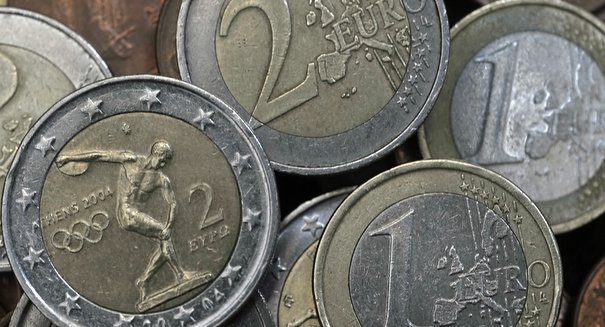
If the European debt crisis, which is straining the ties that bind the continent together, brings about the end of European integration, the economic, political, and social repercussions will impact the entire world.
Source: International Herald Tribune

In fact, the consensus is that within a few short decades, the weight of European economies in the world is bound to plummet to less than half of what it is today.
Moreover, in recent years, it has become increasingly difficult to find a decision made by the European Union that is worthy of applause. Today’s European project feels more like a jobs program for the Continent’s professional middle class than an ideal that sparks hope and energizes people.
The inability to effectively address the economic crisis is only a symptom of deeper problems. Why has Europe suffered the most painful and prolonged consequences of the global financial crash?
Now, the crisis in Ireland and its potential spread to other weak European economies fuels further pessimism. “My current best guess,” writes Gideon Rachman in the Financial Times, is that “the single currency will indeed eventually break up — and that the euro’s executioner will be Germany.” His calculus is that successive financial crises and their respective bailouts will exhaust Germany’s patience. Germany, he writes, might then feel released from its historic obligation to “build Europe.”
The collapse of the European monetary system could be an insurmountable blow to European unity. That this would be bad for Europe is obvious.
Less obvious is that a world without an influential and integrated Europe is a world made worse for everyone. Europe irradiates values and standards that are as necessary as they are rare in today’s world. The old Continent’s economic and political decline will diminish its positive influence on others.
We know about Europe’s current repudiation of war, the legacy of its two terrible conflicts in the 20th century. And we also know how scornfully European pacifism is treated by those who confuse aversion to war with weakness or worse. But a world with a Continent that prefers to make mistakes trying to avoid war is better than a world where trigger-happy superpowers don’t mind being mistaken when they decide to wage “pre-emptive wars.”
If a government in Asia, Africa or Latin America starts violating human rights, “disappearing” political opponents and imprisoning journalists, who do you want with a strong voice in the international community? The Chinese Communist Party? Putin’s Russia? Or Europe?
While for the last decade or so the United States has passively tolerated a massive redistribution of wealth from its poorest to its wealthiest citizens and while Russia and China celebrate a new oligarchy who accumulates unimaginable riches, Europe still has a huge aversion to inequality.
Which do you prefer: a world in which 5 percent of the population accumulates 95 percent of wealth and the rest remain poor and excluded or a world dominated by a vast, growing and politically powerful middle class? Europe still strives to achieve this second scenario.
The European welfare system is overly generous and many countries can no longer afford it. But a model in which millions of people lack health care or are condemned to poverty a few months after losing a job or upon becoming old and infirm may be equally unsustainable in the long run.
The European development aid to poorer countries is often inefficient, but Europe’s commitment to humanitarian causes internationally has few peers. While religious extremism is thriving and dividing nations and societies everywhere, Europe’s commitment to secularism and tolerance of all religions continues to be deeply rooted in what used to be the richest breeding ground of religious wars.
Globalization is rapidly expanding problems whose solutions require coordinated responses from several countries working together.
The European experiment of collective government is the most ambitious ever attempted. Its failure would lead many to dismiss the idea and refrain from trying something similar for a while. Losing this precious time in looking for ways to coordinate different nations is a luxury that we cannot afford at a time when too many global challenges require decisive and immediate multilateral action.
I do not know if the ambitious project of European integration will survive the enormous obstacles it currently faces. But I do know that if it fails, the entire world will pay the consequences.

Distinguished Fellow
Moisés Naím is a distinguished fellow at the Carnegie Endowment for International Peace, a best-selling author, and an internationally syndicated columnist.
Recent Work



Rosa Balfour, Frances Z. Brown, Yasmine Farouk, …
Moisés Naím
Carnegie does not take institutional positions on public policy issues; the views represented herein are those of the author(s) and do not necessarily reflect the views of Carnegie, its staff, or its trustees.

For every ruble allocated to social policy, health, and education in 2027, double that amount is earmarked for the army, the police, and the security services.

Alexandra Prokopenko

The European Commissioner for Trade is headed to China. But after President Xi’s bridge-building visit to Washington, can a more isolated EU overcome Beijing’s stranglehold on critical raw materials? Who will blink first?

Rym Momtaz, ed.
European NATO countries are wrestling with the possibility of U.S. disengagement from the alliance. With the continent’s security increasingly uncertain, governments must restore the credibility of their collective defense.



Hans-Dieter Lucas, Adam Thomson, Pierre Vimont

The domestic impacts of how long it is taking to end the war in Ukraine have pushed the French electorate to the political extremes and compromised the country’s diplomatic capacity.
Rym Momtaz

A deep dive into the policy ecosystems behind battery development in China, South Korea, Japan, the European Union (including some of its member states), the United States, Canada, and India.



Milo McBride, Herbert Crowther, Darcie Draudt-Véjares, …