• Research
  • Emissary
  • About
  • Experts
Carnegie Global logoCarnegie lettermark logo
DemocracyIran
  • Donate
{
  "authors": [
    "Lahcen Achy"
  ],
  "type": "legacyinthemedia",
  "centerAffiliationAll": "",
  "centers": [
    "Carnegie Endowment for International Peace",
    "Malcolm H. Kerr Carnegie Middle East Center"
  ],
  "collections": [],
  "englishNewsletterAll": "",
  "nonEnglishNewsletterAll": "",
  "primaryCenter": "Malcolm H. Kerr Carnegie Middle East Center",
  "programAffiliation": "",
  "programs": [],
  "projects": [],
  "regions": [
    "Egypt",
    "Maghreb"
  ],
  "topics": [
    "Political Reform",
    "Economy"
  ]
}
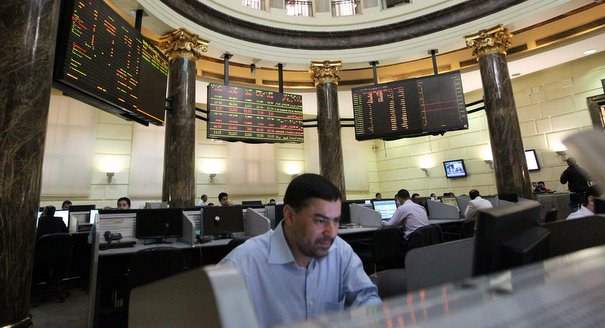
Source: Getty

In The Media
Malcolm H. Kerr Carnegie Middle East Center

After Revolutions, Rising to North Africa's Economic Challenges

Egypt and Tunisia’s democratic transitions will not automatically result in higher economic growth or more employment opportunities. Both countries must set up priorities and enact reforms to spur economic transitions.

Link Copied
By Lahcen Achy
Published on Apr 28, 2011

Source: Los Angeles Times

After Revolutions, Rising to North Africa's Econom
As Egypt and Tunisia move away from their former regimes, the political path seems much clearer than the economic one. Both countries are setting the foundations to shift to a democratic political regime that will give all political movements the right to participate through free and fair elections. Disagreements may surface over details. But consensus exists on the transition to a pluralist party system that derives its legitimacy from the people.
 
The process of economic transition, however, appears more contentious. Some observers argue for greater trade and financial liberalization and for opening up more space for the private sector. They blame the rentier economy, the prevalence of corruption and the dominance by those close to the regime for limiting real economic competition.
 
Meanwhile, others demand that the state intervene more in the economy. In their opinion, privatization and excessive reliance on market mechanisms contributed to a rise in unemployment, poverty and inequality between the rich minority and the deprived majority.
 
This divergence of views is occurring amid critical global economic circumstances. The trust the world has in the market economy — long perceived as the most effective model of economic management — is deteriorating. This limits Arab states’ ability to learn from examples transpiring today. When Eastern European states moved from socialist regimes to market economies in the 1990s, Western European countries offered successful economic models.
 
As a result, economic transition in Arab states will be complicated and risky and likely to influence politics. The challenges in the short and mid term will require taking five decisive steps.
 
First, open and credible communication between transitional governments and the public is critical to improving socioeconomic conditions, especially in the short term. Such communication will help limit labor strikes and stimulate production and investment at a time when domestic and external indicators are deteriorating.
 
Second, Tunisia and Egypt must develop a fair and rigorous approach to fight corruption and reform rentier mechanisms. This will help to restore the confidence of both investors and financial institutions.
 
Third, both governments should promote private-sector development by creating a suitable legal and administrative environment. This means simplifying bureaucratic procedures to establish firms — including medium- and small-size businesses — and helping them to receive bank loans under fair conditions.
 
For Egypt, Tunisia and other Arab states to transition successfully to democracy, they must transform the private sector into a driving force for growth, investment and employment. In South Korea and Turkey, small- and medium-size companies account for 99% of the total number of companies and contribute approximately to 90% of the total employment. In Egypt, this figure is only 50%.
 
Fourth, Arab countries must avoid precipitation in meeting social demands for higher wages, more jobs and consumption subsidies. Overburdening the state budget by increasing the deficit and thereby inflating both domestic and foreign debt may not be the right approach. Again, developing the private sector — especially small- and medium-size enterprises — would help create a broader tax base that contributes to funding public services and providing safety nets for the deprived social classes.
 
Fifth, Arab states’ economies, especially Egypt — which has a population of more than 80 million and needs to create more than 700,000 new jobs annually — cannot continue to depend on tourism revenues, the Suez Canal and migrants’ remittances to cover its glaring trade deficit. Egypt and Tunisia must fundamentally rethink their economic strategies.
 
Both countries must pay more attention to their agricultural sectors, especially as excessive dependence on global markets could threaten food security and increase sociopolitical destabilization. Weak crop yield in the Arab world is largely due to a lack of investment in agricultural research. Although the number of researchers is relatively high, they suffer from limited material capabilities and a lack of basic research equipment, rendering many of them merely administrative staff.
 
Transition to democracy will not automatically lead to higher economic growth or more employment opportunities. In fact, it could have the opposite effect if both countries depend excessively on the state budget and public debt without setting priorities to spur their economic transitions. But, hopefully, policymakers will use the political legitimacy they gain as they move toward democracy to introduce the economic reforms both countries need.

About the Author

Lahcen Achy

Former Nonresident Senior Associate, Middle East Center

Achy is an economist with expertise in development, institutional economics, trade, and labor and a focus on the Middle East and North Africa.

    Recent Work

  • In The Media
    Arab States Need Industrial Policy Reform

      Lahcen Achy

  • Paper
    The Price of Stability in Algeria

      Lahcen Achy

Lahcen Achy
Former Nonresident Senior Associate, Middle East Center
Lahcen Achy
Political ReformEconomyEgyptMaghreb

Carnegie does not take institutional positions on public policy issues; the views represented herein are those of the author(s) and do not necessarily reflect the views of Carnegie, its staff, or its trustees.
More Work from Carnegie Endowment for International Peace

  • Man standing next to a pile of burned cars
    Commentary
    Emissary
    The Myriad Problems With the Iran Ceasefire

    Four Middle East experts analyze the region’s reactions and next steps.

      • Andrew Leber
      • Eric Lob
      • +1

      Amr Hamzawy, Andrew Leber, Eric Lob, …

  •  A machine gun of a Houthi soldier mounted on a police vehicle next to a billboard depicting the U.S. president Donald Trump and Mohammed Bin Salman, the Crown Prince and Prime Minister of Saudi Arabia, during a protest staged to show support to Iran against the U.S.-Israel war on March 27, 2026 in Sana'a, Yemen.
    Collection
    The Iran War’s Global Reach

    As the war between the United States, Israel, and Iran continues, Carnegie scholars contribute cutting-edge analysis on the events of the war and their wide-reaching implications. From the impact on Iran and its immediate neighbors to the responses from Gulf states to fuel and fertilizer shortages caused by the effective shutdown of the Strait of Hormuz, the war is reshaping Middle East alliances and creating shockwaves around the world. Carnegie experts analyze it all.

  •  A machine gun of a Houthi soldier mounted on a police vehicle next to a billboard depicting the U.S. president Donald Trump and Mohammed Bin Salman, the Crown Prince and Prime Minister of Saudi Arabia, during a protest staged to show support to Iran against the U.S.-Israel war on March 27, 2026 in Sana'a, Yemen.
    Article
    Amid Iran War, Gulf Countries Slow the Pace of Reforms

    The return of war as the organizing factor in Middle Eastern politics has predictable consequences: governments are prioritizing regime stability and becoming averse to political and social reform.

      • Sarah Yerkes

      Sarah Yerkes, Amr Hamzawy

  • Commentary
    Southeast Asia’s Agency Amid the New Oil Crisis

    There is no better time for the countries of Southeast Asia to reconsider their energy security than during this latest crisis.

      Gita Wirjawan

  • Commentary
    Fuel Crisis Forces Politically Perilous Trade-Offs in Indonesia

    As conflict in the Middle East drives up fuel costs across Asia, Indonesia faces difficult policy trade-offs over subsidies, inflation, and fiscal credibility. President Prabowo’s personalized governance style may make these hard choices even harder to navigate.

      Sana Jaffrey

Get more news and analysis from
Carnegie Endowment for International Peace
Carnegie global logo, stacked
1779 Massachusetts Avenue NWWashington, DC, 20036-2103Phone: 202 483 7600Fax: 202 483 1840
  • Research
  • Emissary
  • About
  • Experts
  • Donate
  • Programs
  • Events
  • Blogs
  • Podcasts
  • Contact
  • Annual Reports
  • Careers
  • Privacy
  • For Media
  • Government Resources
Get more news and analysis from
Carnegie Endowment for International Peace
© 2026 Carnegie Endowment for International Peace. All rights reserved.