• Research
  • Emissary
  • About
  • Experts
Carnegie Global logoCarnegie lettermark logo
Democracy
  • Donate
{
  "authors": [
    "Evan A. Feigenbaum"
  ],
  "type": "other",
  "centerAffiliationAll": "dc",
  "centers": [
    "Carnegie Endowment for International Peace"
  ],
  "collections": [],
  "englishNewsletterAll": "asia",
  "nonEnglishNewsletterAll": "",
  "primaryCenter": "Carnegie Endowment for International Peace",
  "programAffiliation": "AP",
  "programs": [
    "Asia"
  ],
  "projects": [],
  "regions": [
    "South Asia",
    "East Asia",
    "Southeast Asia"
  ],
  "topics": []
}

Source: Getty

Other

Why America No Longer Gets Asia, April, 1, 2011

While Asia is being reborn and remade, the United States is badly prepared for this momentous rebirth, making it less relevant in each of Asia's constituent parts.

Link Copied
By Evan A. Feigenbaum
Published on Apr 1, 2011
Program mobile hero image

Program

Asia

The Asia Program in Washington studies disruptive security, governance, and technological risks that threaten peace, growth, and opportunity in the Asia-Pacific region, including a focus on China, Japan, and the Korean peninsula.

Learn More

Source: Washington Quarterly

In the fall of 2006, as Deputy Assistant Secretary of State for Central Asia, I wandered through a bazaar in Kara-suu on the Kyrgyz—Uzbek border. The bazaar is one of Central Asia’s largest and a crossroads for traders from across the volatile Ferghana Valley—Kyrgyz, Uzbeks, Tajiks, and many others. But most remarkably, it has become home to nearly a thousand Chinese traders from Fujian, a coastal province some 3,000 miles away, lapped by the waters of the Taiwan Strait.

For a thousand years, this was pretty much the natural order of things. Asia was deeply interconnected. Goods, capital, technologies, ideas, and religions, including Buddhism and Islam, moved across Silk Road caravan routes and over well-trafficked Asian sea lanes. But between the 17th and 19th centuries, Asia fragmented. Maritime trade swamped continental trade. ‘‘The caravel killed the caravan’’ as it became less expensive to ship goods by sea. China weakened. Tsarist armies arrived in Central Asia. And many of India’s traditional roles in Asia were subsumed within the British empire.

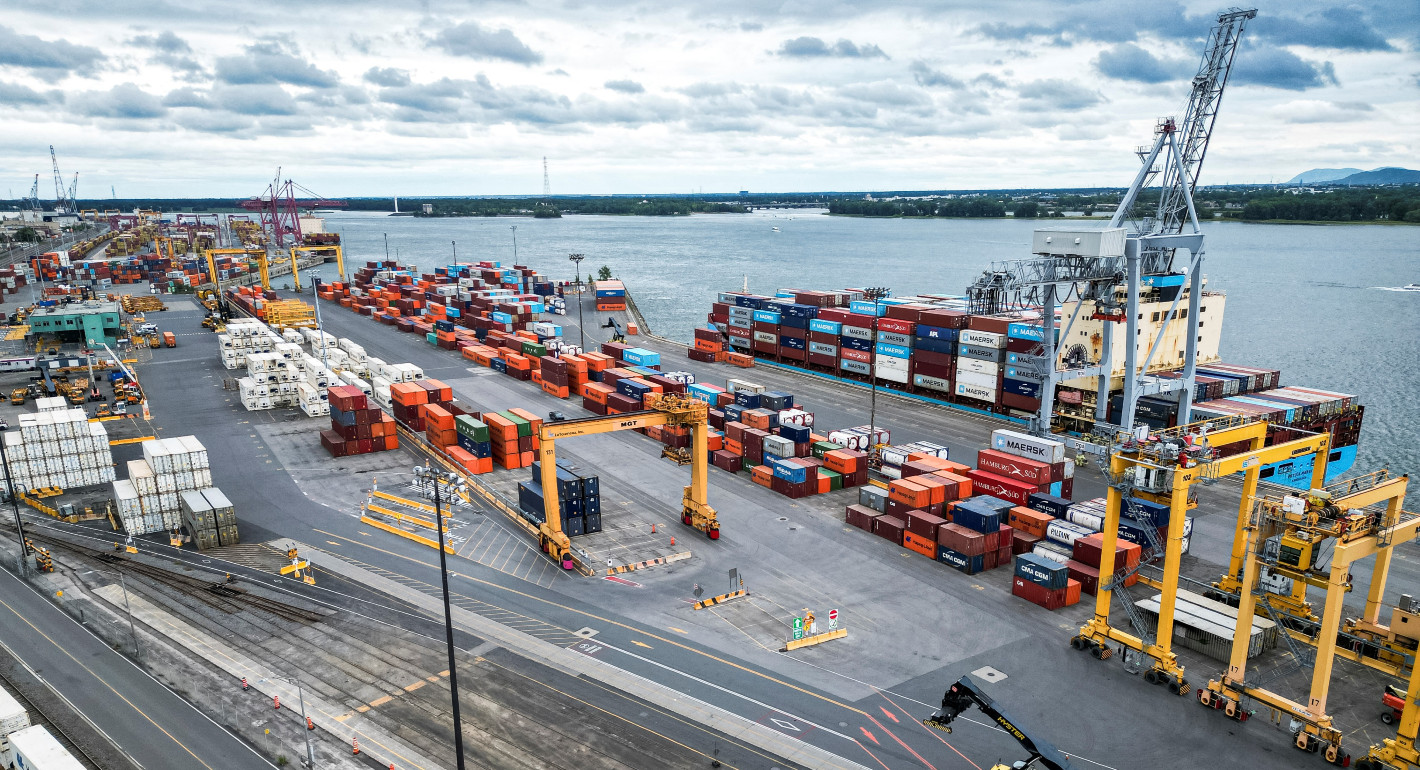
Today, after a 300-year hiatus, Asia is being reconnected at last. Chinese traders are again hawking their wares in Kyrgyz bazaars. Straits bankers are financing deals in India, with Singapore having become the second-largest source of India’s incoming foreign direct investment over the last decade (behind only Mauritius, which retains first place because of tax avoidance incentives). China lies at the core of industrial supply and production chains that stretch across Southeast Asia. And Chinese workers are building ports and infrastructure from Bangladesh to Pakistan to Sri Lanka. The governments of Turkmenistan and Uzbekistan have sold electricity southward, reconnecting their power grids to Afghanistan, while Kyrgyzstan and Tajikistan have signed an intergovernmental memorandum to sell electricity to Afghanistan and Pakistan. Chinese, Japanese, and Korean money is flowing across Asia.

In short, Asia is being reborn, and remade. Yet, the United States is badly prepared for this momentous rebirth, which is at once stitching Asia back together and making the United States less relevant in each of  Asia’s constituent parts. Asians are, in various ways, passing America by, restoring ancient ties, and repairing long-broken strategic and economic links.
 
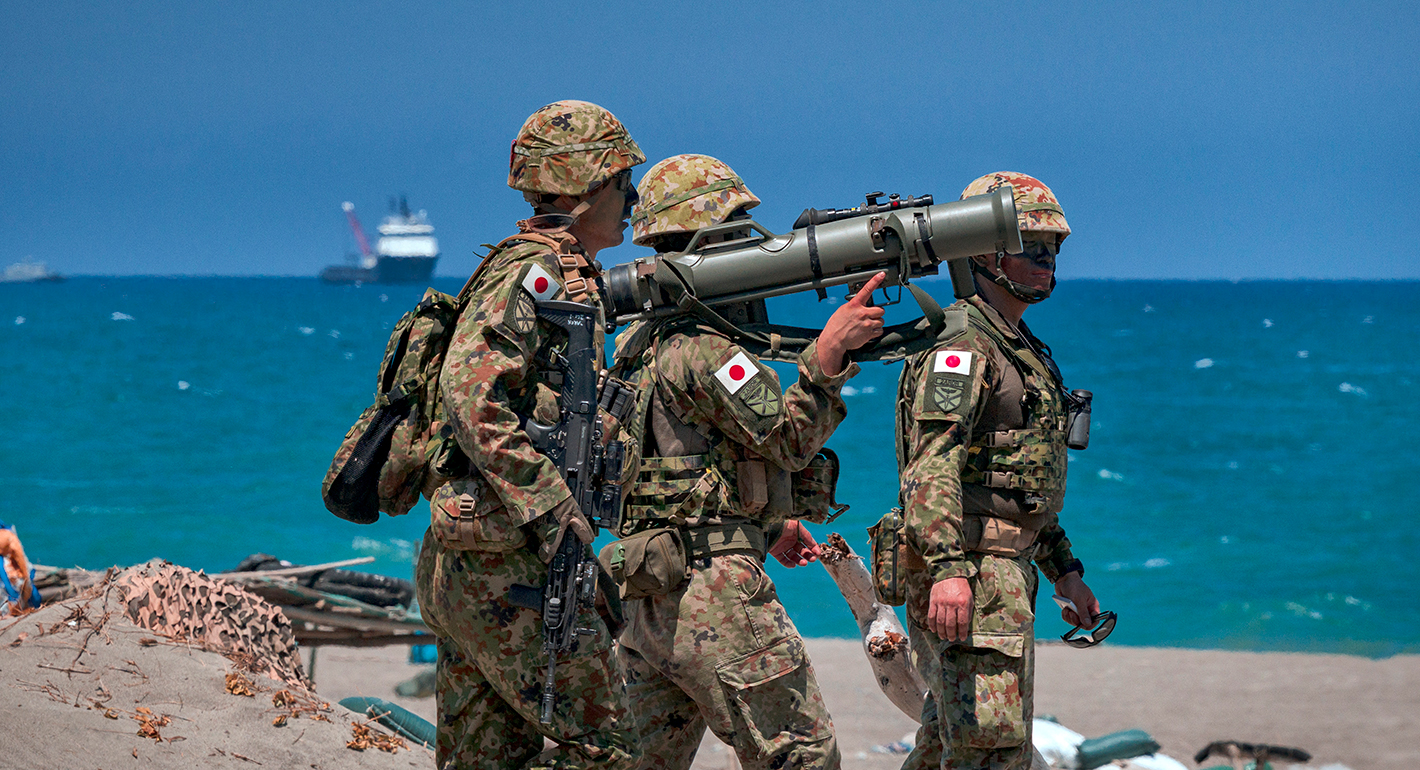
The United States will not cease to be a power in Asia, particularly in East Asia where Washington remains an essential strategic balancer, vital to stability. That security-related role has been reinforced in recent months, as China’s behavior has scared its neighbors silly, from Japan to Vietnam to India. But unless U.S. policymakers adapt to the contours of a more integrated Asia, and soon, they will miss opportunities in every part of the region over time—and find the United States less relevant to Asia’s future.
 
Full text available in the Washington Quarterly.
Evan A. Feigenbaum
Vice President for Studies
Evan A. Feigenbaum
South AsiaEast AsiaSoutheast Asia

Carnegie does not take institutional positions on public policy issues; the views represented herein are those of the author(s) and do not necessarily reflect the views of Carnegie, its staff, or its trustees.

More Work from Carnegie Endowment for International Peace

  • Abstract of global AI
    Article
    South-South AI Collaboration: Advancing Practical Pathways

    The India AI Impact Summit offers a timely opportunity to experiment with and formalize new models of cooperation.

      Lakshmee Sharma, Jane Munga

  • Escalation Dynamics Under the Nuclear Shadow—India’s Approach
    Paper
    Escalation Dynamics Under the Nuclear Shadow—India’s Approach

    An exploration into how India and Pakistan have perceived each other’s manipulations, or lack thereof, of their nuclear arsenals.

      • Rakesh Sood

      Rakesh Sood

  • A Quarter Century of Nuclear South Asia: Nuclear Noise, Signalling, and the Risk of Escalation in India-Pakistan Crises
    Paper
    A Quarter Century of Nuclear South Asia: Nuclear Noise, Signalling, and the Risk of Escalation in India-Pakistan Crises

    A close study of five crises makes clear that Cold War logic doesn’t apply to the South Asia nuclear powers.

      • Rizwan Zeb

      Moeed Yusuf, Rizwan Zeb

  • Commentary
    Malaysia’s Year as ASEAN Chair: Managing Disorder

    Malaysia’s chairmanship sought to fend off short-term challenges while laying the groundwork for minimizing ASEAN’s longer-term exposure to external stresses.

      Elina Noor

  • Commentary
    When It Comes to Superpower Geopolitics, Malaysia Is Staunchly Nonpartisan

    For Malaysia, the conjunction that works is “and” not “or” when it comes to the United States and China.

      Elina Noor

Get more news and analysis from
Carnegie Endowment for International Peace
Carnegie global logo, stacked
1779 Massachusetts Avenue NWWashington, DC, 20036-2103Phone: 202 483 7600Fax: 202 483 1840
  • Research
  • Emissary
  • About
  • Experts
  • Donate
  • Programs
  • Events
  • Blogs
  • Podcasts
  • Contact
  • Annual Reports
  • Careers
  • Privacy
  • For Media
  • Government Resources
Get more news and analysis from
Carnegie Endowment for International Peace
© 2026 Carnegie Endowment for International Peace. All rights reserved.