



• Research
  • Emissary
  • About
  • Experts
Carnegie Global logoCarnegie lettermark logo
Democracy
  • Donate
{
  "authors": [
    "Toby Dalton",
    "Mark Hibbs",
    "George Perkovich"
  ],
  "type": "other",
  "centerAffiliationAll": "",
  "centers": [
    "Carnegie Endowment for International Peace",
    "Carnegie Europe",
    "Carnegie China"
  ],
  "collections": [],
  "englishNewsletterAll": "",
  "nonEnglishNewsletterAll": "",
  "primaryCenter": "Carnegie Endowment for International Peace",
  "programAffiliation": "",
  "programs": [
    "Nuclear Policy"
  ],
  "projects": [],
  "regions": [
    "South Asia",
    "Pakistan",
    "East Asia",
    "China",
    "Asia"
  ],
  "topics": [
    "Nuclear Policy",
    "Nuclear Energy",
    "Arms Control",
    "Security"
  ]
}
Other

A Criteria-Based Approach to Nuclear Cooperation With Pakistan

The Fukushima nuclear disaster in Japan provides Beijing with an opportunity to pause and contemplate conditioning its nuclear cooperation with Pakistan on improvements in nuclear safety and security.

Link Copied
By Toby Dalton, Mark Hibbs, George Perkovich
Published on Jun 22, 2011
Program mobile hero image

Program

Nuclear Policy

The Nuclear Policy Program aims to reduce the risk of nuclear war. Our experts diagnose acute risks stemming from technical and geopolitical developments, generate pragmatic solutions, and use our global network to advance risk-reduction policies. Our work covers deterrence, disarmament, arms control, nonproliferation, and nuclear energy.

Learn More

In the wake of the Fukushima nuclear disaster, Beijing decided to review its plans for expanding nuclear power in China. It appears likely that China will shift its ambitious nuclear construction program away from older designs to modern technology provided by foreign vendors. 

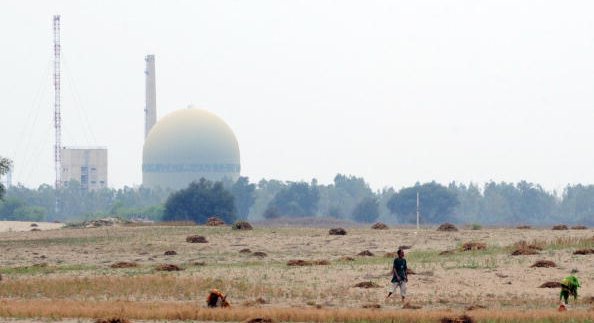
Although there are no indications that China is reconsidering its decision to build two additional nuclear power reactors in Pakistan—which are based on technology Beijing will probably abandon domestically—the accident in Japan provides Beijing with an opportunity to pause and contemplate conditioning its cooperation with Pakistan on improvements in nuclear safety and security. During such a pause, Beijing could consider the possibility of developing within the Nuclear Suppliers Group (NSG) a criteria-based approach to nuclear cooperation with states lacking full-scope safeguards (FSS). This strategy would be invoked irrespective of other discussions about future NSG membership and criteria that might be considered in that context. 
A criteria-based approach would provide a roadmap for states without FSS, including Pakistan, to qualify for civil nuclear cooperation, thus placing China’s current and future nuclear cooperation with Pakistan in an NSG process. The lynchpin in this approach is incentivizing China through the licensing of foreign reactor technology, so that China sees greater economic potential in achieving its longer-term ambition of becoming a nuclear exporter than in its shorter-term deals with Pakistan. Such an approach could help resolve persistent questions about the NSG’s future, which were raised by the U.S.-India nuclear deal and by Russia’s previous nuclear commerce with India. This strategy thus has the potential to resolve this issue in a way that strengthens the NSG, provides China with incentives to reconsider its cooperation with Pakistan, and gives Pakistan the international legitimacy it desperately seeks.

Authors

Toby Dalton
Senior Fellow and Co-director, Nuclear Policy Program
Toby Dalton
Mark Hibbs
Nonresident Senior Fellow, Nuclear Policy Program
Mark Hibbs
George Perkovich
Japan Chair for a World Without Nuclear Weapons, Senior Fellow
George Perkovich
Nuclear PolicyNuclear EnergyArms ControlSecuritySouth AsiaPakistanEast AsiaChinaAsia

Carnegie does not take institutional positions on public policy issues; the views represented herein are those of the author(s) and do not necessarily reflect the views of Carnegie, its staff, or its trustees.

More Work from Carnegie Endowment for International Peace

  • A New Era of Nuclear-Powered Submarines Is Making Waves in Nuclear-Weapon-Free Zones
    Research
    A New Era of Nuclear-Powered Submarines Is Making Waves in Nuclear-Weapon-Free Zones

    As states without nuclear weapons develop nuclear-powered submarines, can NWFZ regimes adapt to manage new technical, legal, procedural, and normative challenges?

      Jamie Kwong, ed., Toby Dalton, ed., Celia McDowall, ed.

  • Navigating Responsible Stewardship of Nuclear-Powered Submarines
    Research
    Navigating Responsible Stewardship of Nuclear-Powered Submarines

    As the first states without nuclear weapons set to acquire nuclear-powered attack submarines, Australia and Brazil face new questions and challenges as they seek to responsibly manage the risks of naval nuclear propulsion.

      Jamie Kwong, ed., Toby Dalton, ed.

  • Commentary
    Carnegie Politika
    Lithuania’s Potash Dilemma Raises Questions About Sanctions’ Effectiveness

    What should happen when sanctions designed to weaken the Belarusian regime end up enriching and strengthening the Kremlin?  

      Denis Kishinevsky

  • Commentary
    Carnegie Politika
    Is There Really a Threat From China and Russia in Greenland?

    The supposed threats from China and Russia pose far less of a danger to both Greenland and the Arctic than the prospect of an unscrupulous takeover of the island.

      Andrei Dagaev

  • Assessing the International Legality of Nuclear Threats
    Paper
    ‘All Options Are on the Table’: Assessing the International Legality of Nuclear Threats

    There is an urgent need to strengthen the relevant international legal frameworks if they are to protect against threats to use nuclear weapons.

      Anna Hood, Monique Cormier

Get more news and analysis from
Carnegie Endowment for International Peace
Carnegie global logo, stacked
1779 Massachusetts Avenue NWWashington, DC, 20036-2103Phone: 202 483 7600Fax: 202 483 1840
  • Research
  • Emissary
  • About
  • Experts
  • Donate
  • Programs
  • Events
  • Blogs
  • Podcasts
  • Contact
  • Annual Reports
  • Careers
  • Privacy
  • For Media
  • Government Resources
Get more news and analysis from
Carnegie Endowment for International Peace
© 2026 Carnegie Endowment for International Peace. All rights reserved.