• Research
  • Emissary
  • About
  • Experts
Carnegie Global logoCarnegie lettermark logo
DemocracyIran
  • Donate
{
  "authors": [
    "Yukon Huang"
  ],
  "type": "legacyinthemedia",
  "centerAffiliationAll": "dc",
  "centers": [
    "Carnegie Endowment for International Peace",
    "Carnegie China"
  ],
  "collections": [
    "China’s Foreign Relations",
    "U.S.-China Relations"
  ],
  "englishNewsletterAll": "asia",
  "nonEnglishNewsletterAll": "",
  "primaryCenter": "Carnegie China",
  "programAffiliation": "AP",
  "programs": [
    "Asia"
  ],
  "projects": [],
  "regions": [
    "United States",
    "East Asia",
    "China"
  ],
  "topics": [
    "Economy",
    "Trade"
  ]
}
Source: Getty

In The Media
Carnegie China

Anti-China Legislation Is Not the Solution

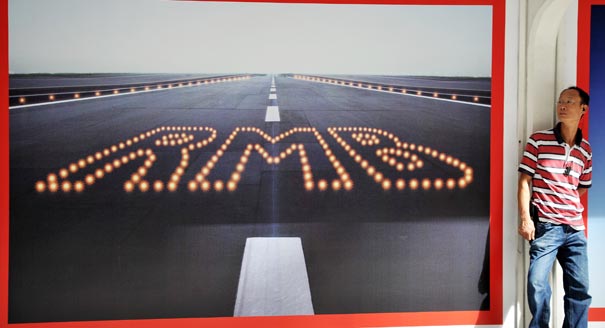
Blaming the undervalued Chinese renminbi for America's economic ills is convenient but counterproductive, given the complicated causes of U.S. trade imbalances.

Link Copied
By Yukon Huang
Published on Oct 13, 2011
Program mobile hero image

Program

Asia

The Asia Program in Washington studies disruptive security, governance, and technological risks that threaten peace, growth, and opportunity in the Asia-Pacific region, including a focus on China, Japan, and the Korean peninsula.

Learn More

Source: U.S. News and World Report

Anti-China Legislation Is Not the SolutionWhy does Congress find it so convenient to blame the supposedly undervalued renminbi for America's economic ills? With a political system seemingly unable to address America's deeper fiscal and competitive issues that keep the unemployment rate stubbornly high, it's far easier to complain that China's export prowess is the real culprit. But the basis for this accusation just keeps getting weaker over time.

China's exchange rate has appreciated by more than 25 percent over the past six years and Beijing intends for it to appreciate steadily by 5-6 percent annually. As the U.S. dollar strengthened over the past several months in response to the problems in the eurozone, the renminbi has been the only major trading currency to appreciate while the others have typically depreciated by 5-10 percent. And China has cut its trade surplus from the 7-8 percent of GDP five years ago to a projected 1-2 percent this year. Although foreign reserves continue to mount, this has more to do with capital inflows seeking higher returns—nurtured by expansionary U.S. monetary policies—than by an undervalued renminbi.
 
But more importantly, fixating on bilateral trade balances is meaningless when global production is being outsourced to production sharing networks and the supply chain is managed by the Walmarts and Apples of the world. Half of China's exports are "processed" products that draw on a variety of components produced primarily throughout East Asia—but also the United States and Europe—and are ultimately assembled in China. The finished products are then exported primarily to major economies, but also increasingly to other developing countries. This processing trade actually accounts for China's trade surplus as the remainder, which draws exclusively on domestic resources, generates a trade deficit. This means that the U.S. deficit with China is really a deficit with East Asia as a whole.
 
Addressing global imbalances requires multilateral solutions and cooperation rather than something like an anti-China currency bill that only fans counterproductive sentiments.

About the Author

Yukon Huang

Senior Fellow, Asia Program

Huang is a senior fellow in the Carnegie Asia Program where his research focuses on China’s economy and its regional and global impact.

    Recent Work

  • Commentary
    Three Takeaways From the Biden-Xi Meeting

      Yukon Huang, Isaac B. Kardon, Matt Sheehan

  • Commentary
    Europe Narrowly Navigates De-risking Between Washington and Beijing

      Yukon Huang, Genevieve Slosberg

Yukon Huang
Senior Fellow, Asia Program
Yukon Huang
EconomyTradeUnited StatesEast AsiaChina

Carnegie does not take institutional positions on public policy issues; the views represented herein are those of the author(s) and do not necessarily reflect the views of Carnegie, its staff, or its trustees.

More Work from Carnegie Endowment for International Peace

  • upward-facing view of ornately tiled buildings
    Commentary
    Emissary
    Is the Shanghai Cooperation Organisation Performance Art or Meaningful Collaboration?

    Xi, Putin, and other regional leaders are back-slapping in Bishkek, but the SCO has yet to answer the most serious questions about continental Asia's economic future.

      Evan A. Feigenbaum

  • Commentary
    Diwan
    A Strategic Disaster that Devalues U.S. Military Prowess

    In an interview, former ambassador Charles Freeman assesses the Trump administration’s war against Iran.

      Michael Young

  • Commentary
    Sada
    Gas and Peace: Can Energy Trade Contain Egypt-Israel Conflict?

    Can economic ties help contain conflict between Egypt and Israel, or do they simply postpone confrontation? Drawing on the German-Russian experience, the article examines how the gas deal creates mutual dependence, keeps channels of cooperation open, and raises the cost of conflict, without necessarily delivering lasting peace.

      Nourhan Hefzy

  • Pituffik base greenland US Denmark
    Article
    Europe’s Overseas Countries and Territories as Geopolitical Assets

    European states control several Overseas Countries and Territories around the world that carry strategic, economic, and environmental weight. As great powers challenge the rules-based order, defending them is a geopolitical imperative for Europe.

      Marc Pierini

  • military personnel on a boat
    Commentary
    Emissary
    The Achilles’ Heel of the Shield of the Americas

    By focusing only on hard security, the Shield ignores the conditions that fuel cartel power.

      • Alejandro Rodriguez
      • Kayly Ober

      Alejandro Martin Rodriguez, Kayly Ober

Get more news and analysis from
Carnegie Endowment for International Peace
Carnegie global logo, stacked
1779 Massachusetts Avenue NWWashington, DC, 20036-2103Phone: 202 483 7600
  • Research
  • Emissary
  • About
  • Experts
  • Donate
  • Programs
  • Events
  • Blogs
  • Podcasts
  • Contact
  • Annual Reports
  • Careers
  • Privacy
  • For Media
  • Government Resources
Get more news and analysis from
Carnegie Endowment for International Peace
© 2026 Carnegie Endowment for International Peace. All rights reserved.