
• Research
  • Emissary
  • About
  • Experts
Carnegie Global logoCarnegie lettermark logo
DemocracyIran
  • Donate
{
  "authors": [
    "Karim Sadjadpour"
  ],
  "type": "legacyinthemedia",
  "centerAffiliationAll": "dc",
  "centers": [
    "Carnegie Endowment for International Peace"
  ],
  "collections": [
    "Arab Awakening"
  ],
  "englishNewsletterAll": "menaTransitions",
  "nonEnglishNewsletterAll": "",
  "primaryCenter": "Carnegie Endowment for International Peace",
  "programAffiliation": "MEP",
  "programs": [
    "Middle East"
  ],
  "projects": [],
  "regions": [
    "Middle East",
    "Syria"
  ],
  "topics": [
    "Political Reform",
    "Foreign Policy"
  ]
}
Source: Getty

In The Media

Chaos In Syria And Regional Implications

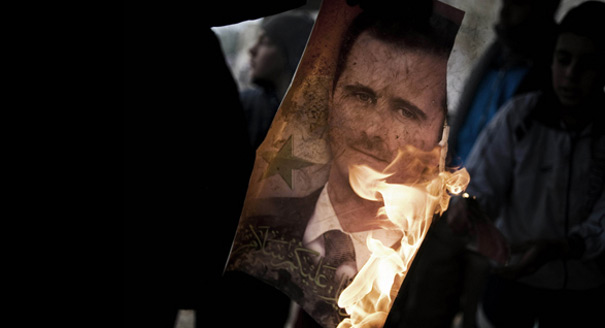
As violence continues to spiral out of control in Syria, the United States has begun to play a larger behind the scenes role in aiding the Syrian opposition.

Link Copied
By Karim Sadjadpour
Published on Jul 23, 2012
Program mobile hero image

Program

Middle East

The Middle East Program in Washington combines in-depth regional knowledge with incisive comparative analysis to provide deeply informed recommendations. With expertise in the Gulf, North Africa, Iran, and Israel/Palestine, we examine crosscutting themes of political, economic, and social change in both English and Arabic.

Learn More

Source: NPR's Diane Rehm Show

As the battle for Aleppo becomes increasingly violent, government troops in Damascus have gone door to door in an effort to clear out the rebels in the capital. Violence continues to spiral out of control with the international community hesitating to take action, due to the complexity of the Syrian case. In recent days, rebels have stepped up guerrilla style attacks in urban areas and the Syrian army has responded with gunships and tanks. Speaking on the Diane Rehm Show, Carnegie's Karim Sadjadpour explained that over 3,000 people have been killed in July alone and the United States has begun working behind the scenes, along with Gulf States like Qatar and Saudi Arabia, to support the rebels.  Sadjadpour said “I think what the U.S. can do is to help the opposition help themselves, meaning helping them with ammunitions, with weapons, with information, with intelligence.” However, “there's very little appetite to have U.S. boots on the ground,” concluded Sadjadpour.

About the Author

Karim Sadjadpour

Senior Fellow, Middle East Program

Karim Sadjadpour is a senior fellow at the Carnegie Endowment for International Peace, where he focuses on Iran and U.S. foreign policy toward the Middle East.

    Recent Work

  • Q&A
    What’s Keeping the Iranian Regime in Power—for Now

      Aaron David Miller, Karim Sadjadpour, Robin Wright

  • Q&A
    How Washington and Tehran Are Assessing Their Next Steps

      Aaron David Miller, David Petraeus, Karim Sadjadpour

Karim Sadjadpour
Senior Fellow, Middle East Program
Karim Sadjadpour
Political ReformForeign PolicyMiddle EastSyria

Carnegie does not take institutional positions on public policy issues; the views represented herein are those of the author(s) and do not necessarily reflect the views of Carnegie, its staff, or its trustees.

More Work from Carnegie Endowment for International Peace

  • Trump and Netanyahu speaking
    Commentary
    Emissary
    The Diverging U.S. and Israeli Goals in Iran Are Making the Endgame Even Murkier

    The cracks between Trump and Netanyahu have become more pronounced, particularly over energy and leadership targets.

      • Eric Lob

      Eric Lob

  • Seoul traffic at night
    Commentary
    Emissary
    How the Hormuz Closure Is Testing the Korean President’s Progressive Agenda

    The crisis is not just a story of energy vulnerability. It’s also a complex, high-stakes political challenge.

      Darcie Draudt-Véjares

  • Commentary
    Strategic Europe
    Russia’s Imperial Retreat Is Europe’s Strategic Opportunity

    The war in Ukraine is costing Russia its leverage overseas. Across the South Caucasus and Middle East, this presents an opportunity for Europe to pick up the pieces and claim its own sphere of influence.

      William Dixon, Maksym Beznosiuk

  • Commentary
    Carnegie Politika
    Tokayev’s New Constitution Is a Bet on Stability—At Freedom’s Expense

    Kazakhstan’s new constitution is an embodiment of the ruling elite’s fears and a self-serving attempt to preserve the status quo while they still can.

      Serik Beysembaev

  • Mourners hold up their phones showing images of Ali Khamenei during a memorial vigil after Iranian state media confirmed the death of Ayatollah Ali Khamenei on March 1, 2026 in Tehran, Iran.
    Article
    Iran Wields Wartime Internet Access as a Political Tool

    In an effort to disseminate its preferred message, the Iranian regime is offering a simple transaction: connectivity for amplification.

      Mahsa Alimardani

Get more news and analysis from
Carnegie Endowment for International Peace
Carnegie global logo, stacked
1779 Massachusetts Avenue NWWashington, DC, 20036-2103Phone: 202 483 7600Fax: 202 483 1840
  • Research
  • Emissary
  • About
  • Experts
  • Donate
  • Programs
  • Events
  • Blogs
  • Podcasts
  • Contact
  • Annual Reports
  • Careers
  • Privacy
  • For Media
  • Government Resources
Get more news and analysis from
Carnegie Endowment for International Peace
© 2026 Carnegie Endowment for International Peace. All rights reserved.












