

Commentary
Nathan J. Brown
{
  "authors": [
    "Nathan J. Brown"
  ],
  "type": "legacyinthemedia",
  "centerAffiliationAll": "dc",
  "centers": [
    "Carnegie Endowment for International Peace",
    "Malcolm H. Kerr Carnegie Middle East Center"
  ],
  "collections": [
    "Arab Awakening"
  ],
  "englishNewsletterAll": "menaTransitions",
  "nonEnglishNewsletterAll": "",
  "primaryCenter": "Carnegie Endowment for International Peace",
  "programAffiliation": "MEP",
  "programs": [
    "Middle East"
  ],
  "projects": [],
  "regions": [
    "North Africa",
    "Egypt"
  ],
  "topics": [
    "Political Reform"
  ]
}
Source: Getty
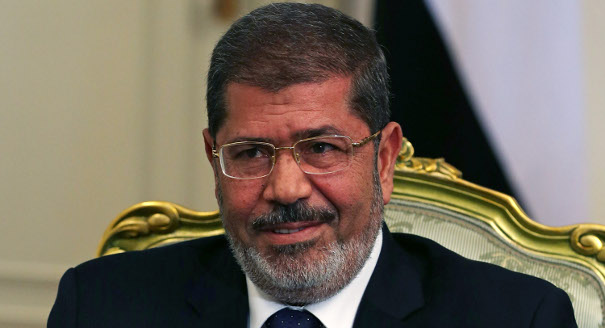
Egyptian President Mohammed Morsi has assumed additional presidential powers, leading to protests largely led by non-Islamic groups.
Source: NewsHour
RAY SUAREZ: To explain why Morsi took these steps and the reaction that followed, I'm joined by Nathan Brown, an expert on Egyptian constitutional law and politics. He's a professor at GeorgeWashingtonUniversity.
And do you find it significant that this wasn't just Tahrir Square, but Alexandria, Port Said, even all the way out in Asyut at the other end of Egypt?
NATHAN BROWN, George Washington University: Oh, yes.
Essentially, most of the non-Islamist political forces in Egypt, that is the Brotherhood, the Salafi movements aside, have lined up against this. The real question is, are they going to be able to form a united front, and do they have any strategy by which to overturn Morsi's decisions?
RAY SUAREZ: Now, what exactly has he done through these decrees? What did he say -- what powers did he give to himself, basically, until there's a constitution?
NATHAN BROWN: Well, he did a lot of little things. He dismissed the old prosecutor, who was seen as a holdover from the old regime. He promised those people who have been injured in the demonstrators around the revolution state support, payments and this sort of thing. He promised new trials.But the main thing that he did was to take all of his actions, and place them outside of court review. And he also made it impossible to disband the constitutional assembly that is now writing the document. He had already assumed not simply presidential powers, but legislative powers. That, he did in August.
What he is doing right now, what he did yesterday, was to place all of his actions, and those of the constitutional assembly, beyond the reach of the judiciary as well.
RAY SUAREZ: Now, we heard the reaction from the streets of Egypt. President Morsi in his own defense says, hey, actually, I'm defending the revolution because there's been so much obstruction that I need these powers just to run the country until there's a new constitution in place. Is that a plausible argument?
NATHAN BROWN: It's a plausible argument, but I think for the transition it's a dangerous one.
Essentially, what you have is the transition process that's worked in a very, very bad fashion since the beginning and it simply isn't producing a consensus. There is this constitutional assembly. It has got 100 people who are supposed to be writing the constitution. It's dominated by Islamists.
So, the non-Islamists in the body were threatening to walk out, not cooperate. There were lawsuits against the constitutional assembly. So what Morsi did yesterday was to say, OK, you can't challenge that process.
And I think instead of making it so those people come back to the assembly and really buckle down and write a consensus document, what it's going to do is harden positions.
And so those people who are outside of the process, or those people who are a minority in the constitutional assembly are just going to pull out of it entirely, and the whole process is going to be essentially taking a constitution and writing a constitution and then shoving it down the opposition's throats.
RAY SUAREZ: The opposition said that this is the kind of stuff they went into the streets to oppose when Hosni Mubarak was still president. Fair point?
NATHAN BROWN: I think it is a fair point.
Morsi's defense would be this is only temporary. As soon as the constitution is written, then my powers go back to whatever that document says. I'm not going to do this endlessly.
Mubarak kept on declaring a state of emergency and extending it and extending it and so on. He tailored a constitution to his own liking. I'm not trying to do that. Just give me until February, so that I can basically oversee this process, and then we go back to normal.
RAY SUAREZ: You know, it's only about 48 hours since this guy was the toast of world capitals for the role he took in bringing about a cease-fire between Israel and Gaza. Do these things move on separate tracks or did he feel his hand strengthened by that new attention?
NATHAN BROWN: Well, we have to speculate about motives here, but I cannot believe it's a total coincidence.
Morsi all along has been trying to assert his authority and feeling that he's constrained in all kinds of different ways, and therefore he's really tried to find the right time to make these moves.
Right now, I think he felt that the constitutional assembly was moving towards completion. There was a sense of crisis coming if this document couldn't get written.
And he had some international room for maneuver. The United States is not going to take a very strong line against him right after he has proved so useful. So, I think -- again, it is speculation. But I think there has got to be some deliberate attempt to use the current international atmosphere to move forward domestically.
RAY SUAREZ: Now, it's early days yet to have the square filled once again after the eyes of the world had been on the downfall of the last Egyptian leader. Does Morsi still have the upper hand at this point?
NATHAN BROWN: I think he does have the upper hand, but my guess is he underestimated the popular reaction.
What he had done in his moves yesterday was to pepper his decrees with all kinds of carrots for different groups of the opposition, hoping that he would be able to split them. And that hasn't happened so far. And so what the opposition really has to do, now that they have basically unified against thee decrees is find some way of challenging them.
Are they going to move to the streets and have demonstrations? If so, how many people can they get? Are they going to try to move to the courts and have a court say, you cannot do this, and then have Morsi say, well, yes, I can, and then have some kind of a constitutional showdown?
They don't have a clear strategy and that's what they have got to work out over the next couple days.
RAY SUAREZ: But might this have put pressure in the pipe to avoid despotism, to get a settlement on a constitution and a new parliament sooner rather than later?
NATHAN BROWN: I think if you take a look at the actual constitution that they're writing, then you don't see a document that is all that problematic.
Some of the opposition and members of the assembly will have some clauses that bother them. It's probably not the constitution that everybody was dreaming about, but it still is a workable document.
The problem is if you go in, even with the workable document, into a situation where there is this much distrust and this much bitterness and where people are convinced that the elections are not really going to be fair, they have got to take their battle into the streets, then you're not going to have a stable political system that comes out of this.
RAY SUAREZ: Professor Nathan Brown, thanks for joining us.
NATHAN BROWN: Thank you.

Nonresident Senior Fellow, Middle East Program
Nathan J. Brown, a professor of political science and international affairs at George Washington University, is a distinguished scholar and author of nine books on Arab politics and governance, as well as editor of five books.
Recent Work
Nathan J. Brown
Nathan J. Brown
Carnegie does not take institutional positions on public policy issues; the views represented herein are those of the author(s) and do not necessarily reflect the views of Carnegie, its staff, or its trustees.
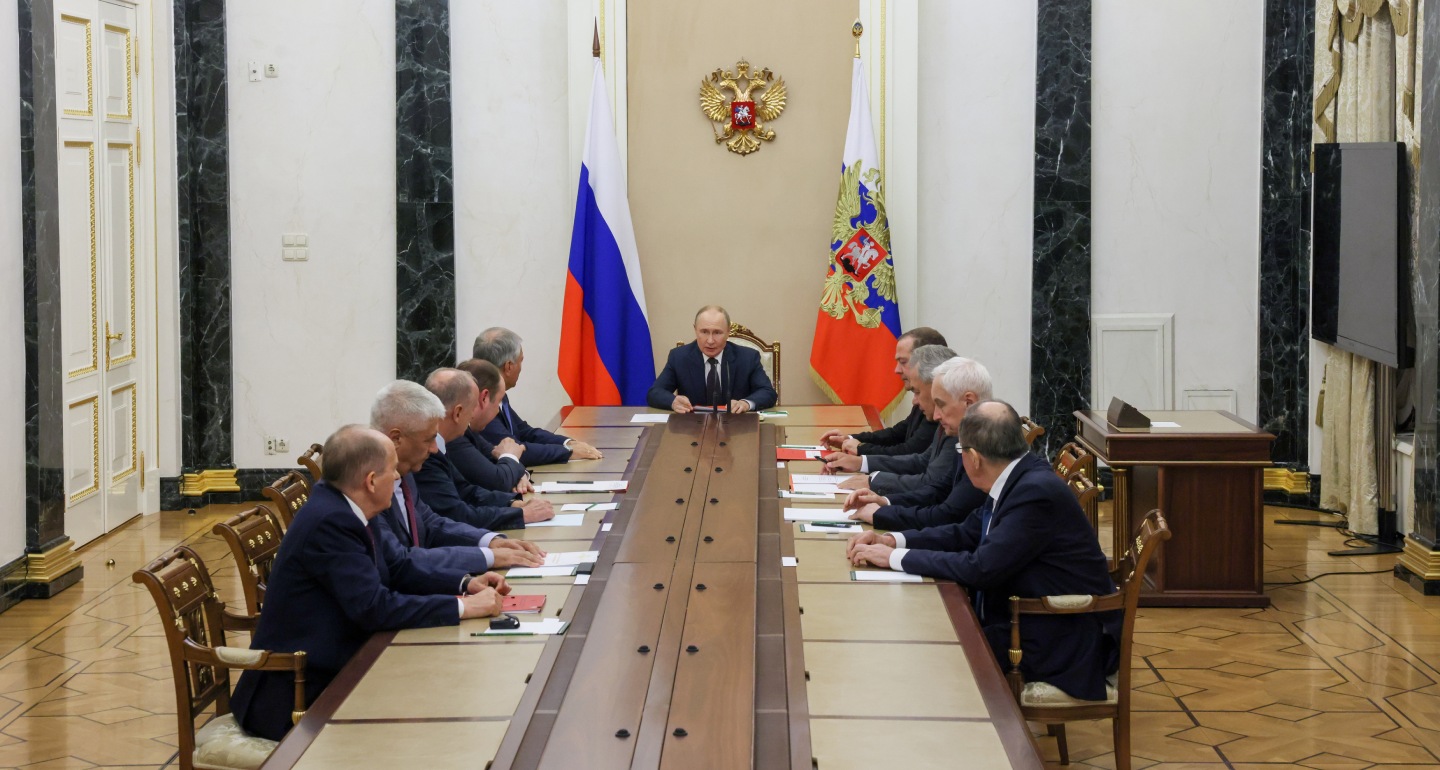
The ruling elites in contemporary Russia are not a political class, but a community of managers who are not subject to competition or public accountability. The state is becoming an operating apparatus without any internal autonomy.

Alexandra Prokopenko

Pashinyan’s pro-European party has been re-elected with a decisive victory. But the pro-Russian opposition could still slow Armenia’s progress toward peace with Azerbaijan and rapprochement with Europe.
Mikayel Zolyan
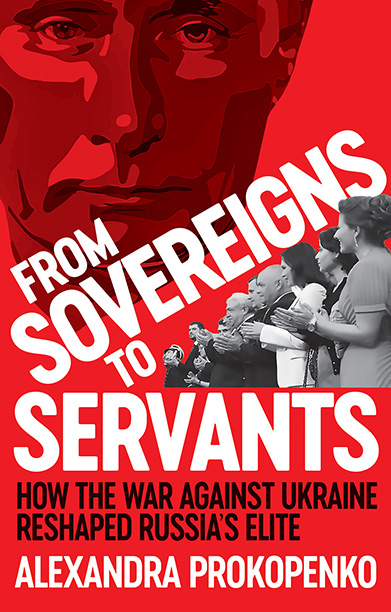
How did Putin co-opt Russia’s political and economic elites, ensuring no more than fitful resistance to the regime’s war on Ukraine?
Alexandra Prokopenko
For all the menacing rhetoric, the Armenian prime minister remains a leader with whom Putin is prepared to interact: not as an ally, but as a partner, albeit a problematic one.

Alexander Atasuntsev

The EU’s new migration policy is not suited to today’s realities. With climate change increasingly becoming a driver of displacement, Europe needs to rethink its deterrence-focused approach.

Shana Tabak