

Paper
James M. Acton, Ankit Panda
{
  "authors": [
    "James M. Acton"
  ],
  "type": "legacyinthemedia",
  "centerAffiliationAll": "dc",
  "centers": [
    "Carnegie Endowment for International Peace",
    "Carnegie China"
  ],
  "collections": [
    "China’s Foreign Relations",
    "U.S. Nuclear Policy",
    "Korean Peninsula"
  ],
  "englishNewsletterAll": "ctw",
  "nonEnglishNewsletterAll": "",
  "primaryCenter": "Carnegie Endowment for International Peace",
  "programAffiliation": "NPP",
  "programs": [
    "Nuclear Policy"
  ],
  "projects": [],
  "regions": [
    "North America",
    "United States",
    "East Asia",
    "South Korea",
    "North Korea"
  ],
  "topics": [
    "Nuclear Policy",
    "Security",
    "Arms Control"
  ]
}
Source: Getty
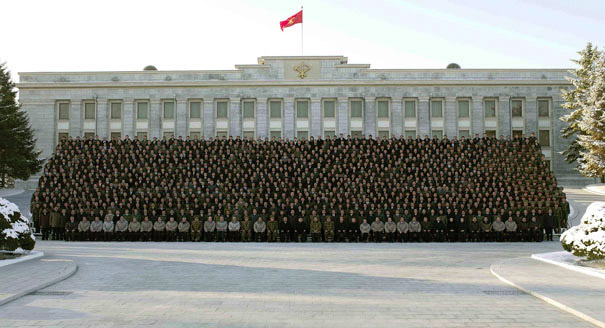
North Korea has issued new threats against South Korea and has demanded an apology for protests in the South.
Source: CTV News
North Korea has issued new threats against South Korea and has demanded an apology for recent protests in the South. Carnegie's James Acton spoke to CTV News about the latest developments.
"Anytime one country threatens another country with the use of nuclear weapons, which North Korea has done, you have to take those threats seriously," Acton pointed out, adding, "that said, do not think that North Korea or Kim Jong-un is about to wake up tomorrow morning and use a nuclear weapon against the United States."
Acton said that he is more worried about an accident, even at sea, that escalates into the use of nuclear weapons. "I think that there are a number of factors going on here," said Acton, "the first point to make is that the truth is that we don't know what is going on inside North Korea, it is widely regarded as being one of the toughest intelligence targets in the world."
"That said," Acton added, "some of what is going on in North Korea is presumably about the young, inexperienced leader, Kim Jong-un, asserting himself amongst his miiltary and perhaps his own population."
On China's position, Acton said that nothing new has come out of Secretary Kerry's visit to China. "If there is a shift in Chinese policy, I wouldn't expect to see much publicly, in general I would expect China to do its diplomacy quietly, behind the scenes," concluded Acton.

Jessica T. Mathews Chair, Co-director, Nuclear Policy Program
Acton holds the Jessica T. Mathews Chair and is co-director of the Nuclear Policy Program at the Carnegie Endowment for International Peace.
Recent Work
James M. Acton, Ankit Panda
James M. Acton
Carnegie does not take institutional positions on public policy issues; the views represented herein are those of the author(s) and do not necessarily reflect the views of Carnegie, its staff, or its trustees.

Despite its flop at the box office, the film raises important questions for the climate community to answer.

Leonardo Martinez-Diaz

Russian strikes are weakening the economy sustaining Ukraine’s war effort. Closing the growing funding gap will require more European support and politically contentious reforms in Kyiv.

Balázs Jarábik

In an interview, Rozina Ali discusses her new book on the rise and manifestations of Islamophobia in the United States.

Michael Young

While the EU and European governments are embracing the much-lauded middle-power moment, this entails three difficult conundrums.

Richard Youngs

Europe is facing rising populism internally as well as external pressures from Russia, China, Turkey, and the United States.

Dimitar Bechev