

In The Media
John Judis
{
  "authors": [
    "John Judis"
  ],
  "type": "legacyinthemedia",
  "centerAffiliationAll": "",
  "centers": [
    "Carnegie Endowment for International Peace"
  ],
  "collections": [],
  "englishNewsletterAll": "",
  "nonEnglishNewsletterAll": "",
  "primaryCenter": "Carnegie Endowment for International Peace",
  "programAffiliation": "",
  "programs": [],
  "projects": [],
  "regions": [
    "North America",
    "United States"
  ],
  "topics": [
    "Political Reform",
    "Security"
  ]
}
Source: Getty
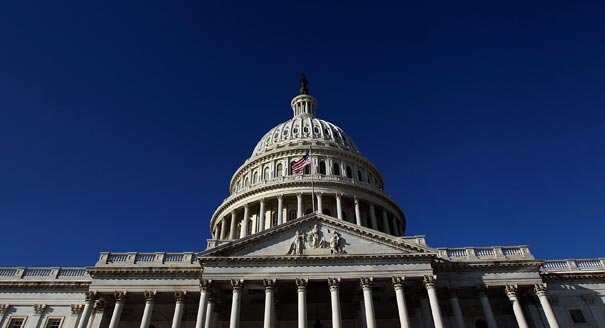
The United States needs a re-examination of the National Security Agency and other national security agencies, as well as the Foreign Intelligence Surveillance Court that is supposed to authorize their activities.
Source: New Republic
The defenders of government surveillance have used the media’s fascination with personalities to turn attention onto leaker Edward Snowden and away from what he disclosed. What Snowden’s leak should prompt is a re-examination of the National Security Agency (NSA) and other national security agencies and the Foreign Intelligence Surveillance Court (FISA) that is supposed to authorize their activities.Nancy Gertner, a former federal judge who teaches at the Harvard Law School, casts doubt on FISA’s. The court, whose members are appointed by Chief Judge Roberts, is stocked with conservatives, including Robert Vinson, who approved the NSA surveillance, and who earlier declared the Affordable Care Act unconstitutional. Its opinions are secret, and not subject to public debate.
Gertner, responding to a statement commending the FISA court, told a meeting in Washington, “As a former Article III judge, I can tell you that your faith in the FISA Court is dramatically misplaced. Two reasons: One … The Fourth Amendment frameworks have been substantially diluted in the ordinary police case. One can only imagine what the dilution is in a national security setting. Two, the people who make it on the FISA court, who are appointed to the FISA court, are not judges like me. Enough said.”

Former Visiting Scholar
As a visiting scholar at Carnegie, Judis wrote The Folly of Empire: What George W. Bush Could Learn from Theodore Roosevelt and Woodrow Wilson.
Recent Work
John Judis
John Judis
Carnegie does not take institutional positions on public policy issues; the views represented herein are those of the author(s) and do not necessarily reflect the views of Carnegie, its staff, or its trustees.

China’s political future will be shaped between now and next October. As the Communist Party enters its intense “campaign season” to prepare for a major political transition in 2027, reading Beijing's actions and responses may become more difficult as domestic politics weigh on its behavior more than usual.

Damien Ma

The EU can impose sanctions but struggles to enforce them without the United States. With Washington increasingly disinterested in backing European interests, the bloc must now fend for itself.


Nicu Popescu, Tiago Antunes

Rubio’s recent visit brought welcome attention, but more capital requires governance changes that may be a hard sell for regional governments.

Jennifer B. Murtazashvili

America’s foreign-policy objectives have grown more demanding while Americans have demanded greater focus on their own affairs.
Stephen Wertheim

Japan’s long-term security policy is driven by concerns about China, and there is little appetite for (or interest in) pursuing a confrontation with Moscow.

James D.J. Brown