

Commentary
- +1
Paul Haenle, Xue Gong, Ngeow Chow Bing, …
{
  "authors": [
    "Paul Haenle"
  ],
  "type": "legacyinthemedia",
  "centerAffiliationAll": "",
  "centers": [
    "Carnegie Endowment for International Peace",
    "Carnegie China"
  ],
  "collections": [
    "U.S.-China Relations",
    "China’s Foreign Relations"
  ],
  "englishNewsletterAll": "",
  "nonEnglishNewsletterAll": "",
  "primaryCenter": "Carnegie China",
  "programAffiliation": "",
  "programs": [],
  "projects": [],
  "regions": [
    "East Asia",
    "China",
    "North Korea"
  ],
  "topics": [
    "Arms Control",
    "Security",
    "Foreign Policy"
  ]
}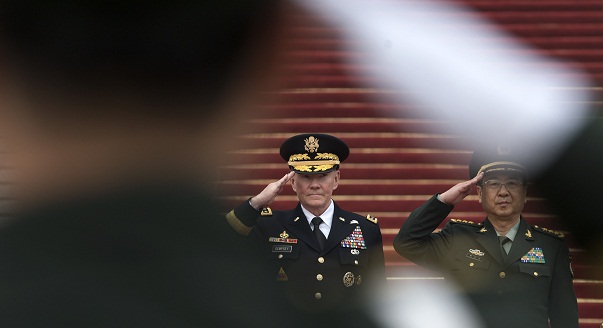
Source: Getty
The United States can help China with its North Korea problem.
Source: CNN
Beijing has long seen itself as the arbitrator between Pyongyang and Washington in addressing North Korean nuclear proliferation. China’s priorities have been peace and stability, denuclearization, and nonproliferation, in that order. So China pushed to preserve the status quo on the Korean Peninsula.
But this is changing – North Korea is now China’s problem. This means that President Obama should take full advantage of his upcoming meeting with President Xi Jinping in California to offer help in finding a way to compel Pyongyang to alter its behavior.
Of course, U.S. officials have tried in the past to demonstrate that the regional stability Beijing desires will only be achieved with denuclearization and that China has as much – if not more – at stake in ridding North Korea of its nuclear weapons program. Unfortunately, U.S. urgings that North Korea is a common problem and that joint solutions are required have fallen on deaf ears.
This all started to change, however, when Kim Jong Un assumed power in North Korea. China put its credibility and patience on the line to help Kim consolidate power in the hope that he would embark upon a path of economic reform similar to China’s own experience. But Beijing’s vision was quickly dashed. In fact, over the last several months North Korea’s young (at 29 years-old, Kim is the world’s youngest head of state) and impetuous leader has taken a series of destabilizing and provocative actions that have brought the region to the brink of war.In defiance of its most important friend, North Korea conducted a missile and nuclear test, annulled the agreement that ended the Korean War, closed the joint Kaesong Industrial Complex with South Korea, and North Koreans even kidnapped 16 Chinese fishermen, to name only a few provocations.
While some argue that Beijing doesn’t hold significant leverage to shape Pyongyang’s behavior, without China’s strong support at the United Nations and economic and humanitarian assistance, North Korea’s continued existence would be uncertain.
Despite this, North Korea goes against Beijing’s wishes and threatens the very stability China hopes to preserve, prompting even Chinese citizens to start to question if Kim is overplaying his hand in a way that will ultimately undermine China’s vital interests.
There are clear reasons for China to address its North Korea problem.
China’s security interests have evolved over the past three decades as the country has prospered and achieved feats of development unparalleled in modern history. Xi has spoken about an enhanced Chinese leadership role in the Asia-Pacific, but this goal will be hard to achieve if China is unable to rein in the reckless behavior of its unruly neighbor.
Efforts to boost China’s soft power and international image are undermined every time North Korea defies China’s pleas. And if North Korean nuclear and missile capabilities continue to advance, China should expect an enhanced U.S. security posture in the region – not something Beijing wants.
The combination of a young and irresponsible leader in Pyongyang and the evolution of China’s own security interests should make it clear to Chinese leaders that North Korea has become a problem for Beijing in new and troubling ways.
China is beginning to take steps in this direction through toughened public statements, the closure of North Korean accounts in Chinese banks, and a significant drop off in cross-border trade. South Korean President Park Geun-hye was also invited for a summit with Xi in late June, while the North Korean leader has not, despite apparent repeated requests. China is clearly sending the North Korean regime a message that business as usual is no longer acceptable.
This changes things. A new window for diplomacy is now opening as North Korea becomes more China’s problem than Washington’s – and Beijing has a responsibility to come up with credible diplomatic options.
The good news is that China doesn’t need to deal with its North Korea problem on its own. The United States and its allies all want a stable Korean Peninsula stripped of its nuclear-weapons capabilities, and are in a position to help. If China, the United States, Japan, and South Korea can respond in a unified manner, with one voice, it would be an important first step in changing North Korea’s behavior. But China must first signal its readiness to accept help from other powers.
This can all start when Xi and Obama meet in California. Obama should initiate discussion on the North Korea problem and work to establish the personal relationship required to enhance cooperation on the issue. The stakes are too high to let this moment pass.

Former Maurice R. Greenberg Director’s Chair, Carnegie China
Paul Haenle held the Maurice R. Greenberg Director’s Chair at the Carnegie Endowment for International Peace and is a visiting senior research fellow at the East Asian Institute, National University of Singapore. He served as the White House China director on the National Security Council staffs of former presidents George W. Bush and Barack Obama.
Recent Work


Paul Haenle, Xue Gong, Ngeow Chow Bing, …

Paul Haenle, Chong Ja Ian
Carnegie does not take institutional positions on public policy issues; the views represented herein are those of the author(s) and do not necessarily reflect the views of Carnegie, its staff, or its trustees.
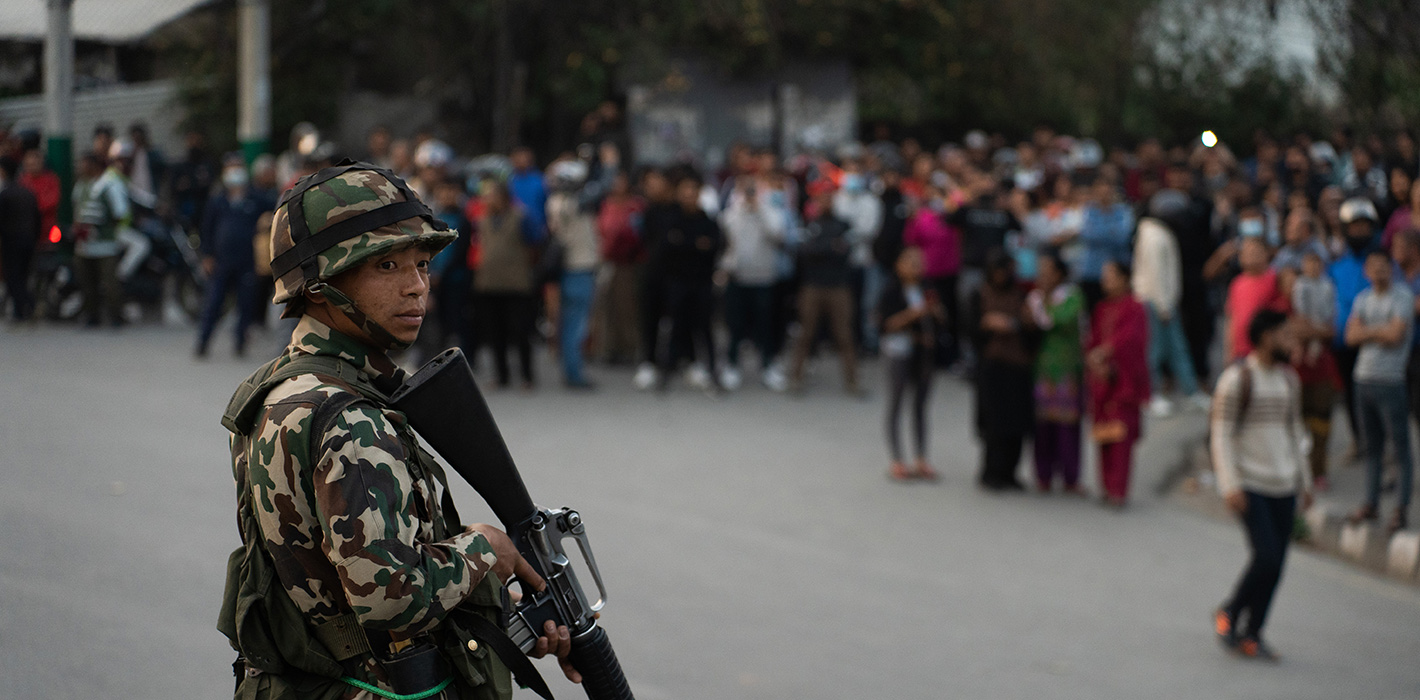
Military rule is now a defining political factor in South Asia. Here’s how analysts can understand and account for it.

Paul Staniland

Orbán created an image for himself as virtually the only opponent of aid to Ukraine in the entire EU. But in reality, he was simply willing to use his veto to absorb all the backlash, allowing other opponents to remain in the shadows.

Maksim Samorukov
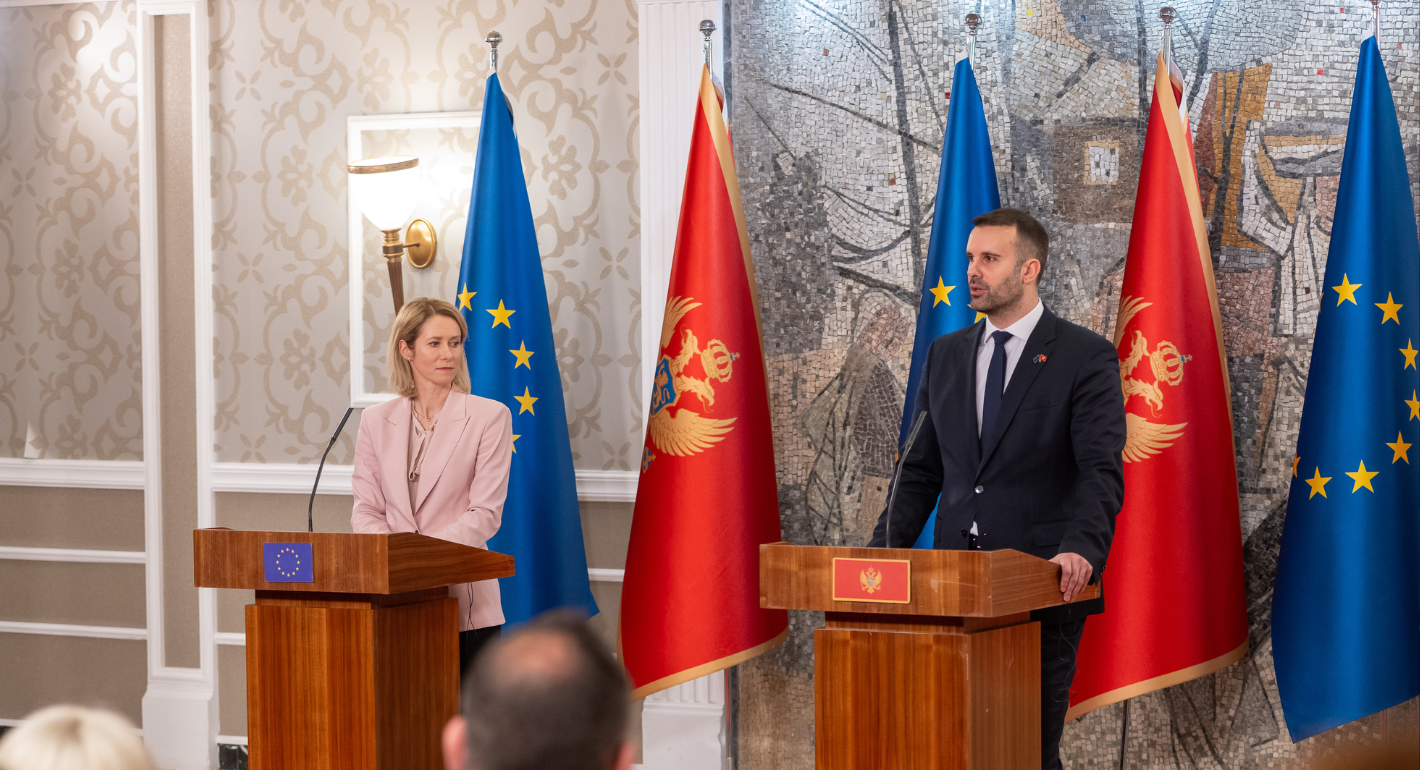
Montenegro and Albania are frontrunners for EU enlargement in the Western Balkans, but they can’t just sit back and wait. To meet their 2030 accession ambitions, they must make a strong positive case.


Dimitar Bechev, Iliriana Gjoni

This piece argues that the present Indian strategy, based on opportunistic diversification and utilization of limited strategic reserves, remains inadequate when confronting supply disruptions. It evaluates India’s options in the short, medium, and long terms.

Vrinda Sahai

Its reinstatement should be celebrated, but it retains some major shortcomings.

Leonardo Martinez-Diaz