

Commentary
In an interview, Ian Lustick and Eli Clifton discuss their new book on why a prominent ally has so much influence in America.
Michael Young
{
  "authors": [
    "George Perkovich",
    "Ariel (Eli) Levite"
  ],
  "type": "legacyinthemedia",
  "centerAffiliationAll": "dc",
  "centers": [
    "Carnegie Endowment for International Peace",
    "Malcolm H. Kerr Carnegie Middle East Center",
    "Carnegie Russia Eurasia Center"
  ],
  "collections": [
    "U.S. Nuclear Policy"
  ],
  "englishNewsletterAll": "ctw",
  "nonEnglishNewsletterAll": "",
  "primaryCenter": "Carnegie Endowment for International Peace",
  "programAffiliation": "NPP",
  "programs": [
    "Nuclear Policy"
  ],
  "projects": [
    "Eurasia in Transition"
  ],
  "regions": [
    "North America",
    "United States",
    "Middle East",
    "Syria",
    "Russia",
    "Levant"
  ],
  "topics": [
    "Political Reform",
    "Security",
    "Military",
    "Foreign Policy",
    "Global Governance"
  ]
}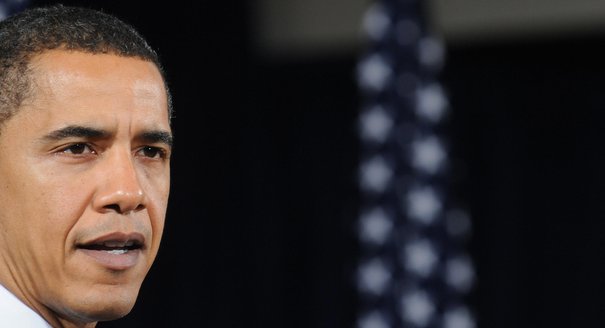
Source: Getty
Washington should endorse the Russian proposal and invest President Vladimir Putin’s prestige in winning Syria’s assent and full, timely implementation. Such an outcome would be better than military action and better than no action.
Source: Politico
Can Barack Obama take yes for an answer?
It’s become a cliché to say that there are “no good options” in Syria. But if Bashar Assad accepts and implements Russia’s proposal to turn over Syria’s chemical weapons to international monitors – admittedly, a big if — the result would be much better than a least-bad alternative. It would be a good outcome of a horrible circumstance. The precedent would be established: If you use chemical weapons, you lose them. And you lose them not because the United States will force you to, but because even U.S. adversaries agree that this punishment fits the crime.No one knows whether and how Syria’s civil war can be ended. Neither President Obama, nor Congress, nor the American public believes the United States can stop the slaughter by force of arms. Americans cannot end the Assad government’s killing of its opponents, and then subsequently prevent the opponents from revenge-killing the Alawites, or prevent Sunni jihadists from killing mainstream Sunnis. (If you think otherwise, we humbly suggest you Google the word “Iraq” and keep scrolling.)
If the United States does intervene, it would be to enforce the Geneva Protocol of 1929 banning the use of chemical weapons, and the generalized norm against use of these weapons, which was reinforced by the Chemical Weapons Convention of 1993. Syria is one of only seven countries that are not party to the latter treaty. One hundred and eighty-nine countries are parties, including Russia and Iran, the two most influential outside powers in Syria.
If Moscow and Tehran can avert U.S. military strikes by persuading Syria’s Assad to transfer chemical weapons to an international authority, then the United States should welcome it. The message would be that the use of chemical weapons (and by extension biological weapons) is beyond the international pale. This injunction would now apply to all states, including the few that have not adopted the Chemical Weapons Convention.
Obama is going to need help from Capitol Hill. To facilitate this important gain, Congress should adopt a resolution authorizing U.S. military operations if Syria did not agree within a fixed number of days or used chemical weapons again. Such a resolution would enhance the leverage of Russia and other international actors in dealing with Assad. It need not commit the United States to strike if Syria does not agree, but would give the president the option to do so.
Russia has already demonstrated its interest in the chemical-disarmament option. There is reason to believe that Iran’s new president, Hassan Rouhani, might press Assad in this direction. Rouhani already has declared, “We completely and strongly condemn use of chemical weapons in Syria.” Iranians still recall the horror of the chemical attacks they suffered at the hands of Iraqi dictator Saddam Hussein in the 1980s. Iran has implemented the Chemical Weapons Convention and has strategic reasons to urge Assad to do the same, especially if it could forestall U.S. military strikes and create pressure on other holdout states, including Egypt and Israel, to adopt the convention.Implementing and verifying the complete surrender of Syria’s chemical weapons would be truly difficult and take considerable time. Yet the process itself can be positive: Syria would be in a much more difficult position if it used chemical weapons after it has agreed to give them up and while internationally backed personnel are in the country monitoring them. Even the U.N. Security Council might then be compelled to recognize the necessity of military punishment. The Russian disarmament proposal would thus cleverly and peacefully accomplish the deterrent goal behind Obama’s proposed military strikes.
The Syrian regime has already used chemical weapons. There is reason to fear that as the civil war continues, these weapons may be transferred to other dangerous actors within the country or elsewhere. Turning Assad’s crime against humanity into an opportunity to gain control over these weapons is therefore a vital U.S. and international interest.
Washington — especially Congress — should do nothing to discourage Syria’s few friends from pursuing chemical weapons disarmament there. Quite the opposite: Washington should endorse the Russian proposal and invest President Vladimir Putin’s prestige in winning Syria’s assent and full, timely implementation. Such an outcome would be better than military action and better than no action. And if this initiative fails, force is always the least-bad option left.

Japan Chair for a World Without Nuclear Weapons, Senior Fellow
George Perkovich is the Japan Chair for a World Without Nuclear Weapons and a senior fellow in the Carnegie Endowment for International Peace’s Nuclear Policy Program. He works primarily on nuclear deterrence, nonproliferation, and disarmament issues.
Senior Fellow, Nuclear Policy Program, Technology and International Affairs Program
Levite was the principal deputy director general for policy at the Israeli Atomic Energy Commission from 2002 to 2007.
Carnegie does not take institutional positions on public policy issues; the views represented herein are those of the author(s) and do not necessarily reflect the views of Carnegie, its staff, or its trustees.

In an interview, Ian Lustick and Eli Clifton discuss their new book on why a prominent ally has so much influence in America.

Michael Young

Germany, India, and other middle powers can’t build frontier AI alone, and they risk being cut off if they depend on the United States or China. The way through is to build the capacity for a frontier sprint while hoping never to use it.


Anton Leicht, Sam Winter-Levy

Sergei Kiriyenko used Russia’s parliamentary vote to further hone his strategy of corporate mobilization that is designed to maximize votes for United Russia.

Andrey Pertsev

Trump has promised Belarus a massive potash deal. But Minsk is seeking something greater: restored Western transit and greater room for maneuver from Russia.

Balázs Jarábik

Before the next wave of EU enlargement takes place, the union needs to grapple with thorny questions of how power is distributed among its members.


Emil Sondaj Hansen, Ditte Brasso Sørensen