

In The Media
Lilia Shevtsova
{
  "authors": [
    "Lilia Shevtsova"
  ],
  "type": "commentary",
  "centerAffiliationAll": "",
  "centers": [
    "Carnegie Endowment for International Peace",
    "Carnegie Russia Eurasia Center"
  ],
  "collections": [],
  "englishNewsletterAll": "",
  "nonEnglishNewsletterAll": "",
  "primaryCenter": "Carnegie Russia Eurasia Center",
  "programAffiliation": "",
  "programs": [],
  "projects": [],
  "regions": [
    "Russia",
    "Eastern Europe",
    "Ukraine"
  ],
  "topics": [
    "Political Reform",
    "Democracy",
    "Foreign Policy",
    "Civil Society"
  ]
}
Source: Getty
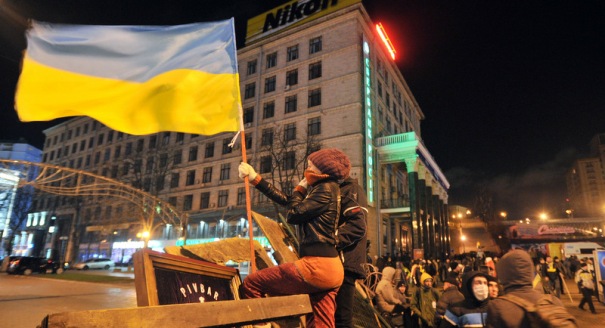
The current Ukrainian awakening is a test for Europe and its ability to reenergize itself and acquire a mission to help find Ukraine a peaceful way out of the confrontation.
Indeed, it should be Ukraine that has taken to the streets demonstrating that it has acquired its own national identity and understanding of where it wants to move.
A couple of points, as brushstrokes on Post-Vilnius.
Last week, I took part in a debate in Vilnius organized by Jerzy Giedroyc Forum and Bronislaw Geremek Foundation, entitled “We in Europe or Europe without us?” We discussed Eastern Partnership, and, of course, Ukraine was a key topic. Vilnius was crowded with supporters of European Ukraine. Lobbying, however, did not help. We know how the Eastern Partnership summit ended—Viktor Yanukovych refused to sign the Association Agreement. Analyzing the recent developments I am coming to a conclusion that he, apparently, was not going to sign it, bluffing from the very beginning.
To understand the post-Vilnius landscape, one needs to put aside the question of winners and losers in this story, although this is indeed the question that interests everyone. The trends and their ramifications highlighted by Vilnius are far more important. Vilnius made previously blurred trends and challenges crystal clear, and this is its greatest outcome.
We may now understand “the Putin Doctrine” that emerged as a result of a newly-formed Russian political regime that seeks to create its own galaxy of satellite states. This galaxy is essential to the Kremlin’s survival. Thus, it is effectively a modified Brezhnev Doctrine adapted to the changed times. Ukraine is the Jewel in the Russian crown. Through its relations with Ukraine, Moscow has already demonstrated what mechanisms it may employ to implement this doctrine. The August trade war was a clear example of Kremlin’s approach.
However, it is Yanukovych’s behavior that became the crucial factor. Naturally, he is trying to ensure his reelection in 2015. This primary motive has guided his actions in the past few weeks. He concluded that European integration would not guarantee him victory and decided to fall back on Putin’s formula of preserving one’s power through appealing to the traditionalist base. This base demands a union with Russia and retention of the old rules of the game, which can be dismantled if Ukraine is to turn to the West. Of course, pressure from Moscow played its role as well. But it was not the main factor that determined Kiev’s choice. Rather, the choice fulfilled the ambitions of the Ukrainian president, and Putin’s pressure was just an additional argument in its favor and a pretext he used to justify it. “Moscow is pressuring me,” he complained to everyone in Vilnius. Yes, there is pressure from Moscow, but the Kremlin simply helped Yanukovych to make a choice that is more likely to preserve the regime which is in no way compatible with the European rules of the game.
Finally, the extent of the West’s paralysis and loss of its mission became evident. Yanukovych’s behavior shocked the unprepared Western capitals, which highlights how little they understand the processes that take place in Ukraine (as well as in Russia). Apart from providing insufficient incentives for modernization (former Ukrainian president Viktor Yushchenko talked about that at the Vilnius forum), the Eastern Partnership model did not include a mechanism that would neutralize possible pressure coming from the Kremlin.
I hope it has now become evident that one of the major premises behind the Eastern Partnership is clearly wrong. Many in Brussels and generally in Europe still believe that this partnership serves as a bridge between Europe and Russia. They keep saying that the partnership should not be treated as a zero-sum game and its members may be involved in alliances with Russia. They are trying not to listen to what the Kremlin is saying. It is talking about Russia being “unique civilization!” This means a zero-sum game with Europe. Actually, we are not talking only about a geopolitical choice for Ukraine here but also about a civilizational one.
In short, forcing Ukraine to make a choice is not the error that Europe has made. Europe has erred by being unable to convince Ukraine to make the right choice and by failing to provide Kiev with additional incentives, including financial ones, to help it make this choice.
In many ways, Kiev’s behavior also resulted from the absence of a clear and unequivocal position in Washington. The U.S. reaction to Kiev’s refusal to sign the agreements came too late and was not strong enough to affect Kiev’s decision.
Finally, let me comment on Euromaidan as one more spillover from the Ukrainian saga. Only last week, one could have concluded how brilliant Yanukovych is at his poker game played simultaneously with Europe and Russia. But on November 30, when the Ukrainian authorities brutally dispersed the peaceful crowd of students in Kiev raising the new tide of anger, it was clear that Yanukovych was digging his political grave. Popular frustration with Yanukovych’s strategic course turned into rejection of him as the president. Moreover, the new Ukrainian rebellion being the reaction to the state violence, it is more aggressive than the 2004 Orange Revolution.
Today we can see that Ukraine is not Russia and the Ukrainian society demonstrates not only activism and drive; major segments of this society have gotten rid of the Soviet and post-Soviet lethargy and know what they want. We can observe in Ukraine all major prerequisites of the new revolution: a growing split of the ruling establishment; lack of loyalty to the leader on behalf of the power structures, including the riot police in the capital; powerful “hotbeds” of regional protest; an independent role of the local authorities who dare to rebel against the president; readiness of the “old” oligarchy to support the rule of law state; existence of a dynamic political opposition (in the parliament as well); and the emergence of the new oppositional leaders. True, the Ukrainian rebellion could still end in a dramatic way. The “Guy from Donetsk” could resort to violence and try to split the country consolidating his Soviet electorate. The opposition could split or fail to offer the society the road map out of the current crisis. But in this case, the “interregnum” will not last long—the next tide will be coming again. Simply because the new Ukrainian society has emerged and they have felt that they can consolidate and have become “Power.”
The current Ukrainian awakening is a test for Europe and its ability to reenergize itself and acquire a mission. Its mission today is to help find Ukraine a peaceful way out of the confrontation. Ukrainian new revolution is also a warning to the Russian regime—in the end Russia could prove that it can follow the same route, only much later…

Former Senior Associate, Russian Domestic Politics and Political Institutions Program, Moscow Center
Shevtsova chaired the Russian Domestic Politics and Political Institutions Program at the Carnegie Moscow Center, dividing her time between Carnegie’s offices in Washington, DC, and Moscow. She had been with Carnegie since 1995.
Recent Work
Lilia Shevtsova
Lilia Shevtsova
Carnegie does not take institutional positions on public policy issues; the views represented herein are those of the author(s) and do not necessarily reflect the views of Carnegie, its staff, or its trustees.
A leak of Russian gas price data helps establish that China is paying Russia far less than Central Asian countries and Gazprom’s former European customers.
Sergey Vakulenko
China’s political future will be shaped between now and next October. As the Communist Party enters its intense “campaign season” to prepare for a major political transition in 2027, reading Beijing's actions and responses may become more difficult as domestic politics weigh on its behavior more than usual.

Damien Ma
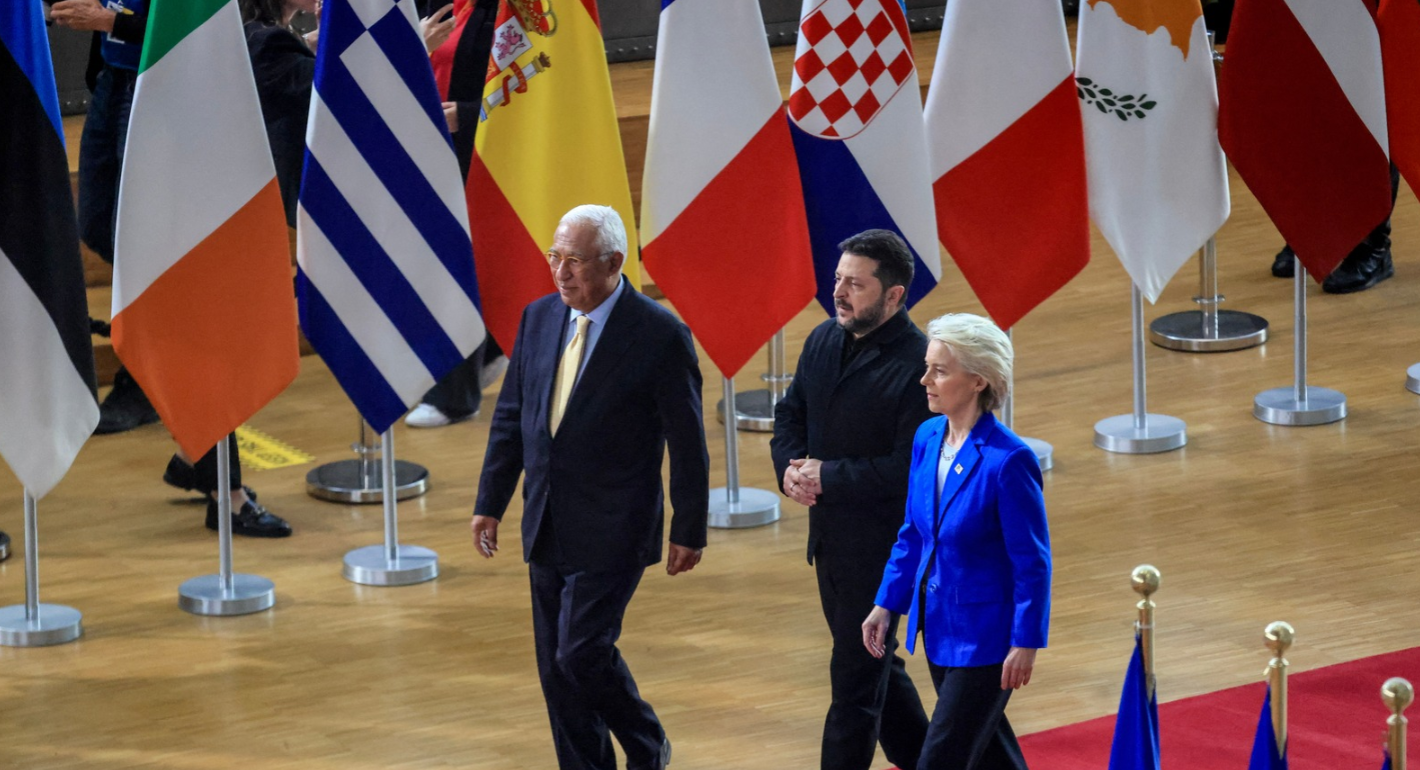
The EU can impose sanctions but struggles to enforce them without the United States. With Washington increasingly disinterested in backing European interests, the bloc must now fend for itself.
Nicu Popescu, Tiago Antunes
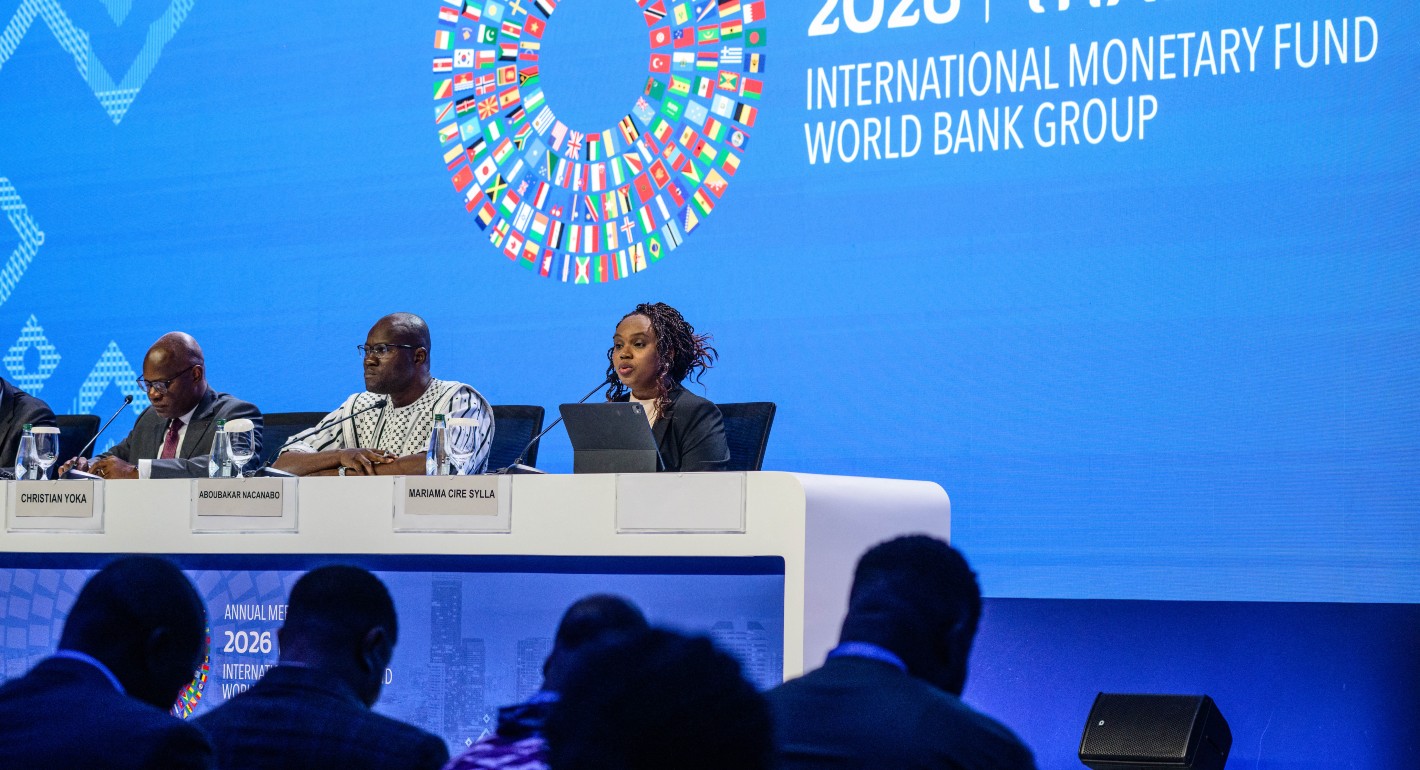
Global and rising powers will need to engage with Africa’s priorities and agency in order to secure the continent’s increasingly attractive partnerships.
Fonteh Akum
Rubio’s recent visit brought welcome attention, but more capital requires governance changes that may be a hard sell for regional governments.

Jennifer B. Murtazashvili