

Research
- +4
Milan Vaishnav, Rahul Verma, Rukmini S., …
{
  "authors": [
    "Christophe Jaffrelot"
  ],
  "type": "legacyinthemedia",
  "centerAffiliationAll": "dc",
  "centers": [
    "Carnegie Endowment for International Peace"
  ],
  "collections": [],
  "englishNewsletterAll": "ctw",
  "nonEnglishNewsletterAll": "",
  "primaryCenter": "Carnegie Endowment for International Peace",
  "programAffiliation": "SAP",
  "programs": [
    "South Asia"
  ],
  "projects": [
    "India Decides 2014"
  ],
  "regions": [
    "South Asia",
    "India"
  ],
  "topics": [
    "Political Reform",
    "Economy"
  ]
}
Source: Getty
More than twenty years of economic reforms, in spite of corrective mechanisms, have resulted in a greater gap between the rich and the poor in India.
Source: Indian Express
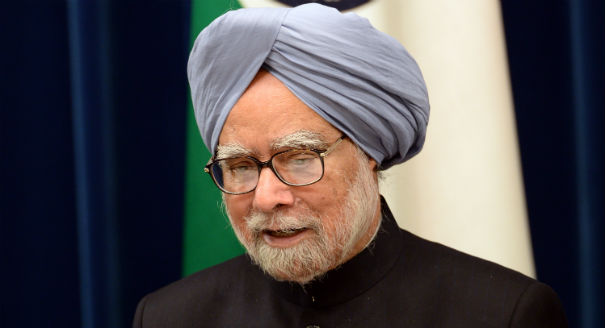
In his latest press conference, Prime Minister Manmohan Singh declared that “history will be kinder to me than the contemporary media, or for that matter, the opposition parties in Parliament”. He is probably right, not only because he is the first PM since Jawaharlal Nehru to complete two five-year terms in a row, but also because Singh has had a huge impact on Indian society by orchestrating major economic reforms from 1991 onwards. The man is also refreshingly modest.
But it’s time to take stock not only of the achievements, but also the limitations of almost 23 years of “Manmohanomics”. One of the basic assumptions during the dismantling of the licence/ permit raj era in the 1990s, when the state-owned economic model had clearly exhausted its potential, harked back to the trickle-down theory. This theory holds that once liberalisation measures re-energise private sector entrepreneurship, a rise in the growth rate also benefits the bottom of the pyramid. The question is how much the bottom benefits. In his first speech after taking over as president, Pranab Mukherjee declared in July 2012 that “trickle-down theories do not address the legitimate aspirations of the poor”.What kind of indicators can we use to substantiate this claim — or its opposite? The controversy around the poverty line suggests that a simple evaluation based on the numbers of absolute poor may not be the most suitable. It is also not the most relevant measure of inequality, which is key to test the validity of the trickle-down theory. Certainly, the percentage of Indians below the poverty line declined from 37 per cent in 2004-05 to 29.8 per cent in 2009-10. But has the gap between rich and poor narrowed? How much wealth has really percolated down? To answer such questions, it is preferable to rely on National Sample Survey Organisation data and more specifically, to its calculation of monthly per capita expenditures (MPCE). This indicator offers an instrument by which to measure the evolution of the standard of living and of inequality.
In 1993-94, the average MPCE was Rs 281 in rural India and Rs 458 in urban India. They rose, respectively, to Rs 772 (+174 per cent) and Rs 1,472 (+221 per cent) in 2007-08, which means that the gap between urban and rural areas has jumped from 63 to 91 per cent.The gap diminished somewhat between 2007-08 and 2011-12, with rural MPCE reaching Rs 1,430 (+85 per cent) and urban MPCE rising to Rs 2,630 (+79 per cent), but it remained more than 20 percentage points higher than what it was in 1993-94, at 84 per cent. The gap between rural and urban areas has become particularly pronounced in states where cities have boomed, like Karnataka, with the Bangalore phenomenon, and where, the gap between rural and urban MPCE has increased from 57 to 93.5 per cent.
But we must look beyond the urban/ rural divide and examine the increasingly alarming difference that exists among villages state-wise. If we concentrate on the 15 largest states of India, we see that in 1993-94, the rural MPCE of those above average (Haryana, Rajasthan, Gujarat, Andhra Pradesh, Tamil Nadu, Punjab and Kerala), all located in the south and west, was Rs 345, when the rural MPCE of the states below average (Karnataka, Uttar Pradesh, West Bengal, Madhya Pradesh, Orissa, Maharashtra, Assam and Bihar), was Rs 255. Almost 20 years later, in 2011-12, the rural MPCE of the above average states (the same as in 1993-94, plus Karnataka and Maharashtra, which have improved) jumped to Rs 1,883, while that of the others (the same as in 1993-94, including the newly created Jharkhand and Chhattisgarh) was only Rs 1,122. This means that the gap between villages in the richest parts of rural India and those in the poorest parts of rural India has jumped from 35 to 68 per cent.
The situation has not changed so dramatically in urban India, but the trend is the same. In 1993-94, the MPCE of the above average states (Haryana, West Bengal, Maharashtra, Assam, Punjab and Kerala) was Rs 490, whereas in those below average (Karnataka, Uttar Pradesh, Rajasthan, Gujarat, Madhya Pradesh, Andhra Pradesh, Orissa, Tamil Nadu and Bihar), it was Rs 360. In 2011-12, the urban MPCE of the above average states (the same as in 1993-94, plus Karnataka and Andhra Pradesh and minus Assam and West Bengal) was Rs 3,153, whereas in those below average, it was Rs 2,170. This means that the gap between citizens in the richest parts of urban India and those in the poorest parts of urban India has increased from 36 to 45 per cent.
These figures show that more than 20 years of economic reforms, initiated by Singh but pursued by all governments, in spite of corrective mechanisms such as the MGNREGA, have resulted in greater inequality. This trend is in contrast to the decade between 1983 and 1993-94, when the percentage of those below the poverty line declined by 9.8 percentage points, while it was reduced by only 8.3 percentage points over the following 10 years.
This is quite understandable. First, rural residents were bound to lag behind given the slow growth of agriculture. Over the years 2005-06 and 2011-12, the average annual growth rate of industry at 2004-05 prices has been 7.5 per cent, while services grew at an ever-quicker pace — 9.95 per cent. Agriculture lagged behind at 3.8 per cent. These figures reflect the government’s lack of interest in agriculture, which has resulted in declining investment (in irrigation, for instance) and diminishing subsidies (for instance, for fertilisers).
Second, liberalisation allows those who have some capital — be it in terms of education, land or money — to invest and flourish while others have to wait for the trickle-down effect. Now, this percolation is only possible in geographical terms when the rich can invest where the poor live. Logically, they should be incentivised to do so the moment the cost of labour rises in the most developed parts of the country, but infrastructure (electricity, roads) is often lacking elsewhere. Instead, the poor go to the richest areas, as migration flows show.
The rise of inequality in India may not be what Singh will be remembered for in history, but it has probably been the most striking consequence of the trickle-down theory. After two decades of liberalisation, investment in agriculture and infrastructure is key. Only the state can undertake such investment. The fiscal reform that would make it possible may well be the need of the day to create jobs, not only in the cities where industry needs to grow, but also in villages.
Ironically, the very same middle class that has benefited most from Manmohanomics, as evident from the social inequalities described above, is the most critical of Singh.
This article was originally published in the Indian Express.

Former Nonresident Scholar, South Asia Program
Jaffrelot’s core research focuses on theories of nationalism and democracy, mobilization of the lower castes and Dalits (ex-untouchables) in India, the Hindu nationalist movement, and ethnic conflicts in Pakistan.
Recent Work

Milan Vaishnav, Rahul Verma, Rukmini S., …
Christophe Jaffrelot
Carnegie does not take institutional positions on public policy issues; the views represented herein are those of the author(s) and do not necessarily reflect the views of Carnegie, its staff, or its trustees.

China’s political future will be shaped between now and next October. As the Communist Party enters its intense “campaign season” to prepare for a major political transition in 2027, reading Beijing's actions and responses may become more difficult as domestic politics weigh on its behavior more than usual.

Damien Ma

Rubio’s recent visit brought welcome attention, but more capital requires governance changes that may be a hard sell for regional governments.

Jennifer B. Murtazashvili

China has showcased its engineering prowess with small modular reactor demonstration projects. But turning these technological achievements into commercial success will be a greater challenge.

Tong Zhao

Despite public disputes over trade and immigration, the strategic partnership’s foundations remain sturdy.

Sameer Lalwani

With its public finances in shambles, the far right polling at 35 percent ahead of the 2027 presidential election, and a growing protest movement, is France’s crisis a threat to the EU’s geopolitical awakening?

Rym Momtaz, ed.