

Paper
Renée DiResta, Rachel Kleinfeld, Margot Treadwell
{
  "authors": [
    "Rachel Kleinfeld"
  ],
  "type": "legacyinthemedia",
  "centerAffiliationAll": "dc",
  "centers": [
    "Carnegie Endowment for International Peace"
  ],
  "collections": [
    "Anti-Corruption"
  ],
  "englishNewsletterAll": "democracy",
  "nonEnglishNewsletterAll": "",
  "primaryCenter": "Carnegie Endowment for International Peace",
  "programAffiliation": "DCG",
  "programs": [
    "Democracy, Conflict, and Governance"
  ],
  "projects": [],
  "regions": [],
  "topics": [
    "Political Reform",
    "Democracy",
    "Security"
  ]
}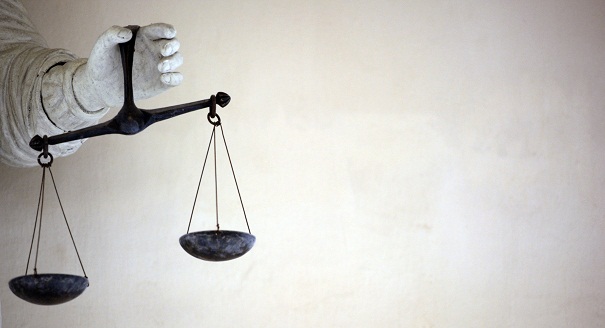
Source: Getty
Democracy can be difficult, especially in developing countries. But dictatorship is no answer: it’s playing roulette where almost every spot on the wheel leads to a Yanukovych or worse.
Source: San Francisco Chronicle
Viktor Yanukovych is the kind of dictator we love to hate. A kleptocrat who chose a bribe from Russia over his people's future in the EU. A thug who sent other thugs to beat up protesters, until he was finally ousted by his own people. A man who left his country bankrupt while pictures of his palatial estate and private zoo are broadcast around the world. We vilify dictators like this. And, yet, there remains a dream, for far too many development experts, business people and others around the globe that a strong leader with authoritarian powers is needed to move poor countries into the developed world.
I am watching Ukraine implode from a West Africa nation where corruption is perceived to be growing, development is stalled and the economy is heading downhill. From high-level government appointees to members of civil society, I hear: "What we need is a benevolent dictator. ... " The sentiment is generally followed by praise for Paul Kagame, who has created a remarkably clean and efficient Rwanda after that country's genocide, or Lee Kuan Yew, the "father of Singapore," who corralled government corruption and thrust his nation into the first world.
The desire for benevolent dictatorship is not confined to developing nations. I hear it even more often from America's business community and those working on international development - often accompanied by praise for China's ability to "get things done." The problem is that the entire 20th century seems to have produced at most one largely benevolent dictator and one efficient but increasingly repressive leader, both in tiny countries.Meanwhile, we have seen scores of Yanukovych-like kleptocrats, Pinochet-style military dictatorships that torture dissenters in secret prisons and "disappear" those who disagree, and North Korean-style totalitarians whose gulags and concentration camps starve and murder hundreds of thousands or even millions of their countrymen.
Occasionally, dictators begin benevolently and grow worse. The world is littered with Kwame Nkrumahs, Fidel Castros and Robert Mugabes who rose to power with great popularity, built their nations, then turned their people's hopes to ash through corruption, personality cults and violence. One Lee Kuan Yew and a Kagame teetering from benevolence toward repression, versus every other dictatorship of the 20th century? Those are not odds to bet your country on.
And yet, the longing for benevolent dictators continues, particularly in California among our technology titans, whose denigration of politics leads to a special Silicon Valley ideology that mixes libertarianism with dictatorship. They seem to want politics to work the way their products do: with elegant, clear solutions implemented by smart, creative doers.
But politics does not have a "right" answer. It is the field where our values compete. Surely, you say, there is a right way to get the job done: to fill in the potholes, build the roads, keep our streets safe, get our kids to learn reading and math. Ah, but look how quickly those issues get contentious.
Whose potholes should get filled first? Do we try to keep our streets safe through community policing or long prison sentences? Should teachers be given merit pay, are small classrooms better, or should we lengthen the school day? These issues engender deep political fights, all - even in the few debates where research provides clear, technocratic answers. That is because the area of politics is an area for values disputes, not technical solutions.
One person's "right" is not another's because people prioritize different values: equity versus excellence, efficiency versus voice and participation, security versus social justice, short-term versus long-term gains.
At a conference I attended recently, a businessman extolled the Chinese government ministers in attendance for "building 100 airport runways while we in the West have failed to add even a single runway to notoriously overburdened Heathrow." That was, of course, because the British have civil liberties and private property, while the Chinese do not have to worry about such niceties. Democracy allows many ideas of "right" to flourish. It is less efficient than dictatorship. It also makes fewer tremendous mistakes.
The longing for a leader who knows what is in her people's best interests, who rules with care and guides the nation on a wise path, was Plato's idea of a philosopher-king. It's a tempting picture, but it's asking the wrong question. In political history, philosophers moved from a preference for such benevolent dictators to the ugly realities of democracy when they switched the question from "who could best rule?" to "what system prevents the worst rule?"
And as problematic as democracy is, the ability to throw the bums out does seem to prevent the worst rule. Corruption, vast inequality and failure to deliver basic goods and services are real problems with democracies in developed and developing nations. These ills are dangerous, leading to anger, stagnation and political violence. But dictatorship is no answer: it's playing roulette where almost every spot on the wheel leads to a Yanukovych or worse.
As Syria burns and Ukraine implodes, Americans tempted by the security or simplicity of dictators, benevolent or otherwise, should give up such simple answers and face the messy realities of politics.
This article was originally published in the San Francisco Chronicle.
Senior Fellow, Democracy, Conflict, and Governance Program
Rachel Kleinfeld is a senior fellow in Carnegie’s Democracy, Conflict, and Governance Program, where she focuses on issues of rule of law, security, and governance in democracies experiencing polarization, violence, and other governance problems.
Recent Work
Renée DiResta, Rachel Kleinfeld, Margot Treadwell
Political Violence Researchers, Rachel Kleinfeld, ed., Dalya Berkowitz, ed.
Carnegie does not take institutional positions on public policy issues; the views represented herein are those of the author(s) and do not necessarily reflect the views of Carnegie, its staff, or its trustees.

Excitement is in the air following Aleksandar Vučić’s defeat in Serbia. To build a truly democratic state, the movement that unseated the former president must learn from the mistakes of the past.
Ivan Vejvoda
The pressures of war are gradually warping Russia’s system of governance, making it more vulnerable to a future crisis.

Tatiana Stanovaya

China’s political future will be shaped between now and next October. As the Communist Party enters its intense “campaign season” to prepare for a major political transition in 2027, reading Beijing's actions and responses may become more difficult as domestic politics weigh on its behavior more than usual.

Damien Ma

Japan’s long-term security policy is driven by concerns about China, and there is little appetite for (or interest in) pursuing a confrontation with Moscow.

James D.J. Brown

Russia is testing the waters of NATO’s mutual defense clause. What do strikes in Romanian territorial waters mean for the alliance’s posture toward Moscow?

Dimitar Bechev