

Report
- +3
James M. Acton, Alexey Arbatov, Vladimir Dvorkin, …
{
  "authors": [
    "Petr Topychkanov"
  ],
  "type": "commentary",
  "centerAffiliationAll": "",
  "centers": [
    "Carnegie Endowment for International Peace",
    "Carnegie Russia Eurasia Center"
  ],
  "collections": [],
  "englishNewsletterAll": "",
  "nonEnglishNewsletterAll": "",
  "primaryCenter": "Carnegie Russia Eurasia Center",
  "programAffiliation": "",
  "programs": [],
  "projects": [
    "Eurasia in Transition"
  ],
  "regions": [
    "South Asia",
    "India",
    "Russia",
    "Eastern Europe",
    "Ukraine"
  ],
  "topics": [
    "Security",
    "Foreign Policy",
    "Global Governance"
  ]
}
Source: Getty
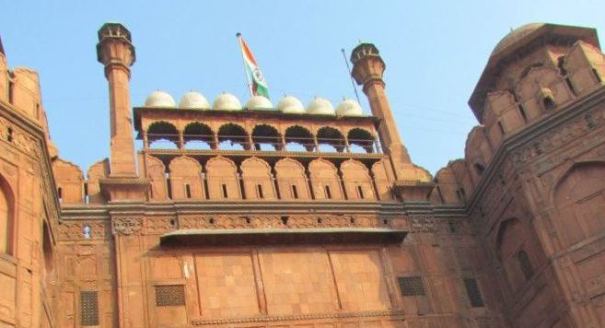
The challenges New Delhi faces inside the country and along its borders do not allow it to fully support the Russian annexation of Crimea, since this would create a precedent that can be used against India’s own territorial integrity. However, India could not denounce Russia either, because it acted similarly four decades ago.
Many Russian publications refer to India’s support for Moscow’s policy on Ukraine. The main and apparently the only evidence of this support comes from the remark by Shivshankar Menon, India’s National Security Advisor, about Russia’s “legitimate interests,” which he made on March 6.
This remark, however, should not be construed as a signal of India’s unequivocal support. Actually, Ambassador Menon said the following, “We hope that whatever internal issues there are within Ukraine are settled peacefully and the broader issues of reconciling various interests involved, and there are legitimate Russian and other interests involved.” So, Menon’s statement simply meant that India recognizes the existence of Russian as well as other interests in Ukraine. It was not an expression of support for Russia.
In the same conversation Manmohan Singh, the official statement says, “emphasized the consistent position India had on the issues of unity and territorial integrity of countries.”
Taken literally, the wording of the statement appeared to suggest New Delhi’s disagreement with Crimea’s inclusion into Russia. Indeed, such incorporation clearly contradicted the principles of Ukraine’s unity and territorial integrity.
The March 27 vote in the UN General Assembly on Ukraine’s territorial integrity offered an excellent opportunity for India to affirm the “consistent position” that Prime Minister Singh talked about. However, India decided to abstain.
Incidentally, all South Asian states chose to abstain, except for Bhutan, a small Himalayan nation that voted for the UNGA Resolution 68/262. The reasons that prompted Bhutan to support the resolution will shed some light on why India, which had previously supported states’ territorial integrity, abstained during the vote on Ukraine.
Four decades ago, Bhutan witnessed India inclusion of the neighboring kingdom of Sikkim that generally rhymed with the Crimea scenario. In 1975, Sikkim’s Prime Minister Kazi Lhendup Dorjee Khangsarpa appealed to the Indian Parliament to accept Sikkim as part of India. Soon thereafter, Indian army and police units entered the kingdom, where a referendum on joining India was then held. In that referendum, 97.6 percent of the votes were cast for transforming the country into an Indian state. It hardly surprising that Bhutan, with its significant Bhutiya population, which is also a prominent ethnic group in Sikkim, interprets the 1975 events as India’s annexation of the kingdom rather than as the Sikkim people exercising its right to self-determination.
Thus, special relations between India and Russia were not the main reason behind New Delhi’s decision to abstain from voting on the Resolution 68/262. Rather, India’s choice may be explained by its complex stance on the principle of territorial integrity. India would support border changes as long as these changes result in territorial gains for itself—or territorial losses for its regional rivals. At the same time, New Delhi firmly rejects any attempts by various ethnic groups within India to assert their own right to self-determination. India dismisses these claims as either acts of separatism or the result of Chinese and Pakistani intrigues.
The challenges New Delhi faces inside the country and along its borders, however, do not allow it to fully support Russia’s Crimean adventure, since this would create a precedent that can be used against India’s own territorial integrity. China, for instance, has a long-standing claim to the Indian state of Arunachal Pradesh. However, India could not denounce Russia either, since it acted similarly in Sikkim. Abstention was the only way to square the circle.
Former Fellow, Nonproliferation Program, Moscow Center
Topychkanov was a fellow in the Carnegie Moscow Center’s Nonproliferation Program.
Recent Work

James M. Acton, Alexey Arbatov, Vladimir Dvorkin, …
Petr Topychkanov
Carnegie does not take institutional positions on public policy issues; the views represented herein are those of the author(s) and do not necessarily reflect the views of Carnegie, its staff, or its trustees.

The books, podcasts, and films that explain the world it made.

Andrew Leber
Blurring the line between humans and animals is a long-standing tradition in social utopian prose. In his latest novel, Leonid Bershidsky reminds us that in social experiments, people are often treated no differently than animals.

Alexander Baunov

U.S. trading partners in Asia are closely watching the dispute for signs of how it may affect their own interests.

Barbara Weisel

The aftermath of the Ceuta crisis shows Europe has drawn the wrong lessons. Rather than doubling down on failed migration policies, the EU needs to address the underlying roots of such episodes.

Richard Youngs
By abandoning past U.S. pro-democracy policies and adopting several lines of pro-autocratic action, the Trump administration has fundamentally repositioned the United States vis-à-vis democracy in the world.

Thomas Carothers