

Article
C. Raja Mohan, Darshana M. Baruah
{
  "authors": [
    "C. Raja Mohan"
  ],
  "type": "legacyinthemedia",
  "centerAffiliationAll": "dc",
  "centers": [
    "Carnegie Endowment for International Peace",
    "Carnegie India"
  ],
  "collections": [],
  "englishNewsletterAll": "ctw",
  "nonEnglishNewsletterAll": "",
  "primaryCenter": "Carnegie India",
  "programAffiliation": "SAP",
  "programs": [
    "South Asia"
  ],
  "projects": [
    "India Decides 2014"
  ],
  "regions": [
    "South Asia",
    "India"
  ],
  "topics": [
    "Domestic Politics",
    "Foreign Policy",
    "Political Reform"
  ]
}
Source: Getty
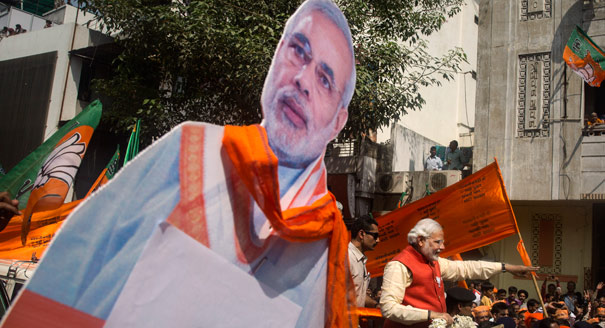
Foreign policy is rarely central to elections anywhere in the world. It is no surprise, then, that the foreign policy sections in the manifestos put out by some Indian parties seem an afterthought.
Source: Eurasia Review
Foreign policy is rarely central to elections anywhere in the world. It is no surprise, then, that the foreign policy sections in the manifestos put out by the Congress and BJP seem an after-thought. Both end up with a long laundry list of disparate propositions. Marginal though they are, the manifestos do offer a peep into the dominant worldview of the Congress and the BJP. Both are disappointing in their inability to comprehend the central imperative of India’s foreign policy — the extraordinary international interdependence that defines India’s contemporary condition.
Nearly a quarter of a century after the launch of economic reforms, more than 50 per cent of the Indian economy is tied up to imports and exports. India imports 90 per cent of its hydrocarbon requirements and a growing share of its coal consumption from abroad. The welfare and progress of the Indian people have never depended so much on what happens beyond its borders. And as the 10th-largest economy, India too matters to the world more than ever before. That is one reason why there is so much global interest in these elections.Yet, the assumptions guiding the Congress and the BJP are rooted in a different era. The challenge for India is no longer about preventing the world from impinging on its choices, but to using its growing economic and political weight to shape the external environment to its benefit.
The foreign policy section of the Congress manifesto is bizarre in its talk about solidarity with “socialist” countries and reveals the make-believe world of the party’s leadership. The BJP manifesto is not up to speed either. Although some of the new ideas outlined by the BJP’s prime ministerial candidate, Narendra Modi, over the last few months did find their way in, the manifesto is quite clearly a triumph for the old guard that is so out of touch with the world.
One new theme in the BJP manifesto is the call, articulated often by Modi, to make the states partners in the execution of Indian foreign policy. Coming from the BJP, with its traditional emphasis on centralisation, the emphasis on the role of states is somewhat counter-intuitive. It comes amid mounting concerns in Delhi’s foreign policy establishment that the Congress party has weakened the Centre’s hand and ceded a veto to the states, especially Tamil Nadu and West Bengal.
The Congress reserves its longest paragraph in the foreign policy section to Sri Lanka as a bow to pressures from Tamil Nadu. Rather than attack the Congress for its appeasement of states, Modi wants to make the state chief ministers allies in boosting Indian diplomacy. The proposition holds much promise, but needs to be fleshed out in greater detail.
A second innovation in the BJP manifesto is the idea of crafting a “web of alliances” to boost India’s weight on the global stage. It stands in contrast to Congress’s obsession with the traditional conception of non-alignment. To be sure, the BJP seems to share the Congress’s aversion to alliances with big powers like the United States. In fact, neither party mentions relations with the US. The Congress talks about improving relations with all major powers and the BJP says Indian foreign policy will not be led by the big powers.
But what about alliances with middle powers and smaller states that are seeking greater security cooperation with India? Delhi established treaty-based alliances with its smaller Himalayan neighbours and defence cooperation with middle powers like Indonesia and Egypt in the Nehru years. More recently, India has signed up for strategic partnerships with a number of countries in the extended neighbourhood.
The UPA government has talked the talk, but has been afraid to walk the walk. The reluctance of the defence ministry under A.K. Antony has prevented a vigorous pursuit of military diplomacy. The drift in the economic ministries has undermined Delhi’s ability to develop significant strategic economic cooperation with India’s partners. Building a web of Indian alliances in Africa, Asia and the Indian Ocean is a big idea whose time has come.
A third important element, a strategic conception of the subcontinent, finds some expression in the Congress manifesto, which says deeper economic engagement with the neighbours is “critical for realising the true potential of the region”. The BJP criticises the Congress for the recent drift in the relations with the neighbours, but offers little more than the assertion that it will “pursue friendly relations” with all neighbours.
The emphasis is on projecting a muscular regional policy: “where required we will not hesitate from taking strong stand and steps”. But bravado is not a substitute for a comprehensive neighbourhood strategy. One would have assumed that the BJP would highlight the regional dimensions of Modi’s domestic focus on economic development. Instead, the BJP has spewed tough rhetoric on illegal migration from Bangladesh, is unwilling to back a transformation in the ties with Dhaka that the Congress pursued but could not finish, and is unable to focus on trans-border connectivity and regional economic integration. The manifesto has only revealed the BJP’s lack of a grand strategy for the region.
In the end, though, the BJP manifesto is a classic committee document that seeks to say many things to many people. But its vagueness should offer Modi, as the prospective PM, considerable freedom to put his own stamp on India’s foreign policy. Unlike Manmohan Singh, who had to yield constantly to the Congress’s self doubt and lack of strategic imagination, Modi would have sufficient authority in the BJP to set his own strategic priorities. Modi’s success on the diplomatic front will depend on an emulation of the last BJP prime minister, Atal Bihari Vajpayee, who successfully carved out foreign policy autonomy from his party’s antediluvian world view.
Former Nonresident Senior Fellow, Carnegie India
A leading analyst of India’s foreign policy, Mohan is also an expert on South Asian security, great-power relations in Asia, and arms control.
Recent Work

C. Raja Mohan, Darshana M. Baruah


Alexander Gabuev, Paul Haenle, C. Raja Mohan, …
Carnegie does not take institutional positions on public policy issues; the views represented herein are those of the author(s) and do not necessarily reflect the views of Carnegie, its staff, or its trustees.
By focusing only on hard security, the Shield ignores the conditions that fuel cartel power.


Alejandro Martin Rodriguez, Kayly Ober
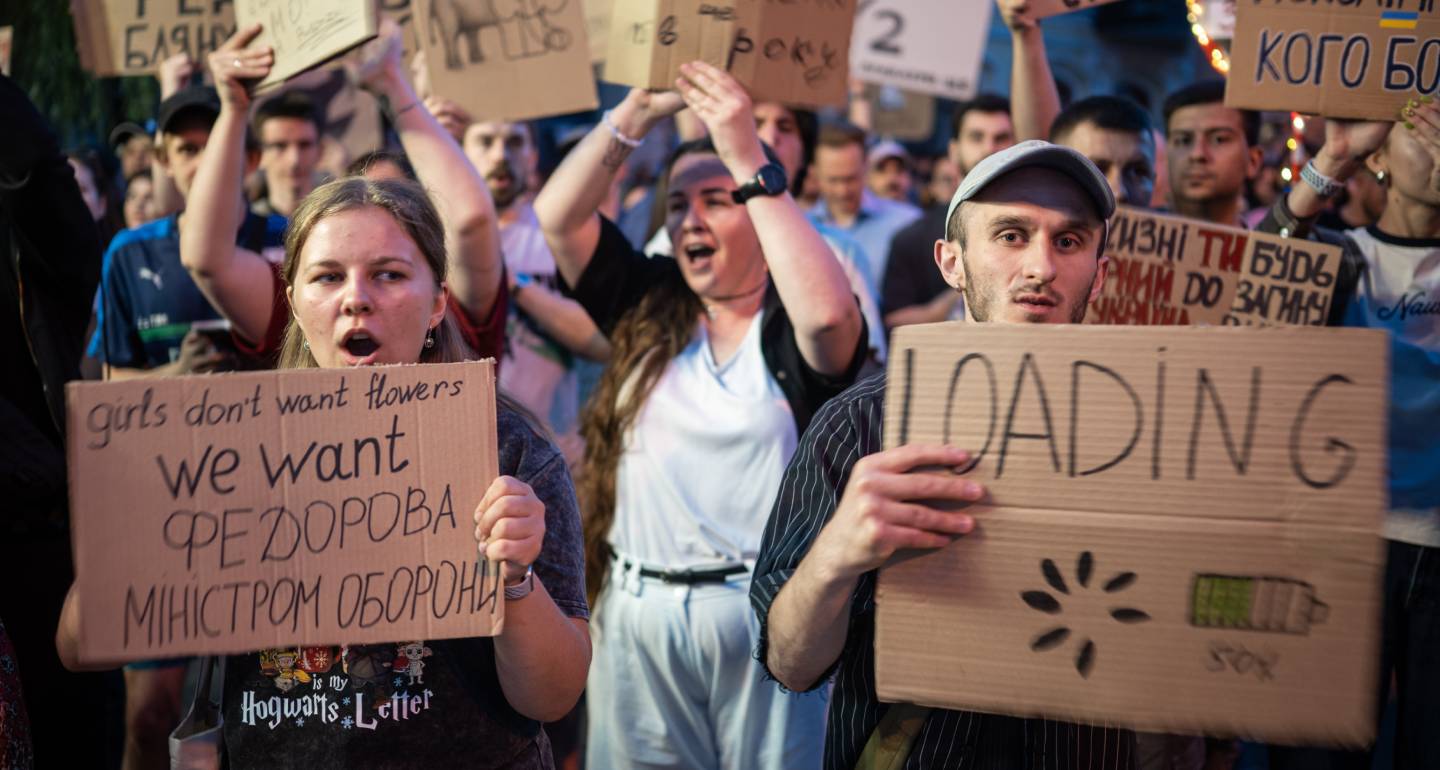
With his public call for new elections in Ukraine, ex-defense minister Mykhailo Fedorov has opened Pandora’s box.

Konstantin Skorkin

In any defense establishment, change is an ongoing process. However, despite the best of intentions, existing bureaucracies, bound by habit and years of socialization, have their limits in implementing transformative change.

Anit Mukherjee

In supporting Europe’s far-right, MAGA and Russia both want the same thing: a weaker EU. Europe must defend itself without abandoning the openness these forces exploit.

Armida van Rij

The conflict has sent economic and political shock waves through a country with no representation at the negotiating table—and Kenya is not alone.

Georgia Schaefer-Brown, Jane Munga