

Commentary
Sergei Kiriyenko used Russia’s parliamentary vote to further hone his strategy of corporate mobilization that is designed to maximize votes for United Russia.
Andrey Pertsev
{
  "authors": [
    "Yukon Huang",
    "Canyon Bosler"
  ],
  "type": "legacyinthemedia",
  "centerAffiliationAll": "dc",
  "centers": [
    "Carnegie Endowment for International Peace"
  ],
  "collections": [],
  "englishNewsletterAll": "asia",
  "nonEnglishNewsletterAll": "",
  "primaryCenter": "Carnegie Endowment for International Peace",
  "programAffiliation": "AP",
  "programs": [
    "Asia"
  ],
  "projects": [],
  "regions": [
    "East Asia",
    "China"
  ],
  "topics": [
    "Political Reform",
    "Economy"
  ]
}
Source: Getty
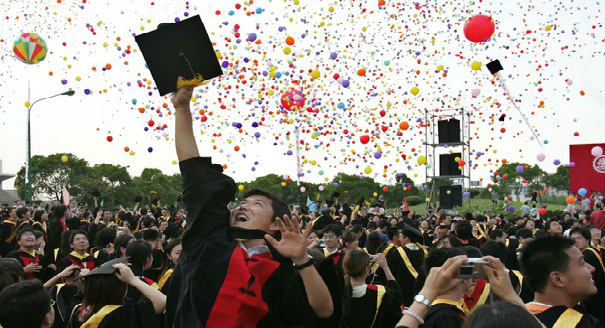
China’s push to expand higher education has spawned new opportunities for corruption that can only be addressed by generating more job opportunities for college graduates.
Source: Bloomberg View
Even during China's most feudal phases, higher education has offered a reliable means of meritocratic advancement. Well into the 1990s, the limited number of university graduates meant that all of them were virtually assured places among the economic elite.
As China tries to evolve from "the workshop of the world" into a more technologically advanced service economy, however, a swelling glut of graduates is threatening this age-old compact. This year alone, Chinese universities are expected to produce a record 7 million degree holders, more than seven times the number 15 years ago. This rapid expansion has vastly outstripped demand: Unemployment among recent graduates has rocketed to 16 percent, four times the norm, while the wage premium they receive has plummeted by 19 percentage points. In some cities, semiskilled factory workers now make more than university graduates in office jobs.
High youth unemployment has spurred social unrest in many countries -- including Spain, where joblessness among young people is double the national average, as well as Egypt and Tunisia. In China, the situation is even more fraught. For decades, the Communist Party has offered citizens a trade-off: economic opportunity in exchange for political docility. If the first is closed off, the whole bargain starts to look a lot less attractive.Given the intensifying scramble for good jobs, connections have begun to matter more than merit. Party links in particular are a key deciding factor as businesses seek to build ties with influential officials by hiring their offspring.
The news media's attention has been focused on high-profile Western banks, which allegedly recruited the children of top party officials in an effort to build guanxi, or close personal relationships, with the Chinese leadership. But the problem extends right down the scale: One study of the career prospects of college graduates found that the children of even low-level party officials were able to secure starting salaries that were 15 percent higher than for those without such connections. No wonder graduates themselves have become the most rapidly expanding demographic within the party: The share of students who choose to join has risen to more than 11 percent today from less than 1 percent in 1990.
Perhaps unsurprisingly, wealth now matters as much as connections do in landing jobs. Some banks blatantly set conditions for coveted internships: "The parents must have a fixed-term deposit of at least 500,000 yuan at the branch," reads one advertisement. Job seekers are forced to offer "gifts" in exchange for government positions, especially at the local level. Some students manage to stand out by gaining degrees abroad -- 400,000 of them in the last year alone. But this tactic, too, is only available to a privileged few who can afford to pay Western tuitions.
Obviously the government needs to generate more high-skill jobs in order to soak up the flood of graduates. Slowing growth will make that difficult. Yet Chinese leaders could at least lift roadblocks to job creation -- from restrictions on internal migration to regulations that favor industry over services.
In the U.S., for instance, young college graduates are highly mobile; about half of them live outside their state of birth. By contrast, Chinese graduates are trapped in their home cities or provinces by a strict household registration system that discourages them from moving to where the jobs are. This generates unemployment in marginal cities while leaving important vacancies unfilled in the megacities that drive China’s economy.
At the same time, China favors industry over services by subsidizing the price of industrial land, with local governments keeping prices artificially low in hopes of attracting additional investment. As a result, from 2000 to 2010, the average price of commercial land rose from three times that of industrial land to almost nine times, dramatically raising the relative cost of business for service firms. Because services tend to be more labor-intensive and require more educated employees, this bias has slowed job growth for college graduates.
The policy of encouraging more and more Chinese to get a university education was meant to strengthen China, to help build it into a creative and modern service economy. Instead, the push is creating new and worrying vulnerabilities. It's too late to turn back, of course, which means solutions must focus on stimulating demand for graduates and changing the skill mix of those students. As President Xi Jinping works to root out corrupt practices, large and small, he should also focus on the bribe taking that’s becoming prevalent in the hiring process.
The alternative is a rising sense of injustice and frustration among tens of thousands of educated youth. That’s hardly a future he or China's other leaders can afford to contemplate.

Senior Fellow, Asia Program
Huang is a senior fellow in the Carnegie Asia Program where his research focuses on China’s economy and its regional and global impact.
Canyon Bosler
Former Junior Fellow, Asia Program
Carnegie does not take institutional positions on public policy issues; the views represented herein are those of the author(s) and do not necessarily reflect the views of Carnegie, its staff, or its trustees.

Sergei Kiriyenko used Russia’s parliamentary vote to further hone his strategy of corporate mobilization that is designed to maximize votes for United Russia.

Andrey Pertsev

The Plaza Accord was not an externally imposed punishment of Japan but part of a broader restructuring that Japanese economists and policymakers themselves recognized was necessary. Its effects were undermined, however, when Tokyo responded to the resulting slowdown with policies that exacerbated investment, credit expansion, and the very imbalances the adjustment was intended to resolve.

Michael Pettis

Before the next wave of EU enlargement takes place, the union needs to grapple with thorny questions of how power is distributed among its members.


Emil Sondaj Hansen, Ditte Brasso Sørensen

The real test may come after the leaders leave the room.


Sheena Chestnut Greitens, Oriana Skylar Mastro, Yukon Huang, …

The European far right might fail to steer EU policy in the direction Russia wants, but they will create enough chaos inside Europe to benefit the Kremlin.

Dimitar Bechev