

Q&A
Eugene Rumer
{
  "authors": [
    "Eugene Rumer"
  ],
  "type": "legacyinthemedia",
  "centerAffiliationAll": "dc",
  "centers": [
    "Carnegie Endowment for International Peace"
  ],
  "collections": [],
  "englishNewsletterAll": "ctw",
  "nonEnglishNewsletterAll": "",
  "primaryCenter": "Carnegie Endowment for International Peace",
  "programAffiliation": "russia",
  "programs": [
    "Russia and Eurasia"
  ],
  "projects": [],
  "regions": [
    "Russia",
    "Eastern Europe",
    "Ukraine"
  ],
  "topics": [
    "Political Reform",
    "Foreign Policy"
  ]
}
Source: Getty
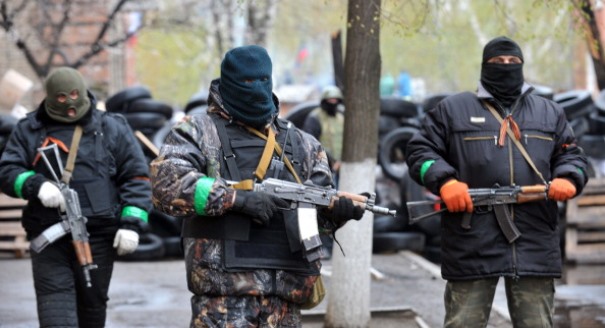
Previous efforts have done little to improve the situation in Ukraine. Perhaps it is time for a radical rethinking of relations between Kiev and the regions.
Source: Financial Times
President Vladimir Putin’s announcement on Wednesday of a pullback from the Ukrainian border has been greeted with a mixture of relief and scepticism in Europe and the US. In any case, it should not obscure the fact that while diplomacy is being reactivated, it has yet to produce any results. After the chaos in Odessa took dozens of lives, and amid continued fighting in eastern Ukraine, the country stands on the brink of civil war. There is no end in sight. It is time to confront an unpalatable truth: Ukraine may not emerge from the crisis as a unitary state.
So far, US policy has entailed shaming Russia and threatening sanctions. But the Kremlin fears neither reputational risk nor the economic pain that western sanctions can inflict. Furthermore, our hands are tied. The global economy needs Russian oil and gas to run.
Russia’s proximity to Ukraine gives it an important operational edge. It has a lot more at stake there than the US or Europe. And unlike western powers, Russia is prepared to use force.The April 17 Geneva accords have done little to improve things. Yet, so far, no better ideas have emerged. US President Barack Obama and Chancellor Angela Merkel of Germany have warned Russia that more sanctions will follow unless it ceases its destabilising activities in eastern Ukraine and refrains from disrupting the May 25 presidential elections. But these threats have had no impact on the violence there. In the long run, sanctions may bear fruit and the Kremlin may come to regret its actions but in the meantime Russia and the west are pursuing a course that could lead to a true catastrophe in Ukraine.
Could Ukraine be saved by a radical rethinking of relations between Kiev and the regions – perhaps even a national referendum or, in the extreme case, partitioning of the country? The latter would clearly be a radical step. It would be messy. But would it be worse than a civil war?
Such moves would not have to be accomplished overnight. A gradual process could begin with a referendum at the same time as presidential elections with international supervision. The subsequent reforms would be implemented by a body of representatives from all parts of Ukraine, in parallel with an effort at national reconciliation. This path need not necessarily end in divorce; separatists in the east may be mollified by some lesser-form of regional self-government, such as a federal government with a large degree of local autonomy.
A new parliamentary election could help to stabilise the situation. At present, no one is in charge in eastern Ukraine. The authorities in Kiev have admitted as much. Much of the separatists’ fervour is driven by the perception that the national government does not represent them, does not care for them and is dominated by nationalists from western Ukraine – in many ways culturally and religiously different from the east – who rose to prominence during the protests in the Maidan.
Giving the east a large bloc of votes in the national parliament would ensure that the region’s interests would be adequately represented in Kiev. Much attention has been focused on the May 25 presidential election. But electing a new parliament is an equally important step.
Nobody wants a civil war in Ukraine. Russia appears reluctant to send in its tanks, probably fearing the chaos that would be certain to follow. Neither Europe nor the US wants another Balkan-style conflict. The people of Ukraine have suffered enough.
It is time to stop digging and begin to look for a solution at any cost. Partitioning Ukraine may not be anyone’s first choice but all options – postponing the May 25 election, a constitutional referendum, a new parliamentary election – should be on the table if they have a chance of averting a civil war and saving lives.
This article was originally published in the Financial Times.
Director and Senior Fellow, Russia and Eurasia Program
Rumer, a former national intelligence officer for Russia and Eurasia at the U.S. National Intelligence Council, is a senior fellow and the director of Carnegie’s Russia and Eurasia Program.
Recent Work
Eugene Rumer
Eugene Rumer
Carnegie does not take institutional positions on public policy issues; the views represented herein are those of the author(s) and do not necessarily reflect the views of Carnegie, its staff, or its trustees.

It should address the shortcomings of previous crisis communication efforts and adapt to the demands of frontier AI.

Lucy Luo

If the Russian-speaking community in Latvia cannot articulate their interests without being seen as disloyal, they could end up embracing a pro-Kremlin agenda.

Sergejs Potapkins
Washington’s decision to support some UN functions while letting others wither is pulling the organization apart at the seams.

Stewart Patrick, Theodore Zaritsky

Are Germany’s economic, industrial, and political struggles becoming a liability for the EU’s ability to rise to the geopolitical moment?

Rym Momtaz, ed.

Russia’s ruling party would have benefited from Putin appearing as its distant patron, but as an active frontman imposing his views on the public, he has done nothing but harm both the party’s election campaign and the ruling system overall.

Andrey Pertsev