

Article
Stefan Lehne
{
  "authors": [
    "Stefan Lehne"
  ],
  "type": "legacyinthemedia",
  "centerAffiliationAll": "dc",
  "centers": [
    "Carnegie Endowment for International Peace",
    "Carnegie Europe"
  ],
  "collections": [],
  "englishNewsletterAll": "ctw",
  "nonEnglishNewsletterAll": "",
  "primaryCenter": "Carnegie Europe",
  "programAffiliation": "EP",
  "programs": [
    "Europe"
  ],
  "projects": [],
  "regions": [
    "Europe",
    "Western Europe",
    "Iran"
  ],
  "topics": [
    "Foreign Policy",
    "EU",
    "Democracy"
  ]
}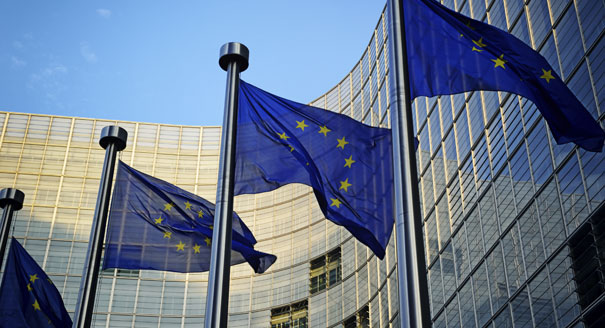
Source: Getty
In the upcoming European elections, voters will have a say in who becomes the next president of the European Commission, but the procedure is more complicated than it seems.
Source: Euronews
There are just three days left until voting begins in the European elections. This time, voters will be getting a say in who becomes the next president of the European Commission.
It’s the first time this is happening and no-one seems sure how it will work out in practice.
In the past it was the heads of state, brought together in the European Council, who chose the president.In an attempt to make the process more democratic, the 2009 Treaty of Lisbon stated they must “take into account” the election results.
Stefan Lehne, a researcher at foreign-policy think tank Carnegie Europe, says that as the “taking into account” has not been clearly defined, sparks could fly between the Council and parliament after the election.
“I believe the voters will have an important input in the decision but maybe not the final word. If you look at the treaty (Treaty of Lisbon) it says very clearly that the proposal for the next President of the Commission will come from the European Council by qualified majority vote and taking into consideration the results of the European Parliament elections,” Lehne said, adding: “so what we could get is a fight between the Parliament and the European Council and there will be a need through consultations to find a solution that is acceptable to both sides.”
Each of the main parties has chosen their lead candidate to be president. The party which gets the most MEPS or backing from the most groups will expect their man or woman to get this top job.
However, heads of state are under no obligation to pick any of the parties’ lead candidates. They want to be free to choose their own person for the post, as well as the two other top jobs, the European Council president and the foreign affairs chief.
Once the heads of state have made their selection, it must then be approved by an absolute majority in parliament. If parliament chooses to block the selection, that’s when the power struggle between the two EU institutions will really be felt.
In the European Union, the president of the parliament is essentially the speaker of the parliament. It’s the president of the Commission who has the real power.
“He or she is a political figure, an important political figure” says Lehne, “the Commission has the right of initiative, legislative proposals and that is very much a political exercise. At the same time the Commission in many regards is more a referee than a team leader.”
The person who gets the top job will need to be able to work and negotiate with all the EU institutions. According to Lehne: “the president of the Commission is a very powerful figure. But it’s crucial that he is not just the creature of the European Parliament but he is also responsible to the European Council and works well with the European Council.
“Because we have also seen over the last ten years that the top body in the EU, the real decisions, the actual core functions are done on the level of heads of states and governments.”
It was hoped that by changing the system and making it more democratic it would encourage people to turn out and vote. If it ends in confusion or stalemate, it may just put more voters off engaging with Europe.

Senior Fellow, Carnegie Europe
Stefan Lehne is a senior fellow at Carnegie Europe in Brussels, where his research focuses on the post–Lisbon Treaty development of the European Union’s foreign policy, with a specific focus on relations between the EU and member states.
Recent Work
Stefan Lehne
Stefan Lehne
Carnegie does not take institutional positions on public policy issues; the views represented herein are those of the author(s) and do not necessarily reflect the views of Carnegie, its staff, or its trustees.

The EU can impose sanctions but struggles to enforce them without the United States. With Washington increasingly disinterested in backing European interests, the bloc must now fend for itself.


Nicu Popescu, Tiago Antunes
Global and rising powers will need to engage with Africa’s priorities and agency in order to secure the continent’s increasingly attractive partnerships.
Fonteh Akum

Rubio’s recent visit brought welcome attention, but more capital requires governance changes that may be a hard sell for regional governments.

Jennifer B. Murtazashvili

America’s foreign-policy objectives have grown more demanding while Americans have demanded greater focus on their own affairs.

Stephen Wertheim

Japan’s long-term security policy is driven by concerns about China, and there is little appetite for (or interest in) pursuing a confrontation with Moscow.

James D.J. Brown