

Commentary
Ongoing uncertainty in the Middle East allows Moscow to both increase its influence in Tehran and continue to enjoy the financial windfall of higher oil prices.
Nikita Smagin
{
  "authors": [
    "Akio Kawato"
  ],
  "type": "commentary",
  "centerAffiliationAll": "",
  "centers": [
    "Carnegie Endowment for International Peace",
    "Carnegie Russia Eurasia Center"
  ],
  "collections": [],
  "englishNewsletterAll": "",
  "nonEnglishNewsletterAll": "",
  "primaryCenter": "Carnegie Russia Eurasia Center",
  "programAffiliation": "",
  "programs": [],
  "projects": [],
  "regions": [
    "North America",
    "United States",
    "East Asia",
    "China",
    "Japan",
    "Russia"
  ],
  "topics": [
    "Security",
    "Military",
    "Foreign Policy"
  ]
}
Source: Getty
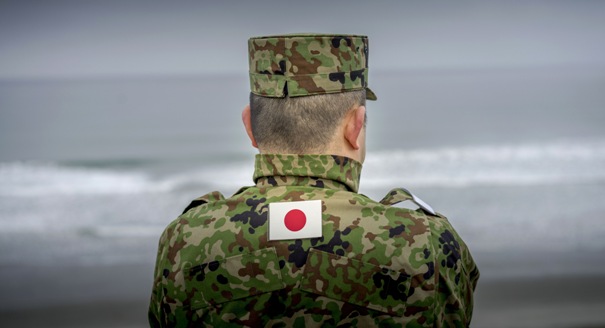
Japan’s new guidelines for overseas operation by the country’s Self-Defense Forces are not aimed at Russia. On the contrary, Japan’s pro-active policy serves the maintenance of balance of power in North-East Asia, which in its turn fits the interest of Russia.
On July 1 Japan’s Cabinet of Ministers adopted new guidelines for overseas operation by the country’s Self-Defense Forces. The decision, in a nutshell, means that if a foreign country, which has close relations with Japan, comes under armed attack in a way that threatens the existence of Japan, the Japanese government—even under the current Constitution—can use a minimum of military force to remove the threat. Some media claim that this is a 180 degrees turn in Japan’s security policy, because, they allege, the ninth article of Japan’s post-WWII Constitution forbids the country from having armed forces, not to speak of sending them abroad.
True, the Constitution states that “the Japanese people forever renounce war as a sovereign right of the nation and the threat or use of force as means of settling international disputes,” and that “in order to accomplish the aim of the preceding paragraph, land, sea, and air forces, as well as other war potential, will never be maintained. The right of belligerency of the state will not be recognized.” The reality, however, is different: Japan, the Constitution notwithstanding, de facto possesses modern and highly efficient Self-Defense Forces.
After the end of the Cold War the United States’ commitment to Japan’s security became more relative, and Japan started to augment its contribution to the U.S. security efforts, in order to keep the Japan-U.S. alliance intact. In 1992, Japan passed a law, which allowed sending the Self Defense Forces abroad for UN peace-keeping operations. During the Iraq War the Japanese government had a special law adopted by the Parliament designed to allow deployment of the Self Defense Forces to Iraq to take part in the the multi-national force authorized by the UN.
Therefore, the decision made on July 1 is not so much a 180 degree turn in Japan’s policy as an extension of the changes that have been taking place after the Cold War. The main motive is to secure the alliance with the United States in front of the growing military imbalance with China, and to raise Japan’s position in the world from that of “concubine of the United States” to at least that of “United States’ poodle.” The decision is not final, because it cannot be invoked in real action without amending and adopting related laws, which will certainly become an issue of hot political contention toward next spring. And next spring Japan is holding nation-wide elections for local municipalities, in which the Koumei Party, the LDP’s partner in the ruling coalition, will be obliged to take a “dovish” posture in order to placate its pacifism-oriented supporters.
Will the new laws make it possible for Tokyo to independently send the Self-Defense Forces to any country which has “close relations” with Japan? I doubt it, because that would become a real 180 degree turn in our security policy. Perhaps some activity may be needed to secure high-seas maritime security, but any act beyond it may incur large negative repercussion both at home and abroad.
Japan’s new initiative is not aimed at Russia. On the contrary, Japan’s pro-active policy serves the maintenance of balance of power in North-East Asia, which in its turn fits the interest of Russia.
Last but not least, the balance in nuclear armament in the region around Japan should also be put to the agenda in the future. Japan is obliged not to possess any nuclear weapons, while its neighbors are building up huge potentials. It is paramount that China should be invited to take part in the nuclear weapons reduction talks.
Akio Kawato
Writer
Akio Kawato is a former Japanese diplomat and blogger.
Carnegie does not take institutional positions on public policy issues; the views represented herein are those of the author(s) and do not necessarily reflect the views of Carnegie, its staff, or its trustees.

Ongoing uncertainty in the Middle East allows Moscow to both increase its influence in Tehran and continue to enjoy the financial windfall of higher oil prices.

Nikita Smagin

To carry out its global AI agenda, Washington will need strategic relationships with emerging markets in Africa, starting with Kenya.

Jane Munga

Europe’s industrial supply chains leave it vulnerable to global shocks. The EU needs a pragmatic green industrial strategy that balances durable partnerships and bolsters homegrown clean tech without sacrificing low-carbon ambition.


Milo McBride, Pauline Gerard
Defense tech innovations will be at the heart of Europe’s new security strategy. But so far, Brussels has been making moves without a broader plan, undermining readiness and credibility.

Raluca Csernatoni
President Lee marked his first year in office after one of the most tumultuous periods in South Korean politics. Though Lee has enjoyed a high approval rating, a large majority in the National Assembly, and foreign policy victories, Lee and his party’s political fortunes depend on generating economic growth, learning the right lessons from the recent local elections, and managing contentious factional strife within his political base.

Chung Min Lee