

Article
Thomas de Waal
{
  "authors": [
    "Thomas de Waal"
  ],
  "type": "commentary",
  "centerAffiliationAll": "",
  "centers": [
    "Carnegie Endowment for International Peace",
    "Carnegie Europe",
    "Carnegie Russia Eurasia Center"
  ],
  "collections": [],
  "englishNewsletterAll": "",
  "nonEnglishNewsletterAll": "",
  "primaryCenter": "Carnegie Europe",
  "programAffiliation": "",
  "programs": [],
  "projects": [],
  "regions": [
    "Caucasus",
    "Russia"
  ],
  "topics": [
    "Political Reform",
    "Security"
  ]
}
Source: Getty
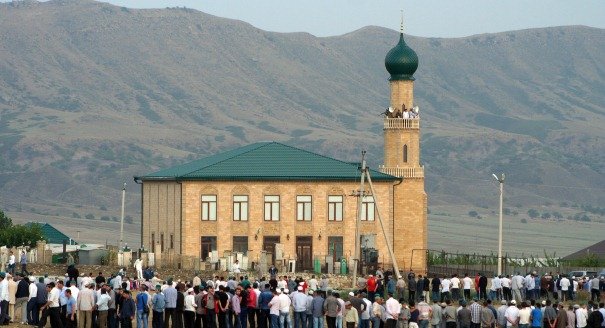
The roots of the insurgency in the North Caucasus remain: local muslims, especially in Dagestan, still experience rule by Moscow as brutal and corrupt and feel they have no stake in Russian society. These roots are only likely to get deeper as Russia becomes more autocratic.
On June 29 a video was released of the new head of the Caucasus Emirate, the organization that claims to lead the Islamist insurgency in Russia's North Caucasus. Ali Abu Muhammad, previously known as Aliaskhab Kebekov, caused a stir by disavowing suicide bombings by women and said he disapproved of attacks which might result in the killing of women and children.
Kebekov was declared the new leader of the Emirate in March, after the death was announced of Doku Umarov—even though Umarov had been reported dead for many months before that.
The "Emirate" is in fact no such thing. Websites used for recruiting and fund-raising give the impression that it is a broad-based movement, but it has no structure and no economic base on the ground. Its adherents are the heirs of the most desperate and zealous of the fighters who fought the two wars against the Russian state in Chechnya. They live in hiding across the North Caucasus, perpetually hunted by the security forces.
Kebekov's appointment as "emir" marked a power shift within this shadowy organization. He is the first North Caucasus Islamist leader who is a Dagestani, not a Chechen. Experts say this is because the insurgency is now rooted in Dagestan, not Chechnya, where it has withered away in recent years.
So at first glance the emir's announcement of a "re-brand" can be interpreted as a sign of weakness. Threats by the militants to attack the Sochi Olympics did not materialize—although they did stage acts of terror in Volgograd before the Games. That suggests they can cause random acts of mayhem, but not wage a sustained and popular campaign.
However, there is no room for complacency. The roots of the insurgency in the North Caucasus remain: local Muslims, especially in Dagestan, still experience rule by Moscow as brutal and corrupt and feel they have no stake in Russian society. These roots are only likely to get deeper as Russia becomes more autocratic.
Moreover, the spectacular success of the Islamist movement ISIS (the Islamic State in Iraq and the Levant) in Syria and Iraq will surely have an impact on the North Caucasus. Many of the leading jihadis of ISIS come from the Caucasus, including Omar al-Shishani, who comes from Georgia's Pankisi Gorge.
If even a fraction of the vast amounts of money ISIS is said to have seized in Iraq makes a way back to the North Caucasus, it could boost the militants there, just as Kebekov's less radical posture may win him some more recruits from the ranks of the abused and the disaffected.

Senior Fellow, Carnegie Europe
Thomas de Waal is a senior fellow at Carnegie Europe, specializing in Eastern Europe and the Caucasus.
Recent Work
Thomas de Waal
Thomas de Waal
Carnegie does not take institutional positions on public policy issues; the views represented herein are those of the author(s) and do not necessarily reflect the views of Carnegie, its staff, or its trustees.
Ultimately, Zelensky sided neither with the reform camp nor with the military establishment as such, but with political control.

Balázs Jarábik

Trump is distracted and Ukraine wants Europe to step up. The continent’s leaders must find their voice and assert it in talks with Russia.

Alissa de Carbonnel
Tokayev’s predecessor, Nursultan Nazarbayev, outlined arrangements for a power transition too soon and in too much detail, ultimately losing control over the process. Tokayev is determined not to meet the same fate.

Temur Umarov

Mounting economic strain and battlefield losses will not necessarily make the Kremlin less dangerous. They could instead push Moscow toward a more aggressive hybrid campaign designed to test NATO’s Eastern flank, exploit allied hesitation, and fracture European resolve.

Maksym Beznosiuk
Official discussions about mini oil refineries are unlikely to come to anything—but the mere fact they’re happening reveals the regime is failing to deliver a functioning economy.

Sergey Vakulenko