

Q&A
Matt Ferchen
{
  "authors": [
    "Matt Ferchen"
  ],
  "type": "legacyinthemedia",
  "centerAffiliationAll": "",
  "centers": [
    "Carnegie Endowment for International Peace",
    "Carnegie China"
  ],
  "collections": [
    "China and the Developing World",
    "China’s Foreign Relations"
  ],
  "englishNewsletterAll": "",
  "nonEnglishNewsletterAll": "",
  "primaryCenter": "Carnegie China",
  "programAffiliation": "",
  "programs": [],
  "projects": [],
  "regions": [
    "North America",
    "South America",
    "East Asia",
    "China"
  ],
  "topics": [
    "Economy",
    "Foreign Policy"
  ]
}
Source: Getty
From a Latin American perspective, the focus of the next decade of relations with China will be on how to create even deeper, but more balanced and sustainable, forms of trade, investment, and diplomatic ties.
Source: Caijing
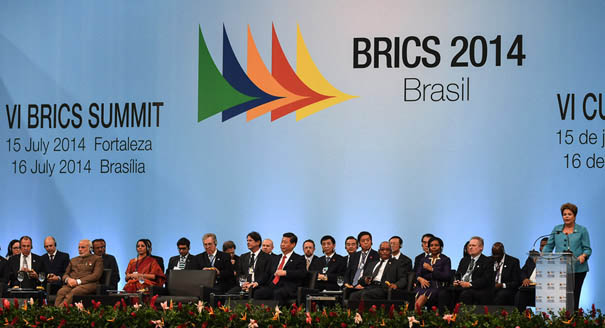
President Xi Jinping’s trip to Latin America this month marks a decade-long boom in China-Latin America relations that began around the time of Hu Jintao’s historic 2004 visit to the region. On visits to Brazil, Cuba, Venezuela and Argentina, President Xi will praise the economic and diplomatic cooperation that has flourished between China and especially the resource-rich countries of South America. Next to Africa, Latin America has been the most important region for China’s “South-South” diplomacy, which emphasizes complementary commercial ties as well as a Chinese alternative to traditional Western (read: American) hegemony. Fundamental to such a Chinese alternative is a principled commitment to “noninterference” in other countries’ internal affairs. However, such a commitment has long been out of step with China’s actual impact on Latin America and is increasingly a poor guide to engaging with economically or politically unstable countries in Latin America and beyond.
China’s long-standing diplomatic commitment to respect for sovereignty and non-interference, along with China’s rising trade and investment ties in the region, has overall been well received in Latin America. However, even during the boom in commodity relations from around 2004 to 2011, South American exporters of mining, agricultural and energy commodities to China already began to grow anxious about a rising dependency on China. Even as commodity-rich South American counties like Brazil and Argentina welcomed China as a major new commercial and diplomatic partner, some in these same counties worried about the impact of this new engagement on the structure and competitiveness of their own domestic economies. For others, such as Chile, Peru and Venezuela, sky-high expectations and wishful thinking about endless Chinese demand for their minerals and energy have fed idealistic perceptions of China’s economic impact on their countries’ economic prospects.So even during the boom, when strong Chinese demand drew in ever-increasing amounts of South American iron ore, copper and soy beans at historically high prices, there were already serious concerns and distorted expectations about China’s impact and influence. In the last few years such concerns have only intensified as expectations have been disappointed and worries have grown that a slowing Chinese economy is at least partly to blame for falling demand, and prices, of Latin American commodities. At no point during this roller coaster ride has the Chinese government overtly “interfered” in any Latin American country’s domestic affairs, but China’s influence and impact have already created a potent mixture of hope, mixed with rising anxiety. From a Latin American perspective, then, looking forward to the next decade of relations with China, the focus will be on how to create even deeper, but more balanced and sustainable, forms of trade, investment and diplomatic ties.
The other incongruous, and largely impractical, dimension of China’s policy of non-interference in a Latin American context is most clearly demonstrated by the case of Venezuela. On the surface, no other country in Latin America, not even Brazil, offers as perfect a fit for China’s win-win, mutually-beneficial, South-South engagement of Latin America as Venezuela. In terms of energy relations alone, China as the world’s largest oil importer and Venezuela as the holder of the world largest oil reserves, ties between the two countries should be a marriage made in heaven. But even during the honeymoon period ushered in by former Venezuelan president Hugo Chavez and reciprocated with massive China Development Bank loans-for-oil deals, relations were never as rosy as promised. Even under Chavez, oil trade and investment between China and Venezuela never seemed anywhere near reaching its vast potential, and now under Chavez’s hapless successor, Nicolas Maduro, such potential seems even more of a mirage. Under these circumstances, China’s non-interference principle is an especially poor guide for action and policy.
On the one hand, China has the real potential to wield influence over Venezuela given its role as Venezuela’s largest source of sovereign foreign finance and the close government ties that have been built up in the last fifteen years. On the other hand, Venezuela’s serious and home-grown domestic economic, social and political instability stem from a profoundly polarized polity and years of mismanagement of its already oil-dependent economy. For all of China’s state-to-state loans and investments from its state banks and national oil companies, Chinese government and corporate officials find themselves feeling more exposed and helpless than powerful in the face of rising Venezuelan instability. With the possible exception of Myanmar, Venezuela presents Chinese government officials, business leaders and intellectuals with the limits of its non-interference principles. As a practical guide to policy in both counties, simple non-interference will not do. Instead China needs creative thinking about how to fruitfully engage countries like Venezuela and Myanmar to help their people build healthier economic, social and potentially even political institutions. Not interference, but instead creative engagement including from a new generation of globally minded Chinese citizens, will be crucial as China looks forward to the next decade of relations with developing countries in regions from Latin America to Africa to Southeast Asia.

Former Nonresident Scholar, Carnegie-Tsinghua Center for Global Policy
Ferchen specializes in China’s political-economic relations with emerging economies. At the Carnegie–Tsinghua Center for Global Policy, he ran a program on China’s economic and political relations with the developing world, including Latin America.
Recent Work
Matt Ferchen
Matt Ferchen, Anarkalee Perera
Carnegie does not take institutional positions on public policy issues; the views represented herein are those of the author(s) and do not necessarily reflect the views of Carnegie, its staff, or its trustees.

China’s police training infrastructure construction projects provide benefits to recipient countries, promote China’s image as a major global security provider, and are likely to reinforce alignment between Beijing’s security priorities and those of countries in the Global South.


Cameron Waltz, Sheena Chestnut Greitens, Kim Nguyen, …

AI capabilities are moving fast. Most institutions—including governments—can’t keep up.


Anton Leicht, Scott Singer

The Bureau of Industry and Security needs to adjust its focus and practices to maintain its position as the U.S. government’s primary champion of international technological competition.

Geoffrey Irving

European Commission President Ursula von der Leyen is about to give her annual address on the state of the EU. Here’s what she won’t—but should—say.

Rym Momtaz

Depleted financial reserves and a shrinking tax base mean it is no longer possible to simultaneously deliver high defense spending, price stability, and economic growth.

Alexandra Prokopenko