

Commentary
It’s time to build momentum, and Ankara is the venue of the next opportune diplomatic window to do this.
Alper Coşkun, Garo Paylan
{
  "authors": [
    "Milan Vaishnav",
    "Suyash Rai"
  ],
  "type": "legacyinthemedia",
  "centerAffiliationAll": "dc",
  "centers": [
    "Carnegie Endowment for International Peace"
  ],
  "collections": [],
  "englishNewsletterAll": "ctw",
  "nonEnglishNewsletterAll": "",
  "primaryCenter": "Carnegie Endowment for International Peace",
  "programAffiliation": "SAP",
  "programs": [
    "South Asia"
  ],
  "projects": [
    "India Decides 2014"
  ],
  "regions": [
    "South Asia",
    "India"
  ],
  "topics": [
    "Political Reform",
    "Economy"
  ]
}
Source: Getty
Reform initiatives that were pursued by previous Indian governments often failed due to inadequate attention to state capacity. This government has a once-in-a-generation opportunity to translate ideas into institutional change.
Source: Live Mint
Finance minister Arun Jaitley recently expressed his government’s intent to pursue a gradualist reform agenda, one predicated on political acceptability. Jaitley’s statement, coupled with the budget’s modest ambition, is consistent with Montek Singh Ahluwalia’s quip that India has a “strong consensus for weak reforms”.
The accuracy of this narrative is suspect on two counts: many reform agendas (take financial or infrastructure reforms for instance) are politically non-controversial; and the 2014 election has damaged the weak consensus argument by granting the Narendra Modi government the clearest mandate for reforms in recent memory.Even where agreement is weak, the government need not wait for robust consensus. In spite of “weak consensus”, India witnessed strong reforms for over a decade, starting in 1991, including politically difficult reforms, such as the National Pension System. Those reforms, in part, created the constituencies that helped the Bharatiya Janata Party win the 2014 election on a platform of economic renewal.
The “first generation” reforms of the 1990s marked the first significant shift towards more private sector and trade-oriented policies, with a more limited role for government. India has pocketed most of the productivity pay-offs from these landmark reforms. Today “second generation” reforms—supplying better public goods and correcting market failures—are required to spur higher growth. In some sectors, such as agriculture, even first generation reforms are pending. The failure of United Progressive Alliance’s (UPA’s) “Dream Team” to enact these reforms was puzzling, especially given its stronger electoral mandate in 2009. So why did it fail?
In a 2012 speech, Raghuram Rajan blamed the nexus between the “connected” and the “political elites”, arguing that reforms would have dried up the well of patronage that many drank from. While this hypothesis has obvious merit, it is too simplistic.
First, this nexus, if it existed, failed to prevent many actions that hurt the “connected”, such as the mess around general anti-avoidance tax rules. Second, India’s most powerful corporate entities invested heavily in infrastructure in the last decade, but failed to resolve the lack of decision-making on stalled projects. Other reforms which would have helped the connected, such as labour market liberalization, never materialized. Furthermore, the UPA government passed initiatives adverse to such a nexus, such as the Right to Information (RTI) Act.
A second narrative is that the UPA was indecisive. Yet, its leadership was ruthlessly decisive in legislating its sweeping social policy agenda, which included rights to food, education, and employment, and a new land acquisition Bill. The UPA’s intellectual bankruptcy on public sector reforms comprises a third narrative. But the UPA actually displayed considerable intellectual initiative. For example, P. Chidambaram personally oversaw drafting of the Direct Taxes Code Bill. Similar stories can be told about the Goods and Services Tax (GST) and administrative, welfare, and financial sector reforms.
A final narrative is that the public does not support reforms. According to Pew, since 2007, the percentage of respondents in India completely or mostly agreeing with the statement “Most people are better off in a free market economy, even though some people are rich and some are poor” has ranged between 61 and 81.
So what explains the UPA’s failure on reforms, and how might the National Democratic Alliance (NDA) government learn from it?
The UPA, divided at the top between Sonia Gandhi and Manmohan Singh, advanced the priorities of the former over the latter. Thus, the welfare agenda promoted by the National Advisory Council was feverishly implemented, while the reform agenda, where ministers or government commissions had led the thinking languished. When UPA was re-elected in 2009 on the back of sustained high growth and welfare expansion, it read its mandate as being fundamentally about the latter.
There should be no doubt about Modi’s mandate: exit polls confirm this election was about “the economy, stupid”. But since political capital is finite, the NDA must use it for tough second generation reforms befitting this political window and aspirational mandate. Second, where UPA pursued reforms, it was politically clumsy. On GST and Aadhaar, it invested in their intellectual development, but was ham-handed in the political follow-on. It failed to create constituencies of support, was opaque in its deliberations, and lacked an effective communications strategy.
On controversial reforms, the NDA needs to muster the risk-taking appetite and political skills it demonstrated on the campaign to generate a pro-reform movement. Statecraft is about shaping political constituencies rather than waiting for a favourable consensus to emerge. Many good ideas are simply awaiting political impetus for implementation.
Third, UPA had a penchant for centralized planning, which stifled state-level initiative. Indian federalism can serve as a laboratory for reform experimentation, but only when the centre creates a hospitable environment.
Many reforms may be more easily attainable working through state capitals rather than Delhi; we should see more state experimentation such as Rajasthan’s proposed labour reforms. Modi is exceptionally placed to craft a new federal bargain as he innately sees issues through the prism of states.
Finally, even on areas it gave top billing, UPA ignored state capacity. A report on RTI demonstrates that the demand for information far outstrips the state’s ability to cope. Legislating food security before fixing the public distribution system prioritized announcement over implementation. One can debate whether UPA’s electoral performance would have improved had it translated outlays into outcomes, but the failure to do so surely hurt its chances.
Quick fixes are politically expedient but their positive outcomes are fleeting. As Pratap Bhanu Mehta wrote recently, “maximum governance” does not automatically follow from “minimum government”. Previous governments have penned innumerable blueprints for second generation reforms, but they lacked the political will, skills or capital to succeed. Reform initiatives that were pursued often failed due to inadequate attention to state capacity. This government has a once-in-a-generation opportunity to translate ideas into institutional change.

Director and Senior Fellow, South Asia Program
Milan Vaishnav is a senior fellow and director of the South Asia Program and the host of the Grand Tamasha podcast at the Carnegie Endowment for International Peace. His primary research focus is the political economy of India, and he examines issues such as corruption and governance, state capacity, distributive politics, and electoral behavior. He also conducts research on the Indian diaspora.
Former Fellow, Carnegie India
Suyash Rai was a fellow at Carnegie India. His research focuses on the political economy of economic reforms, and the performance of public institutions in India.
Carnegie does not take institutional positions on public policy issues; the views represented herein are those of the author(s) and do not necessarily reflect the views of Carnegie, its staff, or its trustees.
It’s time to build momentum, and Ankara is the venue of the next opportune diplomatic window to do this.

Alper Coşkun, Garo Paylan

The EU is putting together a new security strategy to meet today’s myriad challenges. But for any proposal to be effective, the union needs to grapple with its identity and ambitions.

Pierre Vimont
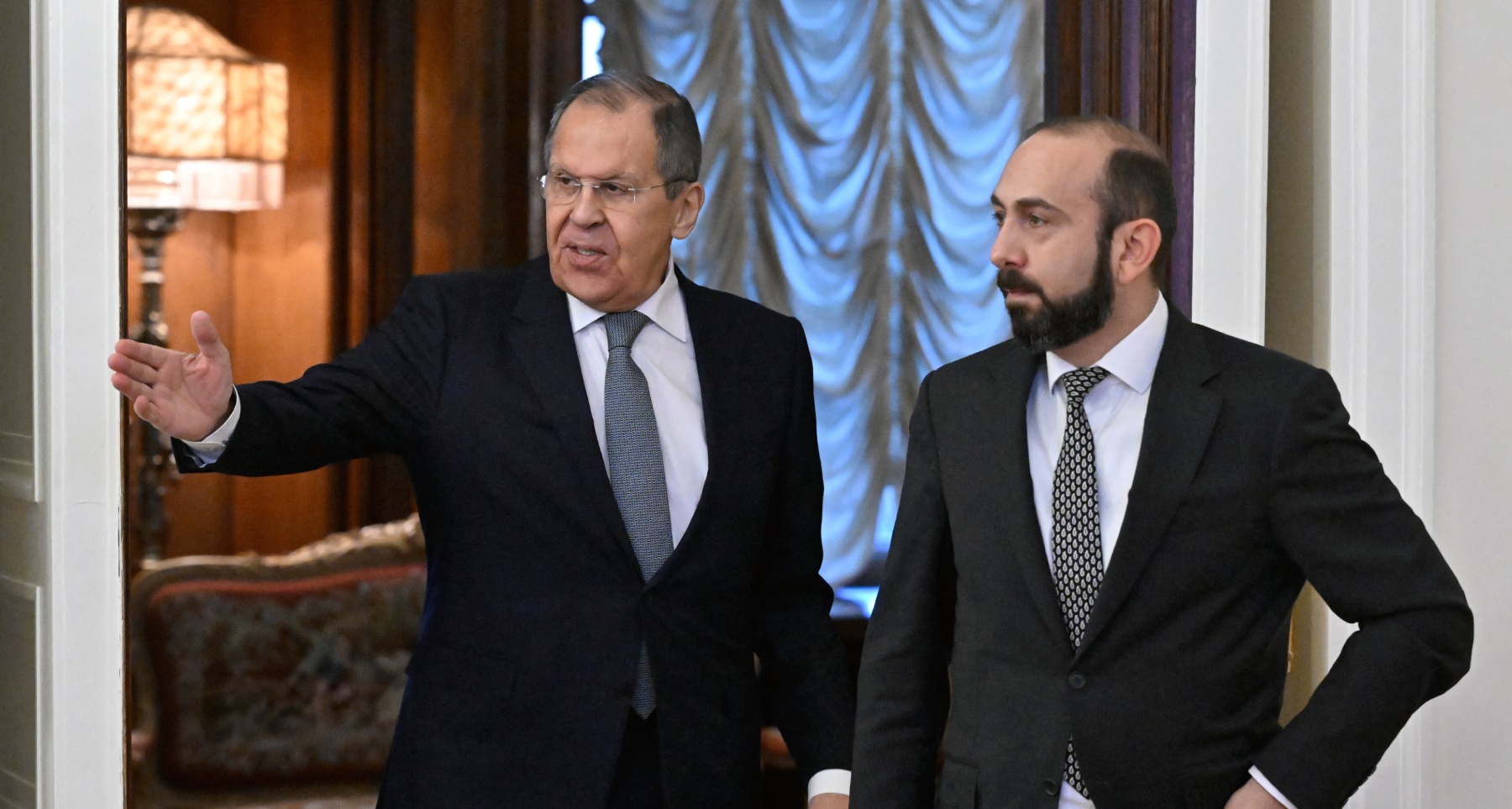
For all the menacing rhetoric, the Armenian prime minister remains a leader with whom Putin is prepared to interact: not as an ally, but as a partner, albeit a problematic one.

Alexander Atasuntsev
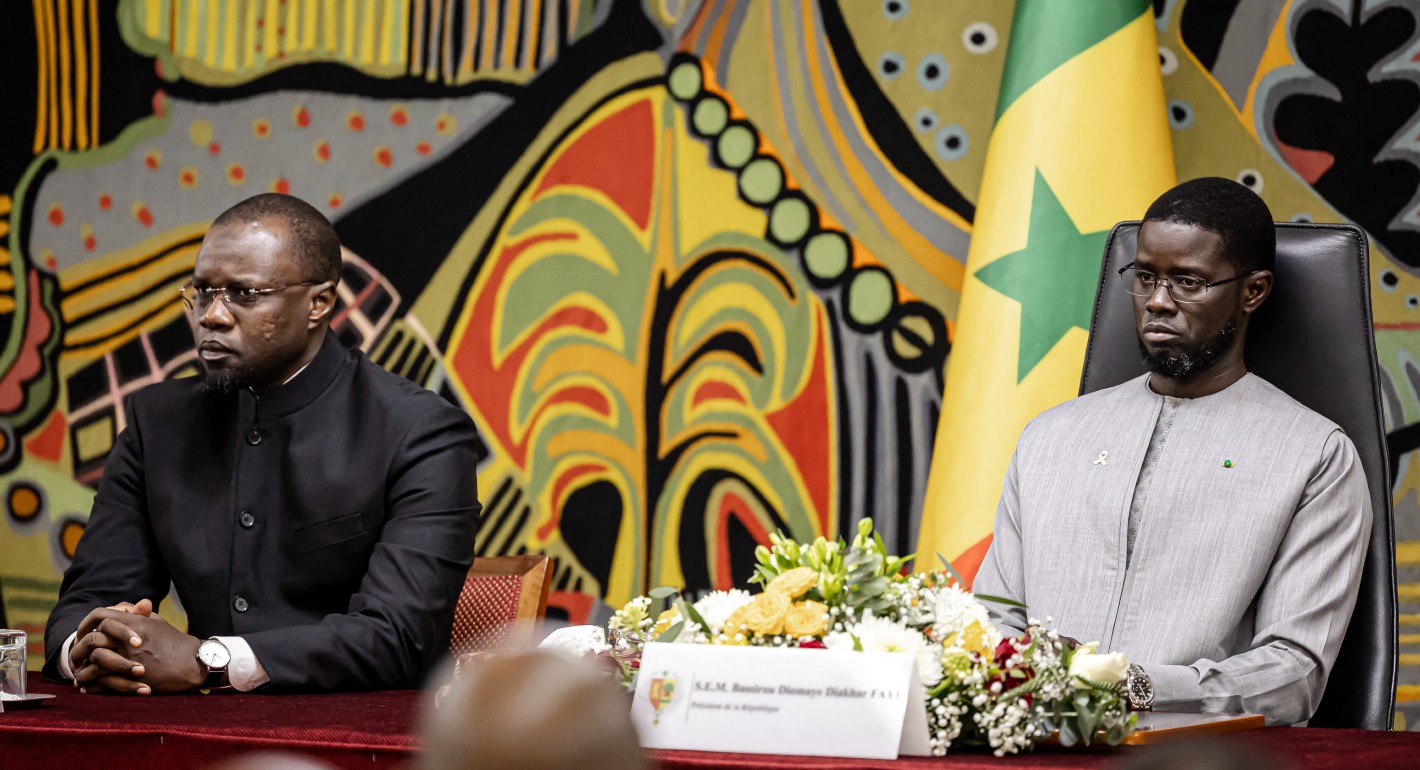
The impacts of the Faye-Sonko rupture could go well beyond the country’s borders.

Lesley Anne Warner

By fueling the arguments of both supporters and opponents of Armenian Prime Minister Nikol Pashinyan, Azerbaijan wants to ensure he is re-elected with a weaker mandate.

Bashir Kitachaev