

Commentary
Dmitri Trenin
{
  "authors": [
    "Dmitri Trenin"
  ],
  "type": "legacyinthemedia",
  "centerAffiliationAll": "",
  "centers": [
    "Carnegie Endowment for International Peace",
    "Carnegie Russia Eurasia Center"
  ],
  "collections": [],
  "englishNewsletterAll": "",
  "nonEnglishNewsletterAll": "",
  "primaryCenter": "Carnegie Russia Eurasia Center",
  "programAffiliation": "",
  "programs": [],
  "projects": [],
  "regions": [
    "North America",
    "United States",
    "Russia",
    "Eastern Europe",
    "Ukraine",
    "Western Europe"
  ],
  "topics": [
    "Security",
    "Military",
    "Foreign Policy"
  ]
}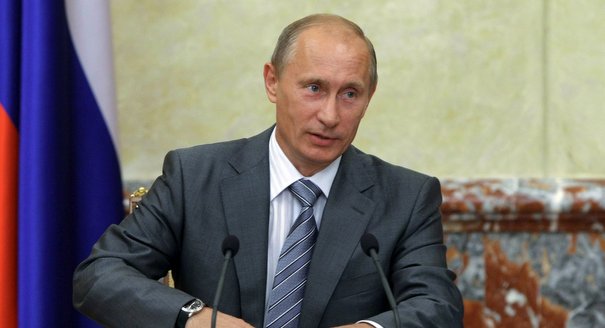
Source: Getty
If the investigators’ verdict on the Malaysia Airlines plane crash does eventually fall against Russia, Vladimir Putin will survive politically, but will have to work hard to restore faith in him, and his good fortune.
Source: BBC
Right up until the downing of flight MH17 over eastern Ukraine on 17 July, President Vladimir Putin's handling of the Ukraine crisis was seen in Russia as fairly successful, both strategically and tactically.
Russia was obviously supporting the militants in the Donbass region, while still pursuing a policy of plausible deniability. At the same time, it had joined Germany and France in a diplomatic effort to promote a political settlement within Ukraine that would also take Russia's interests into account.
The European Union was balking at further sanctions against the Russian government, with a number of countries resolved to protect their important economic relations. The Obama Administration's attempts to rally the Europeans around the sanctions agenda appeared largely ineffectual.Mr Putin was, by contrast, expanding Russia's relations with China, gaining a measure of moral support from the other Brics countries (Brazil, India, China and South Africa), and rekindling old and striking new friendships in Latin America.
The MH17 tragedy abruptly changed all that.
The United States and several of its closest allies have immediately accused Russia of aiding and abetting, if not actually perpetrating, a heinous crime.
Mainstream Western media are already calling for Russia to be treated as a pariah state. As a majority of the victims were from the Netherlands, relations with Europe are particularly likely to suffer.
The gap between the US and EU approaches to sanctions on Russia is about to become narrower, destroying Moscow's hopes of a serious divergence within the West.
In Asia, where Russia is now "pivoting" to, the shooting down of the Malaysian passenger plane may also give rise to anti-Russian sentiment. Mr Putin recently signed a 30-year gas deal with China.
Elsewhere in the non-Western world, which still relies to a significant degree on the Western media for covering world developments, the reputations of both Russia and President Putin will take a big hit.
Some in Russia may see the dramatic worsening of relations with the West over Ukraine as being driven by an undeclared US policy of containing Russia, but few welcome it.
While most Russians sympathise with the plight of the people of eastern Ukraine, around two-thirds are against a military invasion of Ukraine.
With Mr Putin's popularity still topping 80%, he has been widely credited so far with pursuing the right course: protecting Russia's interests, while avoiding unacceptable risks.
The MH17 air disaster, however, raises questions.
Russians, by and large, have long assumed that Moscow is giving the self-declared people's republics of Donetsk and Luhansk more than moral and political support.
At the same time, they hear from their own leaders that Russia does not control those whom it publicly backs. For a while, they may have accepted this apparent incoherence as a diplomatic ruse.
If the international investigation, however, establishes that Russia has indeed given the Donbass militants powerful weapons which they used to shoot down - by mistake - a passenger plane, part of the Russian public, not necessarily pro-Western or liberal, will see the Kremlin's approach as irresponsible brinkmanship.
Sensing this danger, Vladimir Putin is pushing back hard against the US-backed version of the crash.
The stakes are very high.
If the investigators' verdict does eventually fall against Russia it is not so much Vladimir Putin's integrity that will suffer, as respect for his strategic skill. He has, after all, never said that the rebels had nothing to do with the disaster; instead he blamed Ukraine for attacking them.
Mr Putin will survive politically, but will have to work hard to restore faith in him, and his good fortune.
Russia may, however, avoid the blame. And if it does, then the onus for the crime, and the responsibility, will be on others. And Vladimir Putin will have dodged that bullet, too.
Former Director, Carnegie Moscow Center
Trenin was director of the Carnegie Moscow Center from 2008 to early 2022.
Recent Work
Dmitri Trenin
Dmitri Trenin
Carnegie does not take institutional positions on public policy issues; the views represented herein are those of the author(s) and do not necessarily reflect the views of Carnegie, its staff, or its trustees.

It should address the shortcomings of previous crisis communication efforts and adapt to the demands of frontier AI.

Lucy Luo

If the Russian-speaking community in Latvia cannot articulate their interests without being seen as disloyal, they could end up embracing a pro-Kremlin agenda.

Sergejs Potapkins

Washington’s decision to support some UN functions while letting others wither is pulling the organization apart at the seams.

Stewart Patrick, Theodore Zaritsky

While there are notable demographic, economic, and geographic divides over AI, there is also substantial alignment between Republicans and Democrats.


Ian Klaus, Mark Baldassare, Rachel George, …

Are Germany’s economic, industrial, and political struggles becoming a liability for the EU’s ability to rise to the geopolitical moment?

Rym Momtaz, ed.