

Article
Dalia Ghanem
{
  "authors": [
    "Dalia Ghanem"
  ],
  "type": "legacyinthemedia",
  "centerAffiliationAll": "dc",
  "centers": [
    "Carnegie Endowment for International Peace",
    "Malcolm H. Kerr Carnegie Middle East Center"
  ],
  "collections": [],
  "englishNewsletterAll": "menaTransitions",
  "nonEnglishNewsletterAll": "",
  "primaryCenter": "Malcolm H. Kerr Carnegie Middle East Center",
  "programAffiliation": "MEP",
  "programs": [
    "Middle East"
  ],
  "projects": [],
  "regions": [
    "Levant",
    "Middle East",
    "Syria"
  ],
  "topics": [
    "Political Reform",
    "Security"
  ]
}
Source: Getty
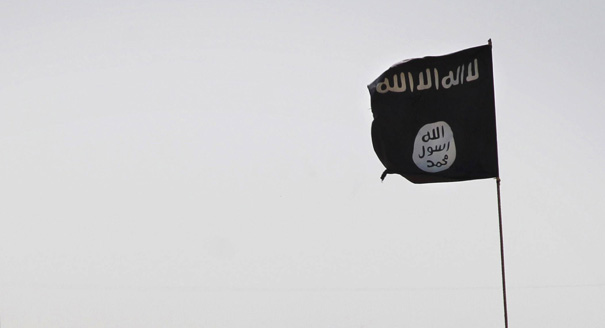
Dabiq—the propaganda magazine of the Islamic State —has a well-established reputation, and is particularly targeting Western and Arab youth who are keen to fight under the caliphate’s banner.
Source: jadaliyya
Following a series of military setbacks, Dabiq—the propaganda magazine of the Islamic State (IS)—is issuing calls for the unity of followers to compensate for the dwindling number of its fighters. Through its powerful media apparatus, IS states its ambitions.
The Islamic State has shown great capabilities on the field, but also in the virtual sphere. The group has developed a high-quality media industry and mastered this tool like no jihadist group ever has. In comparison, al-Qa‘ida propaganda is a complete "has been." The Islamic State is a product of its time; it is a 2.0 jihadist group that has made use of media as a part of its arsenal. Thus the organization possesses a powerful communication strategy, as evidenced by the two "media centers" it operates. The first of these media centers, al-Furqan Media Foundation, is responsible for the production and dissemination of videos. The second, al-Hayat Media Center, also distributes videos, anachids, and audio messages, but also distributes the magazines of the organization (including IS Report, IS News, and finally Dabiq). These materials are easily accessible through a few clicks on the Internet via Archive.org or JustPaste.it.A few days ago, the fifth issue of Dabiq was released. The magazine has a well-established reputation, and it particularly targets Western and Arab youth who are keen to fight under the caliphate’s banner. Attractive and meticulously designed, the easy-to-access magazine is available in several languages and can be downloaded in a PDF format. But what message does the latest issue convey about the state of mind of IS leaders, who have found themselves in a “delicate” position since the launch of coalition airstrikes?
From the very first lines, one can perceive IS’s deep-seated fear of failing to recruit enough fighters to make up for its losses as well as of possible defections by current fighters. The articles included in this fifth issue serve as a “call to arms,” a booster for the fighters’ morale. The group finds itself obliged to make up for its latest military defeats on the ground, albeit on paper. One need name only a few setbacks suffered by the group. At the end of October, IS lost control over the strategic city of Baiji, and consequently access to the largest oil refinery in Iraq. IS also lost Jalula and Sadia, two cities in the province of Diala, to Iraqi forces, the Peshmerga, and the Popular Mobilization Units (PMUs). In addition, following the battle of al-Ramadi, Iraqi forces retook Hit, west of al-Badia in the province of Anbar, and Huz. Significant human losses might also explain the shift in IS’s online strategy.
IS publication places special emphasis on the duty of every mujahid to demonstrate patience and to “stand firm in the face of fitnah.” The prophet Yahya ibn Zakaria is cited as an example. His divine word outraged the King of the Children of Israel, who killed him. Yahya, Allah’s messenger, braved his fears and doubts to fulfill his mission. Thus, IS mobilizes the past in its propaganda to interpret the present and set up easily identifiable points of reference. The past is repeatedly evoked, recalled, and conjured up. It also circulates in a continual back and forth movement, fusing the past and the present.
Like Yahya in the old times, the mujahid of today is gripped by fear. But following in the footsteps of Allah’s messenger, he should fight his fear and brush aside his doubts because Allah is on his side. After all, Allah tests the faith of his followers. Like Yahya, the mujahid should persist and continue in his jihad. IS leaders call on the mujahid to demonstrate patience, “continue to remain firm, having faith in Allah’s promise of victory for those who fight in His path.”
Dabiq produces evidence, including photos, to prove the group’s omnipotence. In addition to more than thirty Kurdish villages that have united under the caliphate’s banner in Aleppo, the battle of ‘Ayn al-Arab heralds the beginning of victory, it claims. Despite the heavy bombardment, the presence of “murtaddin” from the PKK and the communist parties—and despite the mounting numbers of “shuhada’” —IS has successfully broken their lines of defense and infiltrated the city thanks to the patience and firmness of its mujahidin.
The publication also seeks to confirm IS’s ineluctable advancement, starting with the cover photo of Ka‘ba in Mecca. The allegory is quite powerful. IS eyes expansion to Mecca and aspires to unite all Muslims under its banner. The Ka‘ba epitomizes the unity of Muslims and is the direction that Muslims the world over must face when praying.
Dabiq conveys a message that IS has a strong presence in several countries, namely Saudi Arabia, the holy land “nourished by the blood of the Sahaba”; Yemen, the land of wisdom and faith, where IS is battling the Rafidi Houthis who have failed to achieve “tamkin”; Sinai, the land where Allah spoke to Musa(Moses), a resistance front against the Jews and an important step towards the liberation of Baytul-Maqdis; Libya, the promising child with its Barqah mujahidin; and finally, Algeria, the land whose mujahidin waged the longest continuous jihad against a “taghut” regime and were the quickest to retaliate against coalition attacks. IS suggests that it is so powerful that it can persuade young men—who do not speak a word of Arabic—from the farthest end of the world to join its fold with nothing more than words. Otherwise, how can attacks by Numan Haider in Australia as well as Michael Zehaf-Bibeau and Martin Couture-Rouleau in Canada be explained?
Equally interesting about this fifth issue is the caliphate’s roll out of its currency. The gold dinar is imprinted with symbols of IS’s territorial claims, including a map of the world on both sides of the coin. Seven stalks of wheat are also drawn, symbolizing the blessings of Islam’s third pillar, zakat. The silver dirham features a spear and a shield as a reminder of the Muslim’s duty to pursue jihad. The copper fils shows a date palm tree, symbolizing the Muslim’s deep-rooted faith and firm patience. Despite its limited efficiency, this currency is quite symbolic. By minting its own currency, IS not only dismisses the widely used dollar and, by extension, the “corrupt” and “interest-based” global financial system, but it also confirms its standing and remaining as an “autonomous” true state endowed with an anthem, a flag, borders and now a currency—thus validating its existence.
Dabiq is truly one of the centerpieces of the Islamic State's virtual arsenal. Only a few clicks away from the reach of millions of youths, it is—besides the videos—the tool that best communicates the duties of hijra and jihad against the "taghut", the "muratdins", the "nasariyat", the "deviant" and the "corrupt". This issue of Dabiq has the best depiction of the "Caliphate" as a "State," a real and credible entity that even has its own currency. It is looking quite likely that the next issue will announce even more pervasive institutional decisions, such as perhaps the creation of identity papers for the ra‘aya (subjects).
Former Senior Resident Scholar, Malcolm H. Kerr Carnegie Middle East Center
Dalia Ghanem was a senior resident scholar at the Malcolm H. Kerr Carnegie Middle East Center in Beirut, where her research focuses on Algeria’s political, economic, social, and security developments. Her research also examines political violence, radicalization, civil-military relationships, transborder dynamics, and gender.
Recent Work
Dalia Ghanem


Frances Z. Brown, Judy Dempsey, Dalia Ghanem, …
Carnegie does not take institutional positions on public policy issues; the views represented herein are those of the author(s) and do not necessarily reflect the views of Carnegie, its staff, or its trustees.
Between the United States’ market-driven approach and China's state-led industrial strategy, Europe is reckoning with how it can remain competitive in the global economy. But is Europe in danger of becoming a U.S. or China colony?

Noah Barkin, Anu Bradford
Minsk’s faith in the future of its larger neighbor’s economy is fading as Belarusian firms in Russia see record losses.
Olga Loiko

Preparing candidate countries for EU membership is no longer enough. As the enlargement process becomes a reality, the union must also prepare its own societies.

Iliriana Gjoni

The truth is that Japan’s government is seeking a degree of reengagement but at a vastly reduced level than under Abe. Most significantly, Japan has shown no willingness to ease sanctions.

James D.J. Brown
Israel is encroaching on the country’s territory, while the Lebanese look askance at one another.

Issam Kayssi