

Article
Wang Tao
{
  "authors": [
    "Wang Tao"
  ],
  "type": "legacyinthemedia",
  "centerAffiliationAll": "",
  "centers": [
    "Carnegie Endowment for International Peace",
    "Carnegie China",
    "Malcolm H. Kerr Carnegie Middle East Center"
  ],
  "collections": [],
  "englishNewsletterAll": "",
  "nonEnglishNewsletterAll": "",
  "primaryCenter": "Carnegie China",
  "programAffiliation": "",
  "programs": [],
  "projects": [],
  "regions": [
    "Gulf",
    "Middle East",
    "East Asia",
    "China"
  ],
  "topics": [
    "Economy",
    "Trade",
    "Climate Change",
    "Foreign Policy"
  ]
}
Source: Getty
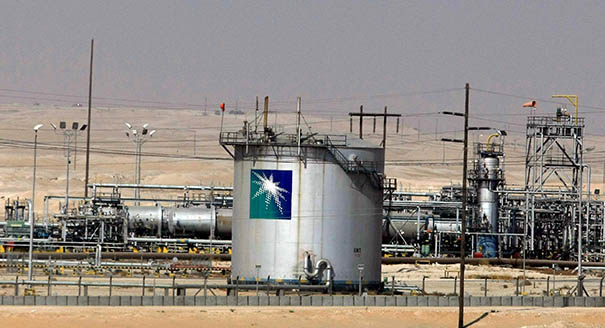
The Middle East is vital to China’s present and future energy interests, but the region’s thorny geopolitics make Chinese state-owned firms hesitant to make large investments there.
Source: UKSA Analist Monthly Journal
Chinese President Xi Jinping has probably had one of the busiest first two years of any Chinese president. Days after he became the president of China, he visited Russia and East Africa in his first-ever state visits, strongly focusing on energy. He then visited the US and three Caribbean countries before alluding to the concept of the “Maritime Silk Road” for the first time during his visit to ASEAN countries in October 2013. President Xi Jinping had also visited Central Asia, the EU, Mongolia, and South America, all of which possess significant energy ties with China, by the time he announced China’s $40 billion plan to establish a Silk Road Fund that would strengthen the connectivity and economic cooperation between the countries along China’s “One Belt and One Road” (OBAOR) development initiative at the 2014 APEC Summit in China.
With his back-to-back visit to Australia after the APEC Summit, another country that holds strong energy ties with China, one could wonder why the country hasn’t yet paid a visit to the Middle East, the region that is most critical to China’s energy supply. The OBAOR initiative connects nearly all the nations President Xi has visited in last two years except America, but the two corridors China proposes for OBAOR seem to bypass the Middle East rather than include it.
Is this a true reflection of the Middle East’s position on the list of the new Chinese leadership’s diplomatic priorities? Are the gulf countries no longer important to China as the world’s oil regime shifts towards new and unconventional oil producers?The answer is of course no.
Saudi Arabia is the largest exporter of oil to China, accounting for nearly 20% of the country’s oil imports in 2013, and the Middle East together supplies more than 50% of China’s oil imports, or 30% of its total oil consumption. Also, considering that China is combatting air pollution by relying more heavily on natural gas, Qatar is China’s largest supplier of liquefied natural gas (LNG), and it is second after Turkmenistan in terms of the overall volume of China’s growing natural gas imports. As China’s demand for natural gas is bound to increase, Iran, as the world’s third largest natural gas producer and as China’s close friend in close proximity, will certainly have an important role to play in the future. The Middle East is only to have more weight in China’s energy-related geopolitical calculations.
Since the “go out” strategy started in 2000, there has been enormous growth in overseas direct investment (ODI) across the world by Chinese state owned enterprises (SOEs), totaling over $90 billion in 2013, of which energy SOEs had the largest share. But recent research by the Carnegie Endowment for International Peace that summarized the accumulation of ODI in the oil sector by Chinese SOEs between 2008 and 2013 revealed that the country’s investments in the Middle East and North Africa (MENA) ranked strikingly lower than other major oil producing regions.
Considering the share of oil and gas imported to China from this region, this reality reflects an interesting divergence from China’s approach to other oil producing regions. A core area of focus in US diplomatic strategy, the Middle East probably has the most complicated geopolitics in the world, which is intertwined with religious and cultural conflicts, thus making Chinese energy SOEs particularly hesitant to engage in this region as they have done in others like Africa and South America. Instead, China has opted to focus on commodity trade with the region. China’s behavior in this regard can be read as the country recognizing the international order led by the US in the region, yet it is also unfortunately interpreted by President Obama as China “taking a free ride” on the United States. This is perhaps most evident in Iraq, where all three Chinese oil companies have acquired significant oil fields after the US-led Iraq War.
In recent years, a few Chinese overseas investment projects have gotten caught in the middle of geopolitical or domestic political troubles, during which times they have suffered significant losses, whether in South Sudan, Libya or Venezuela. The sudden rise of ISIS in Iraq also posed an imminent threat to the investments of Chinese oil companies that were first actualized just a few years ago. Even in a sector unrelated to energy, China Railway Construction suffered a deficit of over $4 billion in a high-speed railway project in Saudi Arabia that was pulled through in the end as if it were a political mission to please the Saudi government.
OBAOR is a proactive strategy of Xi Jinping’s diplomatic grand design, but also an attempt to review and better coordinate investments since the launch of the “go out” strategy, whilst China’s ODI exceeded its Foreign Direct Investment (FDI) for the first time in 2014. China’s overseas energy investment remains, to some extent, a reflection of China’s diplomatic intention. But OBAOR, as China’s first overseas development attempt, is not prepared to test the waters in the most difficult and complicated region just yet. Additionally, with all the recent clashes between China and the US since the latter’s pivot “Back to Asia”, President Xi has no intention of challenging the existing order led by US in the Middle East either.
It is clear that the Middle East will continue to be a critical region for China’s energy security, and that it is in China’s interest to actively engage to keep it stable, just as China is doing in the Iranian nuclear talks. But at this time China will continue to act in accordance with the current international regime, especially when it comes to the Gulf countries, in which the US has long standing and significant interests. Despite the US’s reduction in oil imports, there is no substantial evidence that the country will pull out of the Middle East any time soon. Here, with its own growing stake in the Middle East, China will not resist working together with the US to contribute to the stability of this region; however, it is still far from being the destination where China is ready to project its power.
This article was originally published in Turkish by the USAK Analist Monthly Journal.
Former Nonresident Scholar, Carnegie-Tsinghua Center for Global Policy
Wang Tao was a nonresident scholar in the Energy and Climate Program based at the Carnegie–Tsinghua Center for Global Policy.
Recent Work
Wang Tao
Wang Tao, Yang Yifang
Carnegie does not take institutional positions on public policy issues; the views represented herein are those of the author(s) and do not necessarily reflect the views of Carnegie, its staff, or its trustees.

Despite its flop at the box office, the film raises important questions for the climate community to answer.
Leonardo Martinez-Diaz

Funding Ukraine remains a priority for European leaders. As Russia’s war of aggression heads into another winter, two feasible options to mobilize support for Kyiv should be fast-tracked.


Vladyslav Rashkovan, Gregory P. Wilson

Russian strikes are weakening the economy sustaining Ukraine’s war effort. Closing the growing funding gap will require more European support and politically contentious reforms in Kyiv.

Balázs Jarábik

While the EU and European governments are embracing the much-lauded middle-power moment, this entails three difficult conundrums.

Richard Youngs

The middle power moment will not be defined by sovereign states alone, and California stands out for its potential contributions to international cooperation.


Ian Klaus, Stewart Patrick