

Article
C. Raja Mohan, Darshana M. Baruah
{
  "authors": [
    "C. Raja Mohan"
  ],
  "type": "legacyinthemedia",
  "centerAffiliationAll": "dc",
  "centers": [
    "Carnegie Endowment for International Peace",
    "Carnegie India"
  ],
  "collections": [],
  "englishNewsletterAll": "ctw",
  "nonEnglishNewsletterAll": "",
  "primaryCenter": "Carnegie India",
  "programAffiliation": "SAP",
  "programs": [
    "South Asia"
  ],
  "projects": [],
  "regions": [
    "United States",
    "South Asia",
    "Pakistan",
    "India",
    "North America"
  ],
  "topics": [
    "Foreign Policy",
    "Security"
  ]
}
Source: Getty
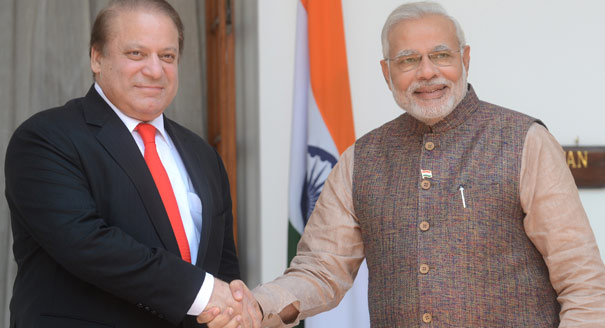
As Modi and Obama expand the scope of the India-U.S. partnership, they have a rare opportunity to strengthen bilateral engagement on regional issues in the subcontinent, including the stability of Pakistan.
Source: Indian Express
As Prime Minister Narendra Modi and US President Barack Obama expand the scope of the India-US partnership, they have a rare opportunity to strengthen bilateral engagement on regional issues in the subcontinent, including the stability of Pakistan.
During the Cold War, one of the main reasons for the estrangement between India and the US was Washington’s support for the Pakistan army. While the American interest was not directed against India, Rawalpindi’s ability to leverage the relationship in its rivalry with New Delhi produced unending complications for Indo-US ties. The frequent US efforts to mediate on the Kashmir question between India and Pakistan only made matters worse for Delhi.
It was President George W. Bush who broke this paradigm by unveiling a policy of “de-hyphenation” early in his first term, which began in 2001. Recognising India’s potential role as a major power in Asia and beyond, Bush discarded Washington’s tradition of viewing India through the South Asian prism. Despite the renewed importance of the Pakistan army for the US after the 9/11 attacks on New York and Washington, Bush did not abandon the special outreach to India. Instead, he defined an American policy towards South Asia that dealt with India and Pakistan on their own merit.Bush would not give Pakistan a veto over Washington’s India policy. Unlike his predecessor, Bill Clinton, Bush made it absolutely clear that he would not let America meddle in Kashmir. Bush also turned down Pakistan’s repeated demands for a nuclear symmetry with India and insisted that the civil nuclear initiative was an exclusive arrangement with Delhi.
When Obama succeeded Bush in 2009, Delhi was concerned that the Democrats, with their Kashmir itch, would take America back to the bad old days in South Asia. After his initial momentary musings on Kashmir mediation, Obama stayed the course adopted by Bush. Despite the huge turbulence in Kashmir during his visit to India in November 2010, Obama chose to maintain silence. This fundamental change in US policy was critical in building mutual trust over the last decade between Delhi and Washington.
As Obama ends America’s more-than-a-decade-long occupation of Afghanistan, there are questions about the future of the US-Pak relationship. With most of the American troops out of Afghanistan, some argue, American interest in and aid to Pakistan will begin to rapidly decline.
Others, however, argue that Washington is unlikely to abandon the relationship with Rawalpindi any time soon. They point to America’s interest in ensuring a reasonably stable Afghanistan, its concerns about the consequences of state failure in Pakistan and the fear of loose nukes falling into the hands of extremist groups.
Whatever direction the ties between Washington and Islamabad may take in the coming years, India needs to engage the US on the future of Pakistan at a moment when our western neighbour is struggling to cope with a deepening crisis at home and mounting challenges on its western frontiers.
Many in Delhi and Washington will instinctively resist the construction of such a dialogue. After all, it has never been done before. The fact, however, is that both countries have a big stake in Pakistan’s stability. But neither America nor India is in a position to unilaterally shape the future of Pakistan. Working together might give them a slim chance of influencing outcomes in Pakistan, one of the world’s pivotal nations.
India’s wariness of America’s regional policies was not limited to Pakistan. As political trust diminished between India and the US during the Cold War, Delhi became increasingly suspicious of the American role in its neighbourhood and sought to limit it in the subcontinent.
It was Bush who once more broke the mould of the US policy. He ordered a substantive dialogue with India on regional issues and was quite happy to let India take the lead in the subcontinent beyond Afghanistan and Pakistan. Delhi too began to shed its reluctance to work with America in the neighbourhood. Recall that it was Delhi that drew the US as an observer into Saarc when Pakistan was pushing for a larger Chinese role in the regional forum in 2005.
In the last few years, Delhi and Washington seemed to slip back to the old habit of working at cross-purposes in the region. Amidst their effort to revitalise the partnership, Modi and Obama must initiate a high-level regional dialogue for sustained political consultation and policy coordination between Delhi and Washington in the region. The apparent cooperation between Delhi and Washington in supporting an orderly transfer of power in the recent presidential elections in Sri Lanka may provide a valuable precedent for future joint efforts to promote political stability and regional economic integration in the subcontinent.
This article was originally published in the Indian Express.
Former Nonresident Senior Fellow, Carnegie India
A leading analyst of India’s foreign policy, Mohan is also an expert on South Asian security, great-power relations in Asia, and arms control.
Recent Work

C. Raja Mohan, Darshana M. Baruah


Alexander Gabuev, Paul Haenle, C. Raja Mohan, …
Carnegie does not take institutional positions on public policy issues; the views represented herein are those of the author(s) and do not necessarily reflect the views of Carnegie, its staff, or its trustees.
Despite the agreement’s uncertainty, it’s still a significant development in regional and nuclear policy.


Andrew Leber, Jane Darby Menton
“AI safety in parallel” is modest and pragmatic but vital.

Matt Sheehan

Trump is distracted and Ukraine wants Europe to step up. The continent’s leaders must find their voice and assert it in talks with Russia.

Alissa de Carbonnel
Unresolved tensions within the AfD may ultimately constrain the its potential as a leader among European and global populist forces.
Jeremy Cliffe
There is a deeply rooted assumption in post–Cold War American statecraft that overwhelming military and economic power translates directly into favorable political outcomes. But force alone is rarely enough. To meet the challenges of the mid-21st century, Washington needs a cultural shift toward a mindset that takes negotiation far more seriously.

Cecily Brewer