

Commentary
Despite the agreement’s uncertainty, it’s still a significant development in regional and nuclear policy.
Andrew Leber, Jane Darby Menton
{
  "authors": [
    "Alexey Arbatov"
  ],
  "type": "legacyinthemedia",
  "centerAffiliationAll": "",
  "centers": [
    "Carnegie Endowment for International Peace",
    "Malcolm H. Kerr Carnegie Middle East Center",
    "Carnegie Russia Eurasia Center"
  ],
  "collections": [
    "Iranian Proliferation"
  ],
  "englishNewsletterAll": "",
  "nonEnglishNewsletterAll": "",
  "primaryCenter": "Carnegie Endowment for International Peace",
  "programAffiliation": "",
  "programs": [],
  "projects": [],
  "regions": [
    "North America",
    "United States",
    "Middle East",
    "Iran",
    "Russia"
  ],
  "topics": [
    "Security",
    "Foreign Policy",
    "Nuclear Policy"
  ]
}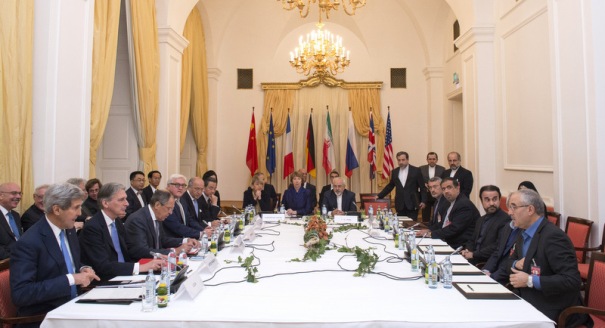
Source: Getty
If the nuclear talks fail, further Russian cooperation on coercing Iran is not likely while Russia and the West remain locked in a standoff over Ukraine. Moreover, Russia and Iran may move to build closer relations in the future.
Source: Belfer Center for Science and International Affairs’ Iran Matters
As the final deadlines for the nuclear negotiations with Iran approach, more consideration should be turned to the aftermath of the possible failure of the talks to produce a workable agreement. An important consideration for American officials for the day after the failure of the negotiations is how Russia will adjust its policy to the post-Geneva world, which will probably see a return to confrontation between Iran and the United States.
Russia will probably not accept some form of ultimatum where Iran must meet certain benchmarks or new sanctions will be imposed. Moscow will be more likely to accept a step-by-step approach, involving Iran implementing increased transparency measures, agreeing to certain levels of enrichment, or restrictions on the Arak reactor in exchange for sanctions relief. Further Russian actions to coerce Iran are unlikely. However, even with this flexibility, an agreement is unlikely at this point.In the event that the negotiations fail, it is doubtful that Russia will consent to future sanctions against Iran. For Russia, applying sanctions against Iran while being the subject of sanctions of the US and EU would be quite a Kafka-ian policy. It is more likely that Russia will increase unilateral cooperation with Iran. A recent example of this shift in direction came in late February, with the news that Russia has offered to sell Iran its advanced Antey-2500v anti-aircraft missiles, which could be used by Iran to defend against Israeli or American attack on its nuclear sites. While this would harm Russia-US relations, it is hard to imagine how the relationship could get worse at this point. As long as the crisis in Ukraine remains ongoing and Russia remains pressured by the US and EU in this area, its cooperation will not be forthcoming.
There is virtually no possibility under President Obama of the United States launching a military strike to destroy Iranian nuclear facilities. At the same time, it is unrealistic to believe that a comprehensive agreement will be reached under the current circumstances. With this in mind, it is critical that American policymakers begin considering their plans for the day after the talks fail, and consider what role Russia will play in America’s Iran strategy going forward.

Alexey Arbatov
Alexey Arbatov is the head of the Center for International Security at the Primakov National Research Institute of World Economy and International Relations.
Carnegie does not take institutional positions on public policy issues; the views represented herein are those of the author(s) and do not necessarily reflect the views of Carnegie, its staff, or its trustees.
Despite the agreement’s uncertainty, it’s still a significant development in regional and nuclear policy.


Andrew Leber, Jane Darby Menton
“AI safety in parallel” is modest and pragmatic but vital.

Matt Sheehan

Trump is distracted and Ukraine wants Europe to step up. The continent’s leaders must find their voice and assert it in talks with Russia.

Alissa de Carbonnel
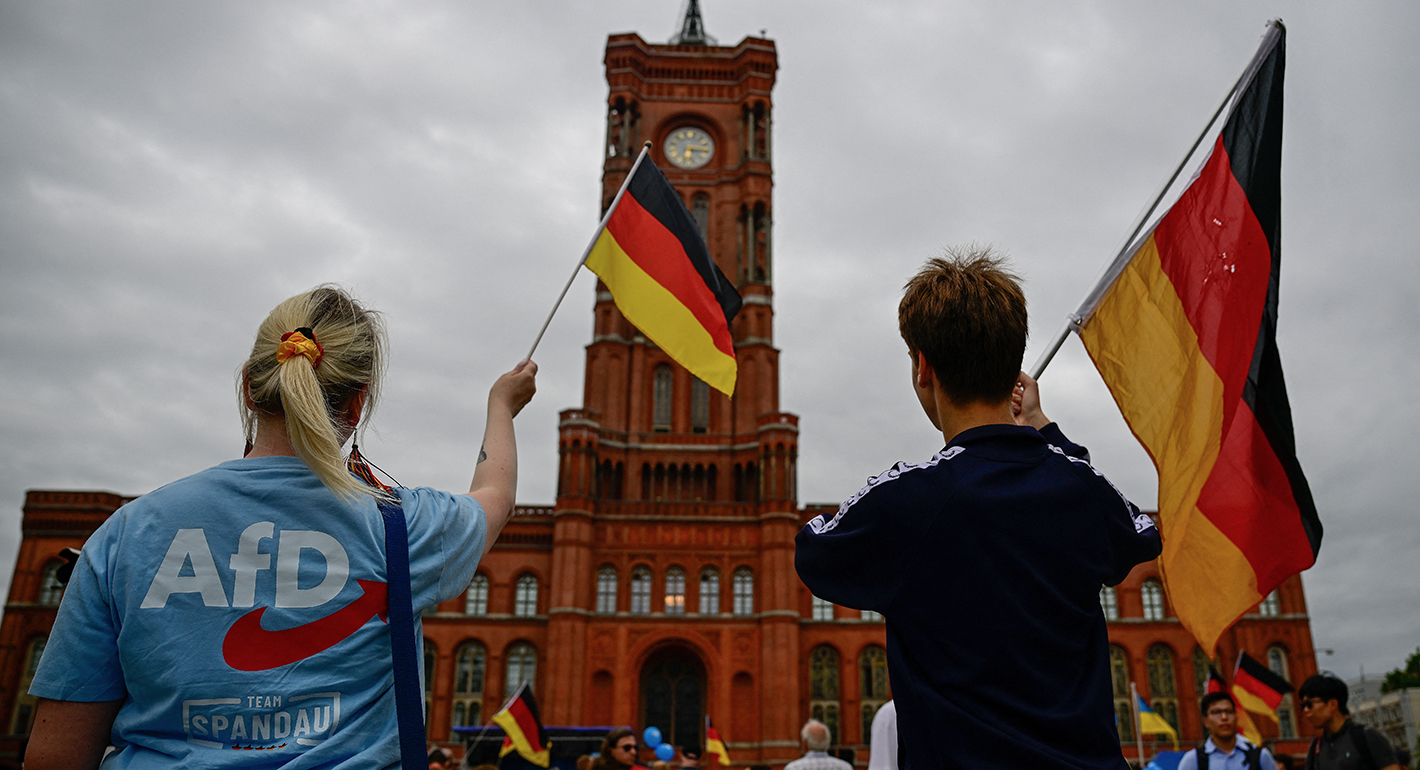
Unresolved tensions within the AfD may ultimately constrain the its potential as a leader among European and global populist forces.
Jeremy Cliffe

There is a deeply rooted assumption in post–Cold War American statecraft that overwhelming military and economic power translates directly into favorable political outcomes. But force alone is rarely enough. To meet the challenges of the mid-21st century, Washington needs a cultural shift toward a mindset that takes negotiation far more seriously.

Cecily Brewer