

Commentary
Regardless of the outcome, there’s another path to ensuring that progress doesn’t stall.
Zaur Shiriyev
{
  "authors": [
    "Dmitri Trenin",
    "Andrew Leung",
    "Mark MacKinnon"
  ],
  "type": "legacyinthemedia",
  "centerAffiliationAll": "dc",
  "centers": [
    "Carnegie Endowment for International Peace",
    "Carnegie Russia Eurasia Center"
  ],
  "collections": [],
  "englishNewsletterAll": "ctw",
  "nonEnglishNewsletterAll": "",
  "primaryCenter": "Carnegie Russia Eurasia Center",
  "programAffiliation": "russia",
  "programs": [
    "Russia and Eurasia"
  ],
  "projects": [],
  "regions": [
    "East Asia",
    "China",
    "Russia"
  ],
  "topics": [
    "Economy",
    "Trade",
    "Foreign Policy"
  ]
}
Source: Getty
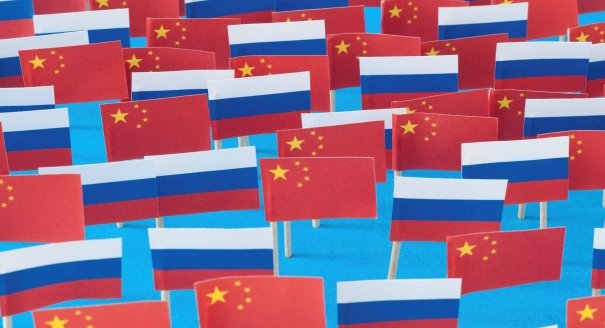
The rising relationship between China and Russia is based both on a common resentment toward Washington’s world dominance as well as on shared interests.
Source: BBC’s Newshour
Speaking on the BBC’s Newshour, Carnegie Moscow Center’s Dmitri Trenin discussed the growing Russia-China relationship with BBC China editor Carrie Gracie. He was joined by Andrew Leung, an independent China specialist based in Hong Kong, and Mark MacKinnon, former Beijing and Moscow bureau chief for Canada’s Globe and Mail, now based in London.
Trenin assessed the rising relationship between China and Russia as based both on a common resentment toward Washington’s world dominance as well as on shared interests in economy, investments, infrastructure, and science.
Moreover, he argued, a new Eurasia is emerging now, with China as a dynamic center of it, and the current China-led projects in Eurasia have the potential to bring about the greatest changes in this region since the days of Genghis Khan.
Former Director, Carnegie Moscow Center
Trenin was director of the Carnegie Moscow Center from 2008 to early 2022.
Andrew Leung
Mark MacKinnon

Regardless of the outcome, there’s another path to ensuring that progress doesn’t stall.
Zaur Shiriyev

But their "principal to principal" model will only be as effective as the political strength of each leader back home.

Damien Ma

China’s Ministry of Public Security is often portrayed as a domestic law enforcement agency, but it is also a global security actor. This paper explores how MPS has used international law enforcement and security cooperation agreements—over 200 since 2006—to advance China’s vision of security in a changing global environment.


Sophie Zhuang, Sheena Chestnut Greitens, Cameron Waltz

The demands of the Kremlin’s war in Ukraine, demographic problems, and public hostility toward Central Asians mean Russia does not have enough workers.

Salavat Abylkalikov

Amid uncertainty caused by the Iran war, the global drive for nonproliferation has stalled. With Europe diplomatically marginalized and countries reassessing their nuclear options, efforts to curb the spread of nuclear weapons risk becoming irrelevant.

Jane Darby Menton