

Article
Amr Adly, Hamza Meddeb
{
  "authors": [
    "Amr Adly"
  ],
  "type": "legacyinthemedia",
  "centerAffiliationAll": "dc",
  "centers": [
    "Carnegie Endowment for International Peace",
    "Malcolm H. Kerr Carnegie Middle East Center"
  ],
  "collections": [],
  "englishNewsletterAll": "menaTransitions",
  "nonEnglishNewsletterAll": "",
  "primaryCenter": "Malcolm H. Kerr Carnegie Middle East Center",
  "programAffiliation": "MEP",
  "programs": [
    "Middle East"
  ],
  "projects": [],
  "regions": [
    "Egypt",
    "North Africa"
  ],
  "topics": [
    "Political Reform",
    "Security",
    "Foreign Policy"
  ]
}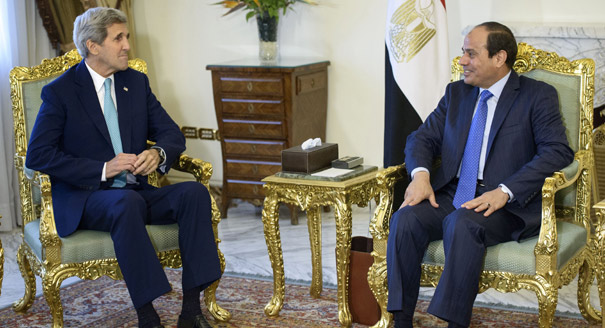
Source: Getty
U.S. Secretary of State John Kerry’s visit to Egypt comes in the aftermath of Iran’s nuclear deal and as part of broader American diplomatic efforts to coordinate the region’s fight against terrorism.
Source: Daily News Egypt
U.S. Secretary of State John Kerry is scheduled to visit Egypt on Sunday. This comes as part of broader American diplomatic efforts to coordinate the fight against terrorism in the Middle East with regional allies. It also comes in the aftermath of Iran’s nuclear deal that is expected to have a deep impact on the security arrangements in the Persian Gulf, and the Middle East, in general.
Kerry’s visit coincides with the delivery of eight F16s to Egypt (the biggest arms deal since 2013), and the relaunching of the Egyptian-American strategic dialogue after a 16-year halt. These are all signs of the renormalization of the relations between Cairo and Washington after nearly two years of tension, following the ouster of former president Mohamed Morsi and the crackdown on the [Muslim] Brotherhood. The tension resulted in the freezing of American military aid to Egypt in 2013, for the first time since its initiation in 1979.
How would this impact Egypt’s future role in the region? Egypt’s role in the Middle East seems to be generally determined by a regional dynamic that is only partly influenced by the United States. As relevant as the United States may be for Egypt’s economic and political future, the Iranian-Saudi struggle appears to be more relevant, and more independent of direct American influence.With the partial U.S. disengagement from the Middle East, the Gulf countries find themselves in need of reaching a regional security arrangement of their own. Where Egypt will fit into these arrangements, and into the struggle the arrangement is designed to tackle, is what will decide Egypt’s future role in the Middle East.
Along the earlier lines, Egypt has received an estimate of $23 billion since 2013 in financial aid from a GCC trio of the UAE, Saudi Arabi,a and Kuwait. The unprecedented cash inflow has been essential to keeping the country afloat, especially after the toppling of Mohamed Morsi in mid-2013. No Western financial aid is closely comparable. The U.S. economic aid to Egyptian has been almost halved through the last decade. Military aid, which has been historically the biggest, has been constant in absolute terms hovering around $1.2 billion since 1979, which is basically negligible as a percentage of Egypt’s GDP (estimated around $285 billion in 2014).
The United States, as well as other Western powers, has hardly played any role in pushing for the Egypt’s economic recovery in the aftermath of the 2011 revolution. The Deville plan, announced by Obama and other G8 leaders back then, failed remarkably to translate into sustainable aid, investment, or trade arrangements in support of sociopolitical change in the region, including Egypt.
The most significant financial dynamic ever since has been largely regional, rather than international, and mainly from the Gulf countries. It was time to make use of the trillions of dollars that were amassed since the 2008 oil price hike. The U.S. has not been capable of fully directing local dynamics. The political changes in Egypt since 2013 were hardly condoned by the Americans.
Yet, they happened any way with clear Gulf support. Moreover, U.S. military aid was resumed later on without gaining any political concessions from the ruling regime in Egypt. Meanwhile, the Egyptians could secure arms deals with the French, and negotiate others with the Russians. The U.S. then found it important to reintegrate Egypt into the fight against “Islamic State”, and to boost the Egyptian army’s capacities to quell the attacks in the Sinai.
The U.S. has not been capable of containing, not to mention settling, the conflict in Syria. There was rather a spillover into Iraq, and an unprecedented territorialization of the jihadist presence in the very heart of the Middle East with the fall of Mosul in 2014, and the establishment and unremitting expansion of “Islamic State” in Iraq and Syria. In a nutshell, the U.S. seems to be less willing and less capable of allocating resources to controling and managing the region.
This of course does not mean that the Americans have decided to forsake or completely withdraw from the Middle East. However, their involvement is clearly being progressively limited, which may be the result of financial restraints, almost complete failure of the Iraq adventure or more interest in other regions of the world deemed more important.
Given this general context, what can the U.S. do for Egypt at this juncture? There is definitely room in supporting Egypt’s fight against terrorism. This has already been happening with the resumption of the U.S. military aid to Egypt, after more than a year of aid freezing.
Egypt has been dependent on U.S. technology and training for the last three decades. Another front can be supporting the country’s sluggish path towards economic recovery. A stable Egypt is very important for any future attempt at stabilizing the Middle East. It is also a key factor in any future political opening in the country, which clearly lies beyond Washington’s interest and capacity to influence.

Former Nonresident Scholar, Middle East Center
Adly was a nonresident scholar at the Carnegie Middle East Center, where his research centers on political economy, development studies, and economic sociology of the Middle East, with a focus on Egypt.
Recent Work

Amr Adly, Hamza Meddeb
Carnegie does not take institutional positions on public policy issues; the views represented herein are those of the author(s) and do not necessarily reflect the views of Carnegie, its staff, or its trustees.
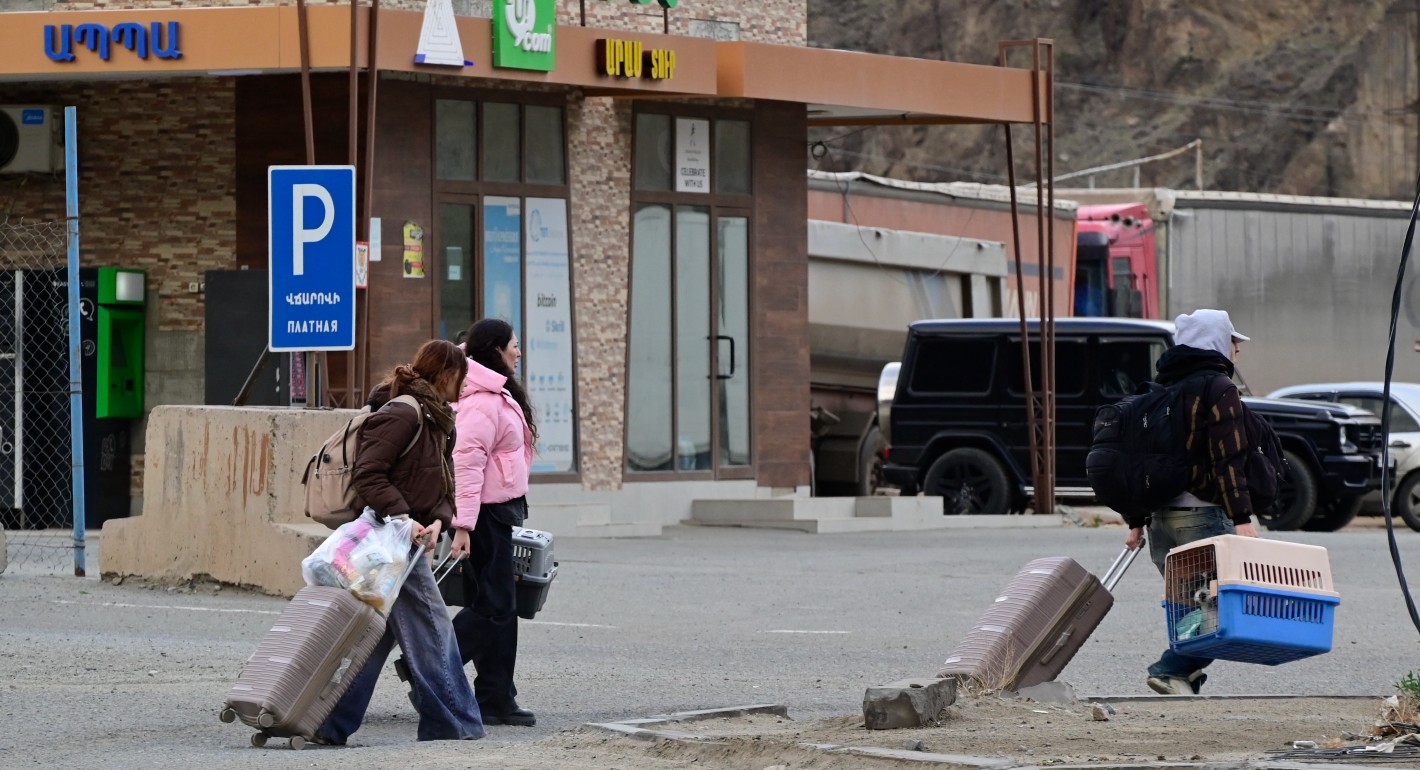
The conflict is threatening stability in Armenia and Azerbaijan.

Zaur Shiriyev

The conflict is exposing the deep energy vulnerabilities of Korea’s chip industry.


Darcie Draudt-Véjares, Tim Sahay

French President Emmanuel Macron has unveiled his country’s new nuclear doctrine. Are the changes he has made enough to reassure France’s European partners in the current geopolitical context?

Rym Momtaz, ed.
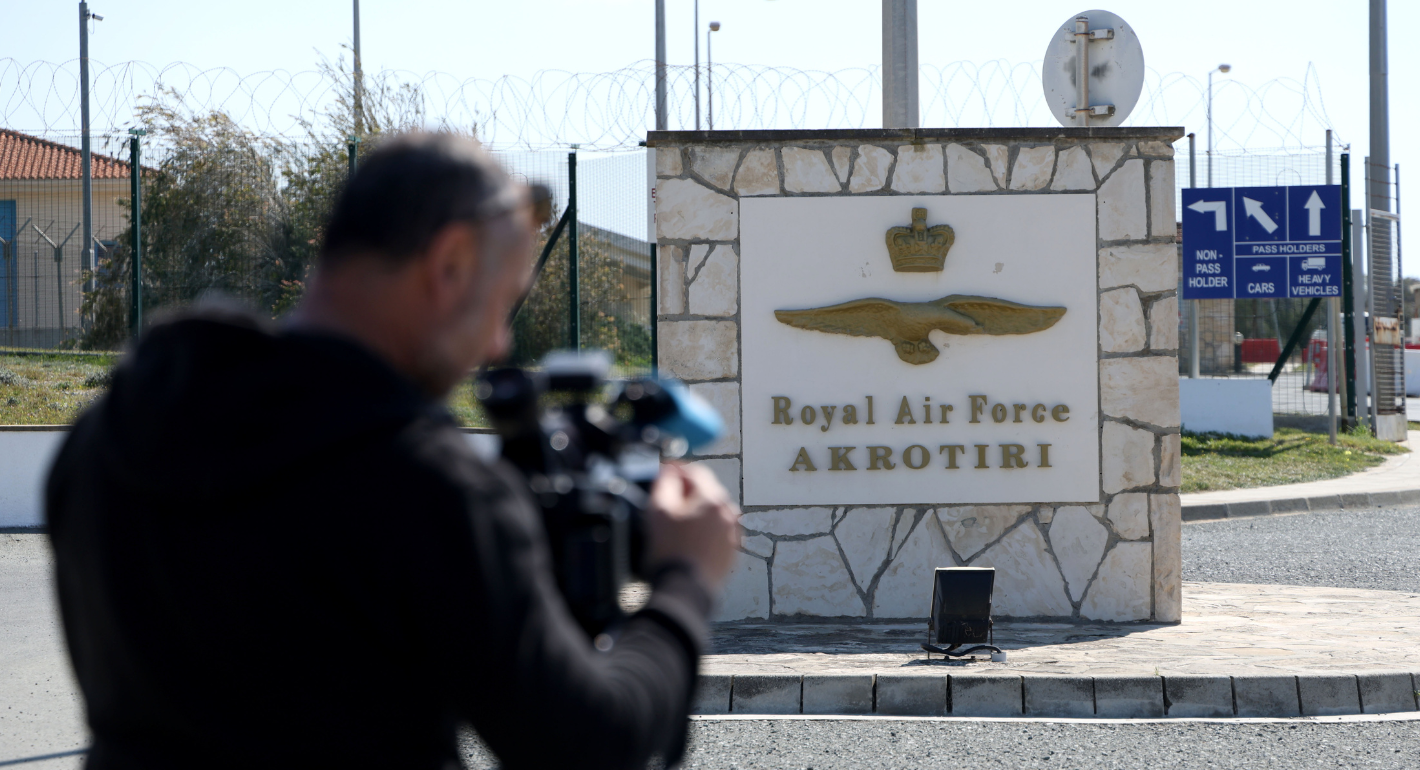
The drone strike on the British air base in Akrotiri brings Europe’s proximity to the conflict in Iran into sharp relief. In the fog of war, old tensions in the Eastern Mediterranean risk being reignited, and regional stakeholders must avoid escalation.

Marc Pierini

Domestic mobilization, personalized leadership, and nationalism have reshaped India’s global behavior.

Sandra Destradi