

Article
Paul Stronski
{
  "authors": [
    "Paul Stronski"
  ],
  "type": "legacyinthemedia",
  "centerAffiliationAll": "dc",
  "centers": [
    "Carnegie Endowment for International Peace"
  ],
  "collections": [],
  "englishNewsletterAll": "ctw",
  "nonEnglishNewsletterAll": "",
  "primaryCenter": "Carnegie Endowment for International Peace",
  "programAffiliation": "russia",
  "programs": [
    "Russia and Eurasia"
  ],
  "projects": [],
  "regions": [
    "Middle East",
    "Syria",
    "Russia"
  ],
  "topics": [
    "Foreign Policy"
  ]
}
Source: Getty
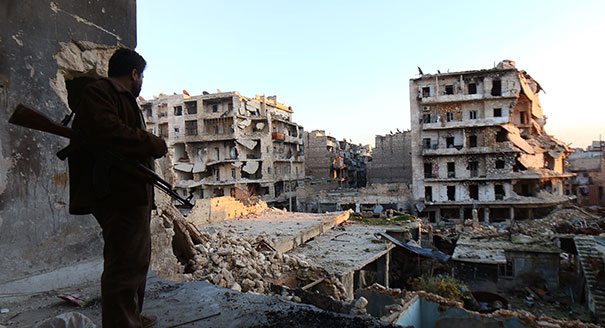
While supporting Assad has allowed Russia to retain its influence in the Middle East, Russia should be wary of getting too involved in Syria if it wants to avoid another Ukraine-like quagmire
Source: Reuters
Russian tactical fighters have arrived in Syria, to join the tanks, transport and attack helicopters, and troops reportedly already delivered. These deployments have triggered cries that Russian President Vladimir Putin is again flexing his muscles at the West’s expense — as he has been doing in Ukraine since 2014.
Some argue that Putin’s Syria gambit is part of a grand scheme to rebuild Russia’s global status. The Kremlin’s moves, however, are better understood as a desperate, risk-laden attempt to shore up Syrian President Bashar al-Assad because his country is one of the few left in the Middle East over which Russia still holds significant influence and where Moscow has long had a military presence.In fact, the Kremlin truly believes that Washington organized and financed the entire Arab Spring — as well as a string of other “colored revolutions” — that toppled authoritarian leaders along Russia’s borders.
If Assad falls, Moscow would likely soon lose its naval base in Syria — its only one in the Mediterranean. It might also possibly lose whatever other military or intelligence assets it has in the country.
Few in the West would lament the Russian military’s forced departure from Syria. But the reality is that the loss of Syria to radical extremists is neither in the West’s nor Russia’s interests. Although it won’t be easy and it is unpalatable to many, there is reason for Russia and the West to work together here — if a mechanism can be found.
The problem with finding that mechanism is that Moscow and Washington continue to disagree over what to do with Assad. The West wants him gone, arguing that his bloody regime fuels extremism and has prompted the refugee crisis. Russia, however, thinks he is the only force capable of preventing radicals from seizing power. We haven’t been able to bridge that difference for years.
Though the West and Moscow have had some tactical cooperation on Syria on issues like safeguarding and eliminating the country’s chemical weapons stockpiles, that cooperation occurred only after the weapons they had already been used. It was too little, too late.
We might be at a similar inflection point. Both Russia and the United States should face the fact that neither country’s policy is working. The fight in Syria has become a conflict between Assad’s struggling army and a collection of radical Islamic militant groups, of which Islamic State is the most dangerous. Some of these groups hate and fight each other, as well as Assad. But that does not make any of them palatable.
The Assad regime’s collapse would be a big problem for Putin. Moscow increased its support for that brutal regime after the 2011 Syrian uprising. This was less out of love for Assad than because the Kremlin views Washington as the source of regional instability – orchestrating not only the Arab Spring but the other uprisings that brought down authoritarian leaders along Russia’s southern borders.
This is a key reason why Putin makes opposition to “U.S.-sponsored regime change” the centerpiece of his foreign policy and claims these policies stoke instability. It is also why Russia hung on to disgraced former Ukrainian President Viktor Yanukovych to the very end.
Western support for the “moderate” opposition has neither pushed Assad out nor led to the rout of Islamic State. Putin’s latest approach, though, is risky.
Putting boots on the ground in a chaotic civil war could have unforeseen consequences. The Russian people still remember their bloody wars in Afghanistan and in Chechnya — and are not eager to get involved in another brutal conflict in the Muslim world.
One recent Russian press report claimed that Russian soldiers about to go to Syria complained to their superiors and the country’s human-rights council about the deployment and indicated they do not want to go. One soldier, speaking anonymously to a reporter, said, “We don’t want to go to Syria. We do not want to go die there.”
If this report is true, the Kremlin should be worried. While Russians generally support the annexation of Crimea, recent polling suggests ordinary Russians are against interventions abroad, with 77 percent reportedly opposing Russian boots on the ground in Syria.
Can Putin afford another quagmire? The war in eastern Ukraine is not going well. Putin can fuel the war in Ukraine — but he cannot win the peace.
He has eagerly hid the military losses and exorbitant costs of that war from his people. His 18-month effort to manufacture conflict in the country succeeded in alienating the Ukrainian population and pushing them closer to the West, which undermined his long-term goal of reinvigorating Russian influence across Eurasia.
The annexation of Crimea has similarly cost Russia a great deal — in billions of rubles, in international isolation and in Western sanctions. The Russian economy is hurting. Oil prices have dropped by half over the past year, as has the value of the ruble.
In addition, Putin’s pointed pivot to China as his new partner is proving problematic. Beijing is a tough negotiator bent on squeezing Moscow as hard as it can. Russia’s economic malaise is bubbling throughout the former Soviet space, which is further pushing Central Asia toward China and providing Beijing with openings in the Caucasus mountains and even in Ukraine.
Russia’s reckless policies in Ukraine, besides devastating that country, have also caused Moscow unanticipated serious problems. Sending troops to Syria and getting involved in its messy civil war is equally dangerous. Putin is unlikely to be able to hid the deaths of Russian troops in Syria as easily has he has done in Ukraine. Russians killing Islamic militants also risks retaliatory steps in Russia. Moreover, developments in Syria could easily spin out of control. Is Russia willing to provide enough support to actually save Assad at this point?
Assad’s collapse after a last-ditch effort to save him could damage Putin politically at home. He was dealt an embarrassing blow in Ukraine after the Yanukovych regime — in which the Kremlin invested heavily — fell like a house of cards in 2014.
Supporting two such weak and morally bankrupt regimes’ to the very end shows there is little strategic thinking going on inside the Kremlin.
Former Senior Fellow, Russia and Eurasia Program
Paul Stronski was a senior fellow in Carnegie’s Russia and Eurasia Program, where his research focuses on the relationship between Russia and neighboring countries in Central Asia and the South Caucasus.
Recent Work
Paul Stronski
Paul Stronski
Carnegie does not take institutional positions on public policy issues; the views represented herein are those of the author(s) and do not necessarily reflect the views of Carnegie, its staff, or its trustees.

Europe is facing rising populism internally as well as external pressures from Russia, China, Turkey, and the United States.

Dimitar Bechev

Much has been said of the changes Brussels is trying to make to the EU enlargement process. Here’s why gradual integration might—or might not—be the answer.
Dimitar Bechev
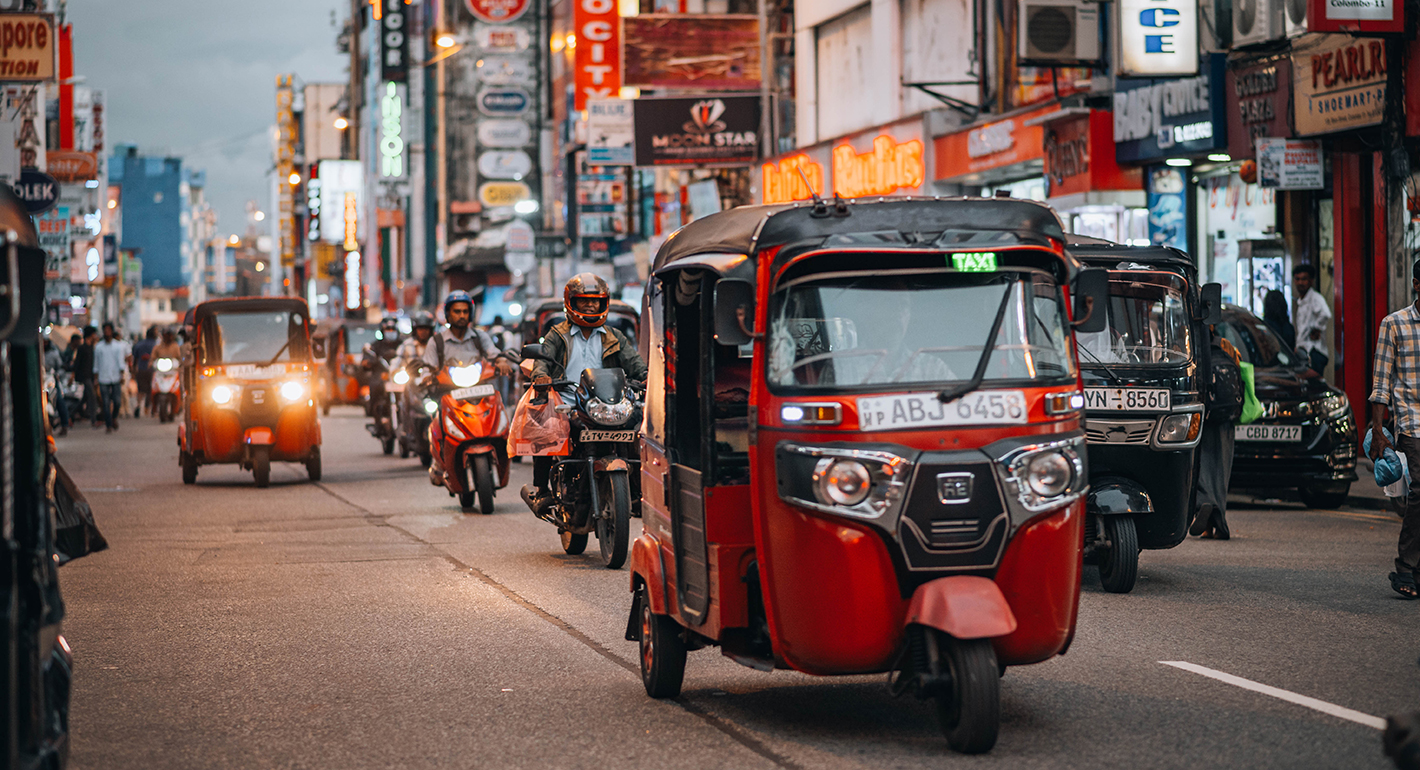
Economic recovery has brought Sri Lanka a modicum of stability, but domestic strains and great-power rivalry could test how long it lasts.
Avinash Paliwal

Despite a new textbook, an influx of Russian teachers and managers, and an end to the teaching of Ukrainian, the Kremlin is unlikely to have “reprogrammed” locals.

Konstantin Skorkin

For every ruble allocated to social policy, health, and education in 2027, double that amount is earmarked for the army, the police, and the security services.

Alexandra Prokopenko