

Article
C. Raja Mohan, Darshana M. Baruah
{
  "authors": [
    "C. Raja Mohan"
  ],
  "type": "legacyinthemedia",
  "centerAffiliationAll": "dc",
  "centers": [
    "Carnegie Endowment for International Peace",
    "Carnegie India"
  ],
  "collections": [],
  "englishNewsletterAll": "ctw",
  "nonEnglishNewsletterAll": "",
  "primaryCenter": "Carnegie India",
  "programAffiliation": "SAP",
  "programs": [
    "South Asia"
  ],
  "projects": [],
  "regions": [
    "United States",
    "Asia",
    "South Asia",
    "India",
    "North America",
    "East Asia",
    "China"
  ],
  "topics": [
    "Foreign Policy",
    "Security"
  ]
}
Source: Getty
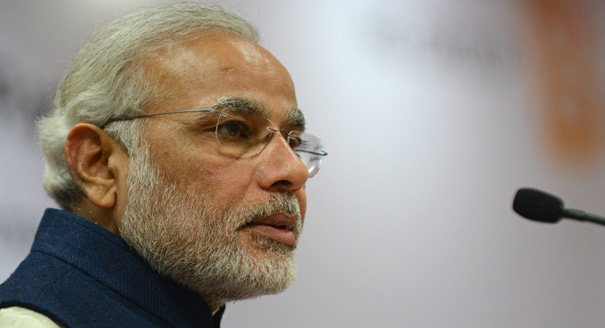
India’s security ties with Washington and Beijing vary significantly in scope and intensity.
Source: Indian Express
India’s simultaneous military exercises this week with the United States and Japan on the one hand and China on the other have drawn some attention. Some analysts view them as India’s delicate military balancing act between Asia’s competing great powers. Others see it as the contemporary expression of India’s enduring tradition of non-alignment.
Neither interpretation sounds right. It is probably a mere coincidence that the naval exercises in the Bay of Bengal between India, Japan and the United States and the counter terrorism exercises in the Yunnan province between the Indian and Chinese armies are taking place at the same time.
A lot of factors go into scheduling these kinds of exercises. The Ministry of Defence in Delhi does not have the time, inclination or the capacity to time them for some presumed political effect. In contrast, the argument that the simultaneous exercises are an expression of non-alignment seems a lot more credible. Yet, it is difficult to visualize India’s engagement with the U.S. and China in terms of non-alignment.During the Cold War, India’s non-alignment dealt with two rival great powers —U.S. and Soviet Russia — that did not share any frontiers with India. China, in contrast, has a long and disputed border with India. Besides the challenge on the border, Delhi feels threatened by Beijing’s ties with Pakistan and other South Asian neighbours of India.
That Beijing and Washington affect India’s security calculus differently is borne out by one simple fact. China sits on territory claimed by India; America does not. To be sure, India continues to be concerned about U.S. ties with Pakistan; but over the last decade Delhi has seen the evolution of a more balanced U.S. approach to India and Pakistan. China, however, remains reluctant to take into account India’s concerns about Pakistan.
Some in Delhi see that partnership with America is critical in balancing China’s rapidly rising military power. Beijing’s challenge to U.S. primacy in Asia has complemented this view and formed the basis for a complex dynamic between Delhi, Beijing and Washington.
The UPA government was afraid that drawing too close to the U.S. and Japan might provoke China. Because of the problems on the boundary, the UPA government was also reluctant to widen the engagement with Beijing. Modi, in contrast, is not defensive at all.
The PM seems to believe that a stronger security partnership with America will enhance India’s national power expand its room for geopolitical manoeuvre with China. At the same time, Modi is also eager to broaden economic ties with Beijing and better manage the conflict on the border.
The political conditions shaping India’s relations with the U.S. and China are fundamentally different. It is no surprise then India’s security ties with Washington and Beijing vary in scope and intensity.
India’s naval exercises with the U.S. and Japan are about consolidating Delhi’s natural advantages in the maritime domain. The army exercises with China are about confidence building. For the foreseeable future, there is no prospect that India’s military ties with the U.S. and China will be similar let alone symmetric.
Former Nonresident Senior Fellow, Carnegie India
A leading analyst of India’s foreign policy, Mohan is also an expert on South Asian security, great-power relations in Asia, and arms control.
Recent Work

C. Raja Mohan, Darshana M. Baruah


Alexander Gabuev, Paul Haenle, C. Raja Mohan, …
Carnegie does not take institutional positions on public policy issues; the views represented herein are those of the author(s) and do not necessarily reflect the views of Carnegie, its staff, or its trustees.

Why governance of rapidly evolving technology will be distributed and complex.


Stewart Patrick, Scott Singer
It should address the shortcomings of previous crisis communication efforts and adapt to the demands of frontier AI.

Lucy Luo
Washington’s decision to support some UN functions while letting others wither is pulling the organization apart at the seams.
Stewart Patrick, Theodore Zaritsky
While there are notable demographic, economic, and geographic divides over AI, there is also substantial alignment between Republicans and Democrats.



Ian Klaus, Mark Baldassare, Rachel George, …

Are Germany’s economic, industrial, and political struggles becoming a liability for the EU’s ability to rise to the geopolitical moment?

Rym Momtaz, ed.