

Q&A
- +1
Sheena Chestnut Greitens, Oriana Skylar Mastro, Yukon Huang, …
{
  "authors": [
    "Yukon Huang"
  ],
  "type": "legacyinthemedia",
  "centerAffiliationAll": "dc",
  "centers": [
    "Carnegie Endowment for International Peace",
    "Carnegie China"
  ],
  "collections": [],
  "englishNewsletterAll": "asia",
  "nonEnglishNewsletterAll": "",
  "primaryCenter": "Carnegie China",
  "programAffiliation": "AP",
  "programs": [
    "Asia"
  ],
  "projects": [],
  "regions": [
    "East Asia",
    "China"
  ],
  "topics": [
    "Economy",
    "Trade"
  ]
}
Source: Getty
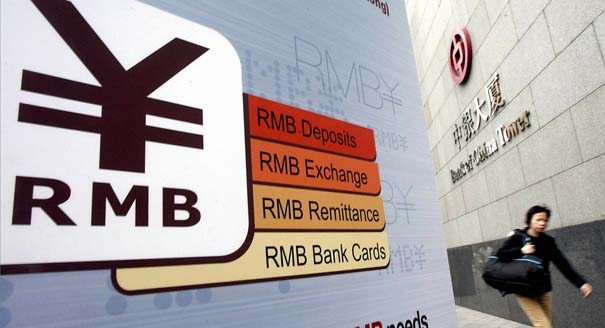
Including the renminbi in the basket of reserve currencies would seem to be an obvious move given China’s economic weight in the global economy, but it also carries a heavy burden.
Source: Financial Times
Until China’s currency joined the International Monetary Fund’s Special Drawing Rights on Monday the term rarely attracted headlines. This event drew so much attention because many see its inclusion as an acknowledgment of China’s status as a global economic power. The renminbi is the first emerging market currency to be added to the elite basket and the first new one since the SDR’s creation, nearly 50 years ago. For China, it has been a much sought after goal. In financial significance, however, it is still largely symbolic since it will be decades before the renminbi becomes a major international currency.
Including the renminbi in the basket of reserve currencies — to join the dollar, euro, yen and pound — would seem to be an obvious move given China’s economic weight in the global economy, and it might be viewed as a gift from the western financial powers — but it also carries a heavy burden that Beijing may come to regret. Under the qualifying rules a new entrant has to meet two criteria. The candidate must be a major trading nation, which China clearly is. And its currency must be “freely usable”. Initially this was understood to mean “freely convertible or tradable” and if so, the renminbi would not qualify given China’s extensive capital controls. But the IMF came out with the interpretation that it means widely used in international transactions — and this condition was met given its use in trade finance, swap arrangements and currency spot markets.
That the major powers were willing to go along with this might seem surprising given the past practice of dealing firmly with China on global economic concerns, including its adherence to World Trade Organisation guidelines. But it was not really a concession since the ultimate objective was to use SDR inclusion as a means to push for more market reforms, in particular improving the country’s financial markets and eliminating its capital controls.
In the interim, the IMF’s principle that the renminbi meet the “freely usable” test will have little impact until the supply of renminbi becomes more available globally. There is little recognition of how difficult it is to make a country’s currency available in the global financial system. The US did this by running huge trade deficits and paying with dollars. It also gave dollars away through its aid programmes. But China will not want to run trade deficits instead of surpluses, nor is it logical for a developing country to give its money away to richer nations. The only other option is for Beijing to open its capital markets more fully to external borrowers so they can buy renminbi. This would be likely to increase volatility and risks for the country’s relatively under-developed and inadequately regulated markets.
Promoting the renminbi as a global currency will make it much harder for Beijing to manage its more immediate growth and stabilisation needs. There is a conflict between having it play a role as an international currency — which means a strong and stable one — and the need to allow market forces to set its value in response to cyclical shifts. The leadership cannot have it both ways unless it takes a different approach to managing exchange rate adjustments.
The major challenge now is to maintain some degree of exchange rate stability while allowing market forces to play a role. China currently appears to be caught in a no man’s land. If Beijing allows the renminbi to depreciate significantly, it would probably be criticised by the US, which still holds the view that it is undervalued. China would also be vulnerable to concerns of its neighbours that it is engaging in competitive devaluations to maintain trade advantages. Yet, by tying its rate to the dollar, the renminbi is seen by most market observers except the US as overvalued, given the massive depreciations of its major Asian trading partners and the likely continued flow of capital abroad as Chinese investors seek to diversify their holdings.
There is a path, though, that would harmonise the objective of promoting renminbi usage abroad while moving to more market-based movements. That is by focusing more on regional trade and investment patterns. Nearly half of the country’s trade is processing-related — comprising parts and components from other east Asian countries that are assembled in China for export to the west. Currencies of several Asian countries already track the renminbi more closely than the dollar, which means it could be used as a “reference currency”. Asia would generally benefit from greater use of the renminbi to improve trade efficiency and reduce exchange-rate risk in intra-regional trade.
As a reference currency, the renminbi should move more in line with Asian currencies and be unlinked from the US dollar. Some depreciation is thus likely but it should be done through gradual and more flexible exchange rate adjustments rather than being bundled into unexpected large adjustments over a few days. The currency would thus be relatively stable relative to its major Asian trading partners but move more flexibly in relation to the dollar.
This article was originally published by the Financial Times.

Senior Fellow, Asia Program
Huang is a senior fellow in the Carnegie Asia Program where his research focuses on China’s economy and its regional and global impact.
Recent Work


Sheena Chestnut Greitens, Oriana Skylar Mastro, Yukon Huang, …


Yukon Huang, Isaac B. Kardon, Matt Sheehan

For every ruble allocated to social policy, health, and education in 2027, double that amount is earmarked for the army, the police, and the security services.

Alexandra Prokopenko

The acknowledgment has sparked fears of a new arms race with China and Russia.

Chris O’Meara

The European Commissioner for Trade is headed to China. But after President Xi’s bridge-building visit to Washington, can a more isolated EU overcome Beijing’s stranglehold on critical raw materials? Who will blink first?

Rym Momtaz, ed.
The summit may be remembered as a fatal blunder, when Washington, Beijing, and the AI industry collectively chose ceremony over action.

Jeffrey Prescott

Cargo traffic through Russia’s Northern Sea Route has increased because of the disruption caused by the conflict in the Middle East, the Ukraine war, and U.S.-China tensions.

Mikhail Korostikov