

Article
C. Raja Mohan, Darshana M. Baruah
{
  "authors": [
    "C. Raja Mohan"
  ],
  "type": "legacyinthemedia",
  "centerAffiliationAll": "dc",
  "centers": [
    "Carnegie Endowment for International Peace",
    "Carnegie India"
  ],
  "collections": [],
  "englishNewsletterAll": "ctw",
  "nonEnglishNewsletterAll": "",
  "primaryCenter": "Carnegie India",
  "programAffiliation": "SAP",
  "programs": [
    "South Asia"
  ],
  "projects": [],
  "regions": [
    "Asia",
    "South Asia",
    "India",
    "East Asia",
    "China"
  ],
  "topics": [
    "Foreign Policy",
    "Nuclear Policy"
  ]
}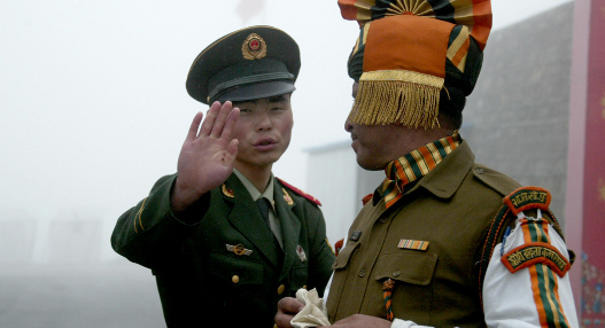
Source: Getty
Delhi finds it hard to elicit China’s support on key international priorities of its own, including India’s integration into the global nuclear order.
Source: Indian Express
As he heads to China on Monday, President Pranab Mukherjee, who has had such a long record of public service, will be happy to reflect on how relations between New Delhi and Beijing have changed for the better in recent years.
But the president will also note that there is a nuclear exception to this positive evolution. The latest manifestation of atomic divergence is China’s opposition to India’s membership of the Nuclear Suppliers Group (NSG), an international club that regulates nuclear commerce worldwide.Delhi and Beijing have indeed travelled a long distance over the last five decades. The political tensions of the 1960s and 1970s, following the border war of 1962, have yielded place to comprehensive engagement at all levels. The two sides have also managed to limit arguments about interference in each other’s internal affairs, ensured peace and tranquillity on the long and contested border, expanded economic cooperation, and deepened cooperation in multilateral affairs.
Delhi has extended political support to a rising China’s global agenda — promoting a multipolar world that limits American power and the building of non-Western institutions such as the Shanghai Cooperation Organisation, BRICS, and the Asian Infrastructure Investment Bank.
Yet, Delhi finds it hard to elicit China’s support on key international priorities of its own — support for permanent membership of the United Nations Security Council, countering international terrorism, and India’s integration into the global nuclear order.
With strong support from the United States and other leading Western powers, India is now quite close to becoming a full member of the global nuclear system. The only thing standing in the way is China, which is saying two things to the international community: “India is not eligible for NSG membership because it has not signed the nuclear non-proliferation treaty. But if you want to bring Delhi inside the tent, please make way for Pakistan as well”.
President Mukherjee knows China’s first argument is akin to the “devil quoting the scripture”: few major powers have violated NPT norms with greater impunity than China. The second argument is merely an extension of Beijing’s long-standing policy of promoting Pakistan’s “nuclear parity” with India.
After India’s 1974 atomic test, China signed a nuclear pact with Pakistan in 1976, which facilitated the transfer of nuclear weapons technology and missile production capabilities to Pakistan in the 1980s and 1990s.
When President George W Bush sought to end India’s international nuclear isolation during 2005-08, China demanded that the international community extend the same privilege to Pakistan. When it was the turn of the Nuclear Suppliers Group to approve the historic civil nuclear initiative between India and the US, China nearly vetoed it.
It was pressure from the White House and the prospect of being isolated at the NSG that made China stand down at the very last minute. Having lost the legal battle, Beijing set about reinforcing the parity at ground level. In a violation of NSG guidelines, China decided to sell additional nuclear power reactors to Pakistan. Beijing has now encouraged Pakistan to apply for NSG membership and complicate India’s own efforts.
As an elder statesman, Mukherjee knows that India can’t win the nuclear argument with China on technical merit. When expressing concern to his hosts in Beijing this week about China’s Pakistan play at the NSG, Mukherjee must take a more political approach.
The president would want to suggest that playing the Pakistan card at the NSG will have significant long-term negative consequences for India-China bilateral relations, and that it is no longer business as usual on this issue in Delhi. Congress governments in the past were willing to bite their tongue and play down India’s unhappiness over China’s nuclear support to Pakistan and resistance to India’s entry into the atomic club.
The Manmohan Singh government, for example, was quick to forget about China’s opposition to the historic civil nuclear initiative and went about as if nothing happened. As someone who handled the defence, foreign and finance portfolios of the UPA government and managed the domestic political dimension of the civil nuclear initiative, Mukherjee can tell his Chinese hosts that the NDA government is somewhat different.
The current political dispensation in Delhi may neither forgive nor forget Beijing’s blocking manoeuvre at the NSG. President Mukherjee would also want to remind Beijing that an earlier BJP-led government, led by Atal Bihari Vajpayee, did not mince words in declaring the China threat and Beijing’s nuclear cooperation with Pakistan as the main reasons for India’s decision to go nuclear in 1998. That in turn had a chilling effect on bilateral relations for a brief while.
This time around, the negative consequences could be more enduring. Mukherjee would do a service to the cause of sensible bilateral relationship by communicating to the Chinese leadership that China’s NSG mischief will leave the NDA government with two unavoidable conclusions. One, Beijing is unwilling to accommodate any of India’s core national interests. The other, China is willing to risk all costs in the relationship with India in supporting a nuclear Pakistan.
This article was originally published in the Indian Express.
Former Nonresident Senior Fellow, Carnegie India
A leading analyst of India’s foreign policy, Mohan is also an expert on South Asian security, great-power relations in Asia, and arms control.
Recent Work

C. Raja Mohan, Darshana M. Baruah


Alexander Gabuev, Paul Haenle, C. Raja Mohan, …
Carnegie does not take institutional positions on public policy issues; the views represented herein are those of the author(s) and do not necessarily reflect the views of Carnegie, its staff, or its trustees.

It should address the shortcomings of previous crisis communication efforts and adapt to the demands of frontier AI.

Lucy Luo

Washington’s decision to support some UN functions while letting others wither is pulling the organization apart at the seams.

Stewart Patrick, Theodore Zaritsky

Are Germany’s economic, industrial, and political struggles becoming a liability for the EU’s ability to rise to the geopolitical moment?

Rym Momtaz, ed.

China’s police training infrastructure construction projects provide benefits to recipient countries, promote China’s image as a major global security provider, and are likely to reinforce alignment between Beijing’s security priorities and those of countries in the Global South.


Cameron Waltz, Sheena Chestnut Greitens, Kim Nguyen, …
AI capabilities are moving fast. Most institutions—including governments—can’t keep up.


Anton Leicht, Scott Singer