

Article
C. Raja Mohan, Darshana M. Baruah
{
  "authors": [
    "C. Raja Mohan"
  ],
  "type": "legacyinthemedia",
  "centerAffiliationAll": "dc",
  "centers": [
    "Carnegie Endowment for International Peace",
    "Carnegie India"
  ],
  "collections": [],
  "englishNewsletterAll": "ctw",
  "nonEnglishNewsletterAll": "",
  "primaryCenter": "Carnegie India",
  "programAffiliation": "SAP",
  "programs": [
    "South Asia"
  ],
  "projects": [],
  "regions": [
    "South Asia",
    "India"
  ],
  "topics": [
    "Foreign Policy",
    "Nuclear Policy"
  ]
}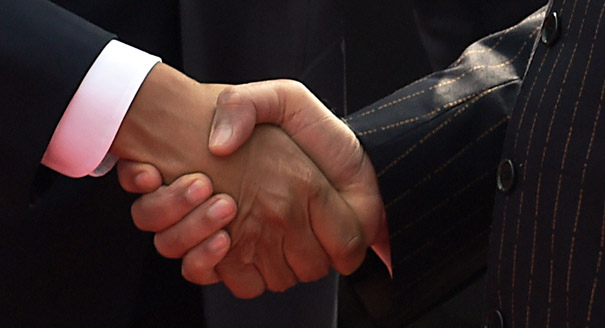
Source: Getty
India’s Nuclear Suppliers Group diplomacy reveals a new level of self-assurance that can explore the space for accommodation in all directions.
Source: Indian Express
This week marks a major “multilateral moment” in Indian diplomacy as Delhi joins an Asian regional forum and pitches hard for the membership of an international nuclear club. The multilateral advance, however, is founded on some bold bilateral diplomacy.
In Tashkent this week, the paper work for India’s membership of the Shanghai Cooperation Organisation, a forum that brings China, Russia and the Central Asian states together is likely to be completed. In another corner of Asia in Seoul, South Korea, the members of the Nuclear Suppliers Group may deliberate on India’s application for membership. Joining these two organisations has long been a major diplomatic objective for India. The campaign for SCO membership has moved at a steady pace in the last many years. However, the final play for the NSG has been more recent and very demanding.In the expansive dialogue between Delhi and Washington after the second round of nuclear tests in May 1998, India put special emphasis on removing the international restrictions on high technology exports that had accumulated since the mid 1970s.
Following the historic civil nuclear initiative between India and the US during 2005-08, President Barack Obama, during the visit to India in November 2010, endorsed India’s claim for membership of the four export control groups — the Nuclear Suppliers Group, the Missile Technology Control Regime, the Australia Group that seeks to prevent chemical weapon production and the Wassenaar Arrangement that regulates trade in conventional weapons and dual use items.
India’s aspiration to become a full member of the global nuclear management was the logical next step to the civil nuclear initiative that had ended the prolonged international nuclear blockade against India. But the UPA government’s delay in implementing the civil nuclear initiative meant there would be no progress on the membership of these forums.
As the government of Narendra Modi removed the last hurdles in the implementation of the nuclear initiative, it also renewed the effort for entry into the four export control regimes. Earlier this month, the path was cleared for the membership of MTCR. All eyes are now on its NSG campaign.
It is not quite clear if the NSG meeting this week will come up with a definitive decision on India’s application. While a formal decision welcoming India into the NSG will be a huge achievement, even a negative or non-decision will not detract from India’s high-octane diplomatic campaign.
The need for unanimity in the NSG for admitting India, China’s openly expressed reservations, the widespread temptation to link India’s membership with a signature on the Nuclear Nonproliferation Treaty and the inevitable hyphenation of India with Pakistan were all big obstacles.
Instead of being deterred, Delhi chose to up the stakes and raise its game. It fielded President Pranab Mukherjee to make a direct appeal to President Xi Jinping during his visit to China last month. The PM showed up in Geneva and Mexcio City to persuade the political leadership of Switzerland and Mexico to ease their reservations against India’s application to join the NSG. He also picked up the phone to talk to some key leaders like Russia’s Vladimir Putin. The external affairs minister, Sushma Swaraj, personally spoke to 23 counterparts among the members of the NSG.
The diplomatic effort called for an effective management of the Pakistan question that continues to complicate India’s bilateral and multilateral diplomacy on the regional and world stage. The NSG campaign involved getting simultaneous Western and Russian support at a time when relations between the two have deteriorated and India is warming up to America.
It also demanded a sophisticated balancing act between the US, India’s main supporter in the nuclear campaign, and China, the principal problem. Many in Delhi have argued that drawing close to the US and asking China at the same time to lift its hold on India’s membership of the NSG was a bit of bravado.
But Delhi’s new diplomatic chutzpah is about ending the kind of political diffidence that underlined India’s traditional approach to the great powers. Delhi’s NSG diplomacy reveals a new level of self-assurance that can explore the room for accommodation in all directions rather than hide behind the slogan of non-alignment and do nothing.
Many have argued that the net benefit for India from membership of the NSG is rather little. After all, India is now free to engage in civil nuclear commerce under the exemption that the NSG had provided Delhi in 2008. But as Sushma Swaraj put it in her Sunday press conference, there is a big difference between sitting outside a room seeking the indulgence of others and being inside and making the nuclear rules.
Call it what you will, Indian diplomacy is shaking off its traditional risk aversion, trading potential favours, exercising leverages and bargaining for productive outcomes. Whether it wins in Seoul this week or not, Delhi has demonstrated that it has the political will to play hard ball on issues of high national interest.
Former Nonresident Senior Fellow, Carnegie India
A leading analyst of India’s foreign policy, Mohan is also an expert on South Asian security, great-power relations in Asia, and arms control.
Recent Work

C. Raja Mohan, Darshana M. Baruah


Alexander Gabuev, Paul Haenle, C. Raja Mohan, …
Carnegie does not take institutional positions on public policy issues; the views represented herein are those of the author(s) and do not necessarily reflect the views of Carnegie, its staff, or its trustees.
Though Orban is gone, Putin can still count on some like-minded individuals in Central and Eastern Europe. However, they will seek to avoid open confrontation with EU institutions over Ukraine and their ties with Moscow.

Dimitar Bechev
The truth is that Japan’s government is seeking a degree of reengagement but at a vastly reduced level than under Abe. Most significantly, Japan has shown no willingness to ease sanctions.

James D.J. Brown
Azerbaijan’s relations with the EU appear to be going from strength to strength after several years in the deep freeze following the military escalation in Karabakh in 2023 and Azerbaijan’s bitter fallout with France and several other EU member states.
Shujaat Ahmadzada
The full list of humiliations Europe has endured since Donald Trump returned to the White House makes for grim reading. But Washington’s adversarial approach to its allies undermines its own power base.

Rym Momtaz
The National Rally’s electoral strength, coupled with its internal fragility at a crucial political juncture, contributes to foreign policy vagueness.
Catherine Fieschi